
Quick Answer
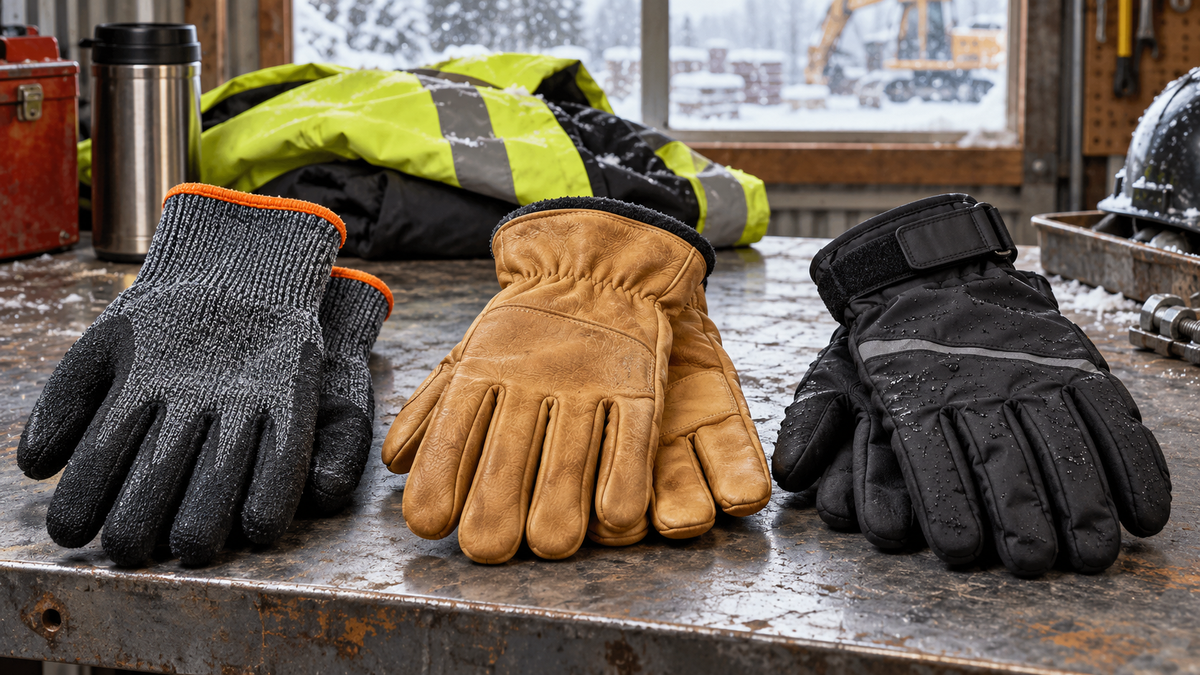
The best winter work glove is the one a worker can keep on for the whole task. Start with the job's cut, abrasion, impact, chemical, and machinery hazards; then choose enough insulation for the actual cold and enough water resistance for the exposure. Test grip and fingertip control with the tools used on site. Keep dry replacement pairs nearby. A very warm glove that gets soaked, slips on a handle, or is too bulky to use safely is the wrong glove.
Why One Winter Glove Rarely Fits Every Job
An outdoor crew may handle wet lumber at dawn, use small fasteners at midday, and guide material through an exposed loading area by evening. Those are different glove problems. The first needs weather resistance and grip; the second needs dexterity; the third may need both warmth and abrasion protection. A single heavy glove can be convenient to buy and frustrating to wear.
OSHA's hand protection rule calls for selection based on the tasks, conditions, duration, and identified hazards. It includes harmful temperature extremes, but cold protection does not cancel out the need to address cuts, punctures, chemicals, or other exposures. Start with the hazard assessment, then compare glove features.
Match the Glove to the Work
| Job condition | Look for | Check before ordering |
|---|---|---|
| Dry, cold material handling | Insulated leather or coated knit glove | Abrasion, seam comfort, grip with the material |
| Wet or snowy work | Water-resistant or waterproof construction with an appropriate grip surface | Whether seams and cuffs keep water out during the real task |
| Small parts and tool controls | Thin insulation and close fingertip fit | Whether workers can use fasteners and controls without removing gloves |
| Oily or slick surfaces | Palm coating designed for that contact | Grip test with the actual material; chemical suitability separately |
| Prolonged stationary outdoor work | More insulation, wind protection, and planned warm-up breaks | Dexterity, circulation, and whether hands sweat inside the glove |
| Cold plus sharp edges | Independently documented cut or puncture performance | The rating for the specific hazard, not just the word "heavy-duty" |
This table is a starting point, not a product certification. Check the manufacturer's data and test a sample in the job setting before buying for a crew.
Insulation: Warm Enough, Not Too Much
Thicker is not automatically safer. Extra bulk can make it harder to operate a radio, buckle a harness, thread a nut, or keep a secure grip on a tool. The practical goal is to preserve hand function for the whole shift.
Compare the glove's lining, shell, cuff, and expected activity level. Someone repeatedly lifting boxes may generate more body heat than a flagger standing still in the same air temperature. Wind, rain, snow, contact with cold metal, and work duration can matter as much as the thermometer reading. There is no single temperature rating that applies to every worker or task; a marketing number cannot replace a trial.
NIOSH advises providing appropriate cold-weather gear, warm areas, and training, and notes that insulative PPE works best when it stays dry. It also warns that tight gloves can reduce circulation and that sweating inside heavily insulated gear can leave workers colder when activity stops. If a worker has to take the glove off to finish the job, choose a different system instead of treating removal as a habit to tolerate.
Waterproof Versus Water-Resistant
Water-resistant gloves can handle some damp contact; waterproof claims imply more complete protection, but the construction and test conditions still matter. A coated palm may shed water while the back of the glove, seams, or cuff let it in. A waterproof membrane may protect the hand until water runs inside the cuff during overhead work. Ask where moisture enters on your job, not just whether the product page says "waterproof."
For wet crews, test a glove through a realistic shift segment: handling wet materials, gripping a tool, and removing and replacing the glove. Check whether the lining pulls out with the hand and whether the glove dries between uses. Put spare dry pairs at the crew's access point. NIOSH's cold-weather guidance specifically emphasizes staying dry and keeping extra clothing available.
Grip and Dexterity Deserve a Field Test
A smooth leather glove may feel excellent at the rack and slide on a wet handle. A heavily textured coating may grip well but reduce feel on a small trigger or fastener. Try the intended glove with the tools and materials workers actually touch: cold pipe, lumber, cartons, rope, controls, and fasteners.
Check these four things during a short trial:
- Can the worker close their hand fully without fighting the lining?
- Can they grip the tool securely when the surface is wet or cold?
- Can they operate required controls without removing the glove?
- Can they take the glove off and put it back on without damaging the lining?
Order multiple sizes. A loose glove can bunch up and compromise control; an overly tight glove can limit circulation. For tasks near rotating parts, do not assume any glove is safe just because it fits well. OSHA warns that protective gloves may create entanglement hazards around rotating equipment; follow the machine-specific procedure and guarding assessment.
Cold Does Not Erase the Other Hazards
Some winter gloves are sold chiefly for warmth. Their cut, abrasion, puncture, impact, and chemical performance may be unstated or unsuitable for the task. Do not infer a cut rating from a thick palm or chemical resistance from a waterproof coating. If the job includes sharp sheet metal, oily parts, solvent, energized electrical work, or hot surfaces, verify the corresponding protection separately.
For general handling, compare cold-weather work gloves. For leather handling styles, see cold-weather drivers gloves. A winter liner can be useful only when the liner and outer glove still fit together and retain the required task performance. Browse the broader winter protection selection when gloves are only one part of a cold-weather PPE plan.
A Better Buying Checklist
- Write down the task, contact surfaces, moisture, wind, work duration, and other hand hazards.
- Select two or three candidate gloves with documented performance appropriate to those hazards.
- Trial every candidate with representative tools and materials, in the cold if possible.
- Check fit across the actual size range of the crew, including cuffs under or over sleeves.
- Ask how gloves will be dried, stored, cleaned, inspected, and replaced.
- Keep a dry spare where workers can reach it without leaving the task area unprotected.
- Plan warm-up breaks and training; gloves are not the whole cold-stress program.
For a broader crew review, use our cold-weather PPE checklist and work gloves selection guide. Confirm local procedures and manufacturer instructions before standardizing a model.
FAQ
What are the warmest work gloves for winter?
There is no universal winner. Warmth depends on insulation, fit, wind, wetness, activity level, and exposure time. Choose a glove that keeps hands dry and allows the worker to perform the task without removing it.
Are waterproof work gloves always warmer?
No. Keeping water out helps preserve warmth, but insulation, lining, fit, and activity still matter. A waterproof glove can also trap sweat if it is too warm for the work.
Can I wear a liner under my usual work glove?
Only if the combination fits and preserves required grip, dexterity, and hazard protection. A liner can make a close-fitting outer glove too tight, which may reduce circulation.
Do winter work gloves need a cut rating?
Only if a cut hazard is present, but then the rating should be selected for that hazard. Cold-weather labeling alone does not establish cut resistance.
When should winter gloves be replaced?
Replace them when tears, failed seams, worn grip, saturated insulation, damaged coatings, or other deterioration means they no longer perform for the job. Follow the manufacturer's care and inspection guidance.
About Mick Chan
Mick Chan contributes safety supply guidance for eSafetySupplies content, with a focus on practical PPE selection, workplace readiness, and helping teams connect safety requirements to the right supplies. His review perspective is included to keep recommendations grounded in real purchasing and jobsite use.
Final CTA
Choose one representative cold, dry task and one wet task, then test a few sizes and styles before placing a crew-wide order. Start with winter work gloves, compare winter liners, and keep spare dry pairs in the places crews actually work.