
Quick Answer
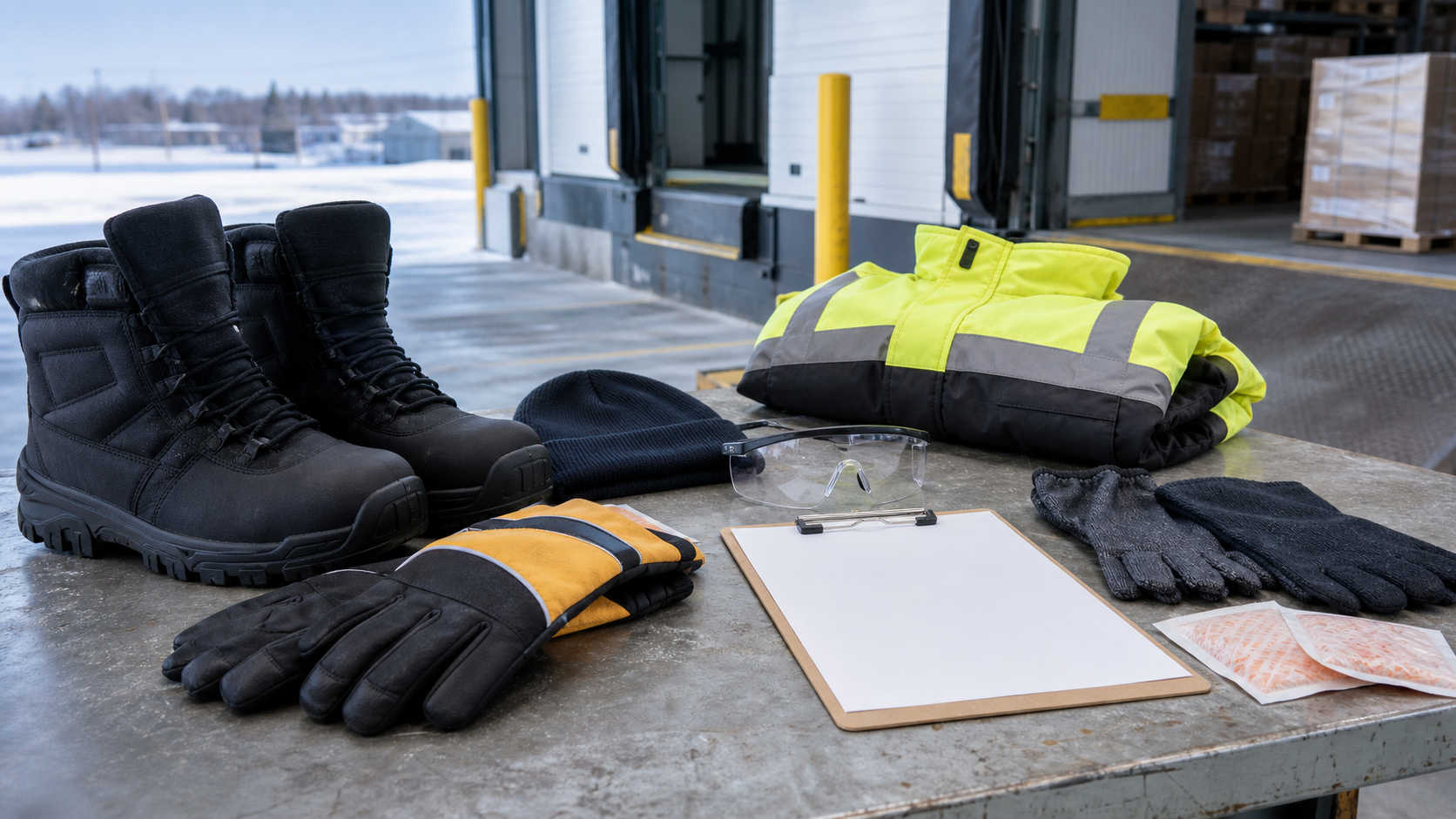
Cold weather PPE should protect workers from cold stress while still supporting visibility, grip, dexterity, footing, and compatibility with required safety gear. A practical checklist includes insulated work gloves, layered clothing, high-visibility outerwear, insulated boots, slip-resistant soles, eye protection, head and face coverage, and dry replacement gear.
The right cold weather PPE depends on temperature, wind, wet conditions, task duration, physical workload, and whether employees move between outdoor work, loading docks, freezers, vehicles, and heated indoor areas.
Cold Weather PPE At A Glance
| Hazard | PPE to evaluate | Buying note |
|---|---|---|
| Cold hands | Insulated work gloves, glove liners, waterproof gloves | Balance warmth with grip and tool control. |
| Low visibility | High-visibility jackets, vests, rainwear, reflective outer layers | Keep hi-vis material outermost over winter layers. |
| Wet or icy walking surfaces | Insulated boots, slip-resistant soles, traction aids where appropriate | Dock plates, ramps, and yards need separate review. |
| Wind and exposed skin | Balaclavas, knit caps, neck gaiters, insulated hard-hat liners | Confirm compatibility with hard hats and other PPE. |
| Eye exposure | Safety glasses or goggles with anti-fog features | Cold-to-warm transitions can create fogging problems. |
Why Cold Stress Planning Matters
OSHA warns that cold stress can occur when the body cannot warm itself, and risk increases with low temperature, wind, dampness, exhaustion, and inadequate clothing. Workers at loading docks, outdoor yards, construction sites, delivery routes, freezer areas, and maintenance locations can face changing exposure throughout a shift.
PPE purchasing should not focus only on warmth. If gloves are too bulky to grip safely, if eye protection fogs, or if high-visibility apparel is buried under a coat, the cold weather gear can create new problems.
Task-Based Checklist
- Outdoor material handling: insulated gloves, hi-vis outerwear, safety footwear, eye protection, and layered clothing.
- Loading docks: slip-resistant footwear, hi-vis apparel, gloves with grip, and weather-resistant outerwear.
- Freezer or cold storage: thermal gloves, insulated clothing, face coverage, and staged warm-up procedures.
- Vehicle and yard work: hi-vis jacket, winter gloves, traction-focused footwear, and dry replacement gear.
- Maintenance work: task-specific gloves, eye protection, head protection, and cold-compatible tool control.
Buying Checklist
- Map cold exposure by work area, shift, and task duration.
- Choose glove warmth by task, not just temperature rating.
- Stock multiple glove sizes so workers do not lose dexterity.
- Use high-visibility outer layers where vehicle or equipment traffic exists.
- Confirm hard-hat liners and hoods do not compromise head protection fit.
- Plan anti-fog eyewear for temperature transitions.
- Keep dry replacement gloves and socks available for wet conditions.
Common Mistakes To Avoid
Do not assume winter PPE is only a coat purchase. Hands, feet, eyes, visibility, and traction usually drive the practical safety outcome. Do not let workers wear non-compatible hoods or hats under hard hats without checking fit. Do not buy one glove for every cold weather task; forklift work, box handling, metal handling, and snow removal can need different grip and insulation.
FAQ
What PPE is needed for cold weather work?
Common cold weather PPE includes insulated gloves, layered clothing, hi-vis outerwear, insulated boots, head and face coverage, and eye protection. The final list depends on the worksite hazard assessment.
Are winter gloves enough for loading dock work?
Not always. Loading dock workers may also need hi-vis apparel, slip-resistant footwear, eye protection, and dry replacement gear.
How should employers choose winter work gloves?
Match gloves to temperature, wet conditions, grip needs, cut risk, dexterity, and task duration. The warmest glove is not always the safest if it reduces control.
Mick Chan Bio
Mick Chan contributes practical safety supply guidance for eSafetySupplies.com, helping buyers compare PPE by hazard, task, compliance context, and day-to-day usability. His content is written to support safer purchasing decisions and should be paired with site-specific safety review.
Final CTA
Need cold weather PPE for loading docks, outdoor crews, freezer areas, or winter maintenance? Compare gloves, hi-vis outerwear, eye protection, boots, and related safety supplies at eSafetySupplies.com.
Sources: OSHA Cold Stress, NIOSH Cold Stress, OSHA PPE overview.