
Quick Answer
Eyewash stations should be selected, placed, inspected, and maintained based on the chemicals and eye hazards present in the workplace. OSHA requires suitable facilities for quick drenching or flushing of the eyes and body where employees may be exposed to injurious corrosive materials. ANSI/ISEA Z358.1 is the consensus standard commonly used for emergency eyewash and shower equipment details such as performance, placement, and inspection practices.
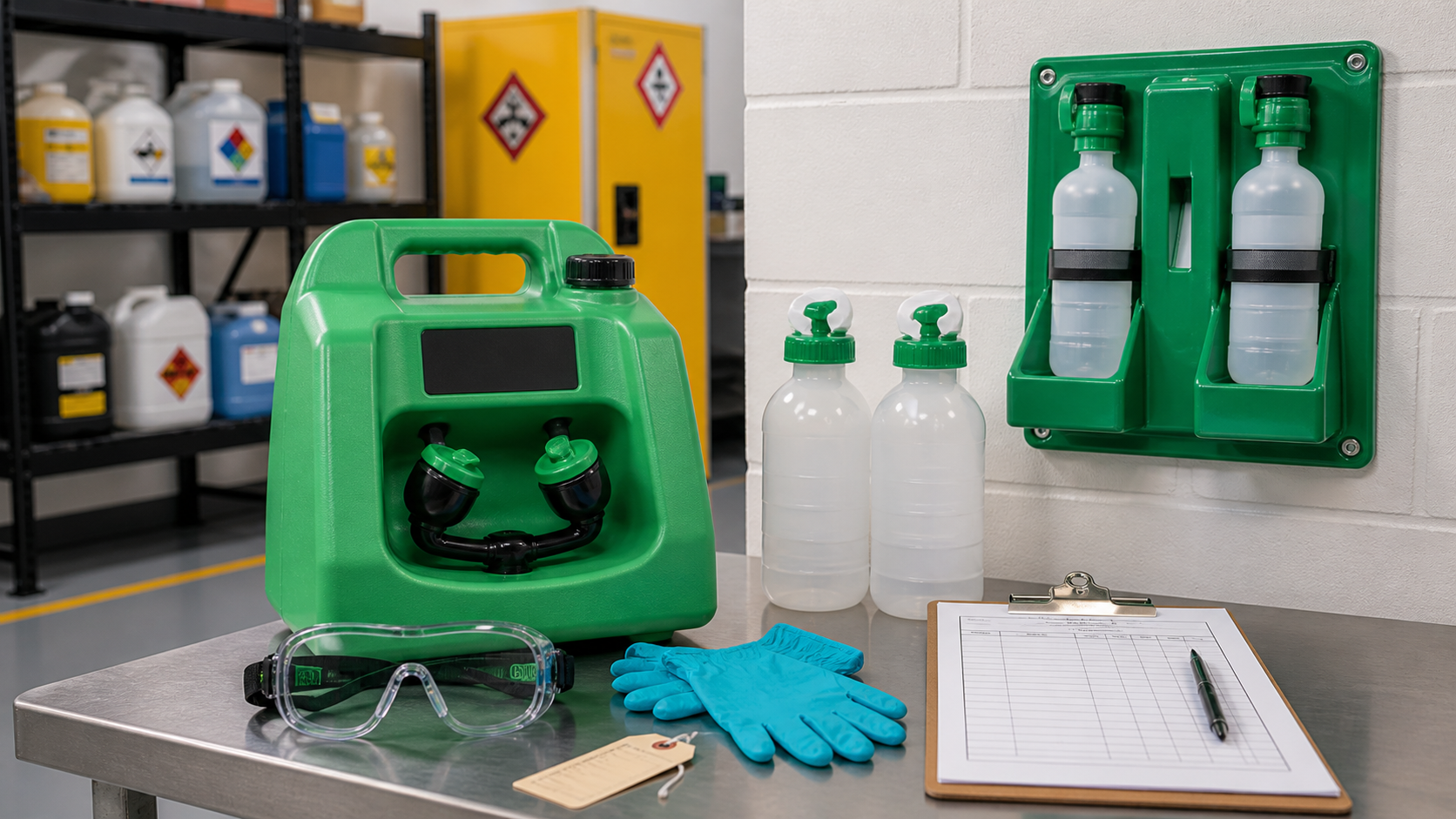
For buyers, the key decision is whether workers need a plumbed eyewash, self-contained portable eyewash, personal eyewash bottles, or a combination. Bottles can support immediate flushing, but they should not be treated as a full replacement where an emergency eyewash station is required.
Eyewash Planning At A Glance
| Question | Why it matters |
|---|---|
| What chemicals can contact the eyes? | Corrosive and irritating materials drive emergency flushing needs. |
| Where are chemicals mixed, poured, charged, or cleaned? | Stations need to be near real exposure points. |
| Is the hazard fixed or mobile? | Fixed areas may suit plumbed units; changing jobsites may need portable options. |
| Can workers reach the station quickly? | Access must be practical under stress and impaired vision. |
| Who inspects and refills the unit? | Empty, blocked, expired, or dirty eyewash supplies fail when needed. |
Where Eyewash Stations Are Commonly Needed
Eyewash review is important around battery charging, corrosive cleaning chemicals, laboratories, maintenance shops, manufacturing lines, chemical storage, janitorial closets, paint and coating areas, and any task where liquids, dusts, or particles can injure the eyes. The Safety Data Sheet should be reviewed for first-aid and exposure-control requirements.
Do not assume general safety glasses solve every exposure. Eye protection helps prevent exposure, while eyewash equipment supports emergency response after exposure.
Plumbed, Portable, And Bottle Eyewash
Plumbed eyewash stations connect to a water supply and are often used in fixed facilities. Self-contained portable eyewash stations can support areas where plumbing is not practical, but they require filling, treatment, maintenance, and inspection. Personal eyewash bottles are useful for immediate flushing and support, but they are limited by volume and duration.
Use the hazard assessment and applicable standard guidance to decide whether bottles are supplemental or whether a full eyewash station is required.
Inspection Checklist
- Eyewash station is visible and accessible.
- Path to the station is not blocked by boxes, pallets, carts, or equipment.
- Station is close enough to the hazard for practical emergency use.
- Protective caps, nozzles, bowls, and covers are clean.
- Fluid level, pressure, flow, or bottle contents are acceptable for the unit type.
- Portable units are within fill, treatment, and manufacturer service requirements.
- Bottles are sealed, not expired, and stored where workers can reach them.
- Inspection tag or log is current.
- Workers know where the station is and how to activate it.
Common Mistakes To Avoid
Do not block eyewash stations with storage. Do not let portable units sit without maintenance. Do not keep expired eyewash bottles in service. Do not assume a station is adequate because it exists on a wall; location, flow, cleanliness, and worker training matter. Also avoid placing eyewash only in a central first aid area if corrosive chemical exposure can occur elsewhere.
Buying Checklist
- Review SDSs for chemicals used on site.
- Identify fixed and mobile exposure points.
- Choose plumbed, portable, bottle, or combination coverage based on the hazard.
- Stock replacement bottles, preservative, inspection tags, and compatible PPE.
- Assign inspection responsibility by area.
- Include eyewash location and use in worker training.
- Review needs when chemicals or work processes change.
FAQ
How often should eyewash stations be inspected?
Many programs use weekly activation or checks for plumbed emergency eyewash equipment and regular documented inspections for portable and bottle units. Follow ANSI/ISEA Z358.1 guidance, manufacturer instructions, and site policy.
Can eyewash bottles replace an eyewash station?
Eyewash bottles can provide immediate flushing support, but they are limited. Where an emergency eyewash station is required, bottles should generally be treated as supplemental unless competent review says otherwise.
Where should an eyewash station be located?
Place eyewash equipment near the eye hazard, with a clear path, visible location, and no blocked access. Chemical use areas should be reviewed individually.
Mick Chan Bio
Mick Chan contributes practical safety supply guidance for eSafetySupplies.com, helping buyers compare PPE by hazard, task, compliance context, and day-to-day usability. His content is written to support safer purchasing decisions and should be paired with site-specific safety review.
Final CTA
Need eyewash bottles, portable eyewash stations, inspection tags, goggles, gloves, or related emergency supplies? Compare workplace eyewash and safety products at eSafetySupplies.com, then match placement and inspection to your chemical hazards.
Sources: OSHA 29 CFR 1910.151, OSHA Medical and First Aid, ANSI/ISEA Z358.1-2021, OSHA Hazard Communication.