
Quick Answer
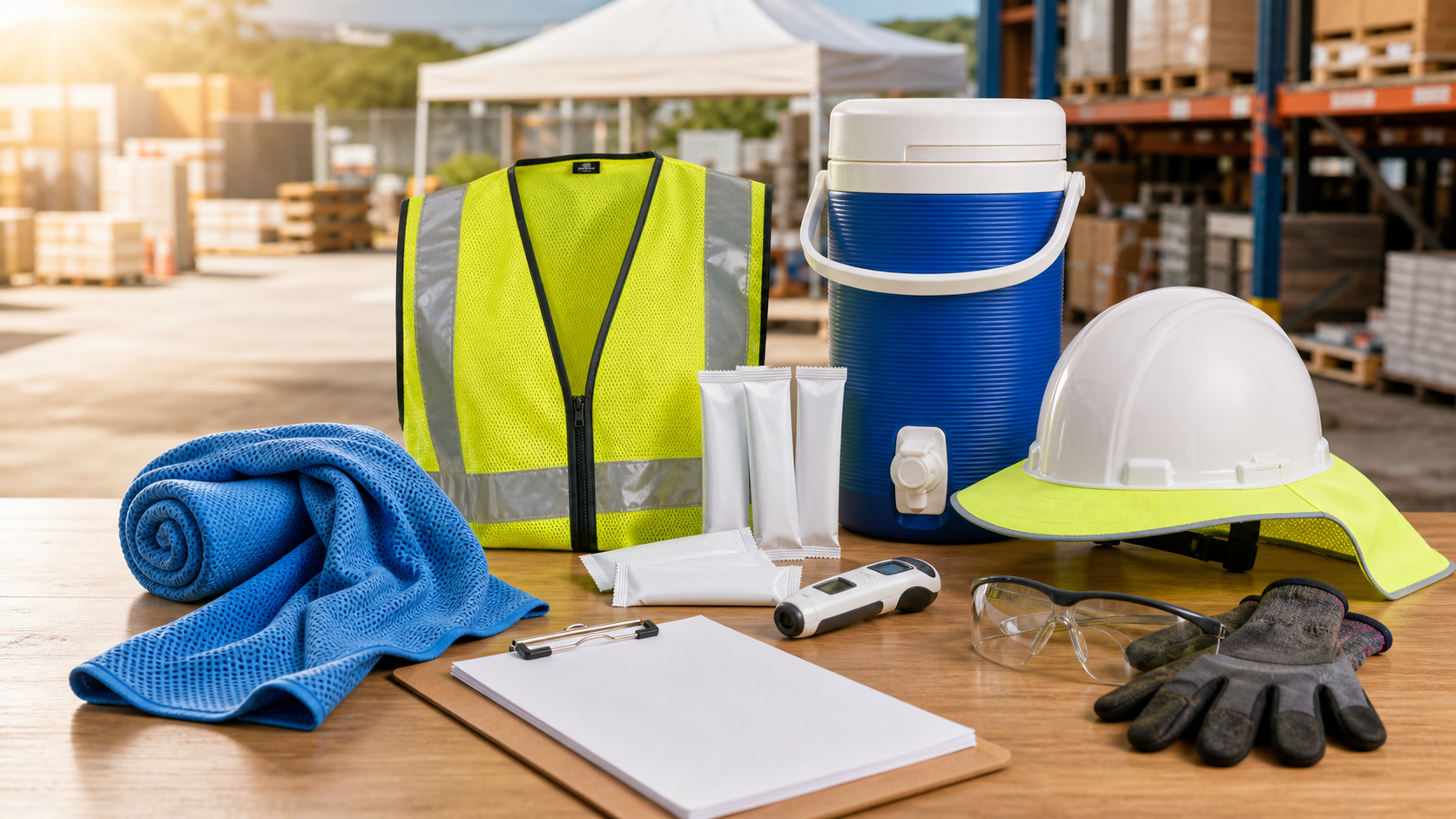
Heat stress prevention supplies should support water access, rest, shade, cooling, visibility, and task-specific PPE. Common supplies include water coolers, cups, electrolyte products, cooling towels, cooling vests, hard hat sun shades, breathable high-visibility apparel, shade canopies, fans, thermometers, and first aid supplies.
Supplies are only one part of heat illness prevention. OSHA emphasizes water, rest, shade, acclimatization, training, monitoring, and emergency response. PPE should support that plan without trapping unnecessary heat or reducing visibility.
Heat Stress Supplies At A Glance
| Need | Supplies to consider | Why it matters |
|---|---|---|
| Hydration | Water coolers, disposable cups, electrolyte packets | Workers need reliable access throughout the shift. |
| Cooling | Cooling towels, cooling vests, evaporative bandanas | Useful for outdoor work, warehouses, and high-heat tasks. |
| Shade and rest | Canopies, shaded rest areas, portable fans | Rest breaks need a usable location. |
| Sun exposure | Hard hat sun shades, neck shades, UV-rated safety glasses | Helps reduce direct sun load. |
| Visibility | Breathable hi-vis vests or shirts | Workers still need to be seen around traffic and equipment. |
OSHA Heat Prevention Basics
OSHA’s heat illness prevention guidance focuses on practical controls: provide cool water, encourage frequent drinking, allow rest breaks, provide shade or cool areas, build acclimatization for new or returning workers, train workers and supervisors, and plan emergency response. These are program decisions, not just product decisions.
For procurement, the question is whether the worksite has enough supplies to make the plan real. A heat policy without water coolers, shade, cooling PPE, and replacement supplies tends to break down during busy shifts.
Outdoor Work Checklist
- Water stations are close enough for regular use.
- Shade or cooling areas are available for breaks.
- High-visibility apparel is breathable and appropriate for the traffic hazard.
- Hard hat sun shades or neck shades are compatible with head protection.
- Cooling towels or vests are staged where workers can refresh them.
- Supervisors have a heat illness response plan and communication method.
Warehouse Heat Checklist
Indoor heat can be a problem in warehouses, loading docks, mezzanines, trailers, and production areas. Fans, hydration stations, cooling towels, breathable PPE, and planned rest areas can help. Evaluate dock doors, trailer loading, roof heat, poor airflow, and peak shift periods separately.
Common Mistakes To Avoid
Do not assume indoor workers are safe from heat stress. Do not rely on workers bringing their own water. Do not buy cooling products that interfere with required PPE. Do not remove high-visibility apparel in traffic areas just because it is hot; select cooler compliant apparel instead.
FAQ
What supplies help prevent heat stress?
Common supplies include water coolers, electrolyte products, shade, fans, cooling towels, cooling vests, hard hat shades, breathable hi-vis apparel, and first aid supplies.
Do warehouse workers need heat stress supplies?
They may. Warehouses, trailers, loading docks, and production areas can become hot enough to require prevention planning and supplies.
Are cooling vests PPE?
Cooling vests can be part of a heat stress prevention supply plan, but they should be checked for compatibility with required PPE and the work task.
Mick Chan Bio
Mick Chan contributes practical safety supply guidance for eSafetySupplies.com, helping buyers compare PPE by hazard, task, compliance context, and day-to-day usability. His content is written to support safer purchasing decisions and should be paired with site-specific safety review.
Final CTA
Need heat stress supplies for outdoor crews, loading docks, warehouses, or summer jobsite work? Compare cooling vests, hi-vis apparel, hard hat shades, hydration supplies, gloves, and related PPE at eSafetySupplies.com.
Sources: OSHA Heat Exposure, OSHA Heat Illness Prevention worker guidance, NIOSH Heat Stress.