
Quick Answer
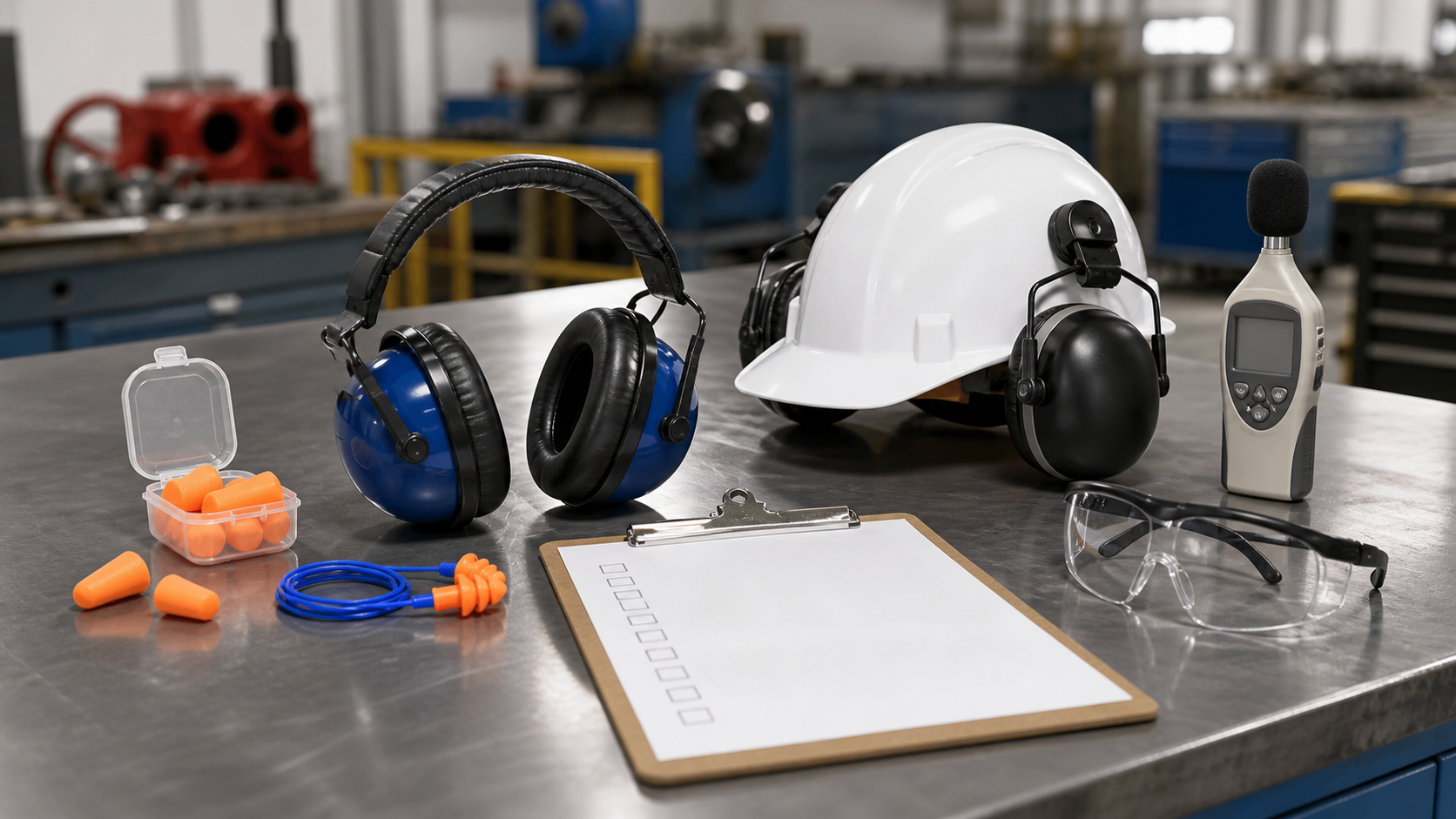
Earplugs and earmuffs both reduce workplace noise exposure, but they fit different tasks. Earplugs are compact, disposable or reusable, and often work well in hot environments or with other head PPE. Earmuffs are easier to put on and remove, easier for supervisors to see, and often useful for intermittent noise. Some high-noise tasks may require dual protection with both earplugs and earmuffs.
The right hearing protection depends on measured noise exposure, required attenuation, fit, comfort, communication needs, compatibility with hard hats and safety glasses, and the hearing conservation program.
Earplugs vs Earmuffs At A Glance
| Option | Best-fit uses | Buying note |
|---|---|---|
| Foam earplugs | Continuous noise, high-use areas, hot work, disposable programs | Protection depends heavily on correct insertion. |
| Reusable earplugs | Workers who need repeat use and a consistent fit | Need cleaning and storage. |
| Corded earplugs | Intermittent use, food production, maintenance, supervisors | Harder to lose and easier to manage. |
| Earmuffs | Intermittent noise, visitor use, colder environments, easy supervision | Seal can be affected by glasses, hair, hats, and straps. |
| Hard-hat mounted earmuffs | Construction, maintenance, utilities, and head protection areas | Must be compatible with the hard hat system. |
OSHA Hearing Conservation Context
OSHA’s occupational noise exposure standard requires a hearing conservation program when employee noise exposures equal or exceed the action level. The program includes noise monitoring, audiometric testing, hearing protectors, training, and recordkeeping. Hearing protection buying should support that program, not replace exposure assessment.
Noise Reduction Rating is useful, but the real-world result depends on fit and correct use. A high-rated earplug worn poorly can underperform a lower-rated protector worn correctly.
When Earplugs Make Sense
Earplugs are often preferred in hot environments, under hard hats, with face shields, or when workers need lightweight protection all shift. They are easy to stock in bulk and can be placed near noisy areas. Training matters because foam plugs must be rolled, inserted, and held long enough to seal.
When Earmuffs Make Sense
Earmuffs are practical for intermittent noise, visitors, supervisors, and tasks where workers frequently move in and out of loud areas. They are easier to inspect visually, but the seal can be compromised by safety glasses, facial hair around the cushion area, hats, or poor adjustment.
Buying Checklist
- Confirm noise exposure and required protection.
- Offer more than one protector style when fit varies across workers.
- Check compatibility with hard hats, safety glasses, respirators, and face shields.
- Use corded or detectable options where loss control matters.
- Place disposable plugs at entrances to noisy areas.
- Train workers on insertion, seal checks, cleaning, storage, and replacement.
- Replace earmuff cushions and worn bands when they no longer seal.
Common Mistakes To Avoid
Do not choose only by the highest NRR. Do not assume earplugs work if workers are not trained to insert them correctly. Do not ignore PPE compatibility; glasses can break an earmuff seal, and hard hats can limit earmuff options. Also avoid one-size-only programs where workers have different ear canals, tasks, and comfort needs.
FAQ
Are earplugs better than earmuffs?
Neither is universally better. Earplugs can work well for continuous use and hot environments. Earmuffs can be better for intermittent noise and easier supervision.
Can workers wear earplugs and earmuffs together?
Yes, dual protection may be needed for very high noise exposures. The decision should come from noise assessment and the hearing conservation program.
How often should hearing protection be replaced?
Disposable earplugs are generally single-use. Reusable plugs should be replaced when dirty, damaged, or no longer sealing. Earmuff cushions and bands should be replaced when worn, cracked, compressed, or loose.
Mick Chan Bio
Mick Chan contributes practical safety supply guidance for eSafetySupplies.com, helping buyers compare PPE by hazard, task, compliance context, and day-to-day usability. His content is written to support safer purchasing decisions and should be paired with site-specific safety review.
Final CTA
Need earplugs, earmuffs, hard-hat mounted hearing protection, or bulk hearing PPE? Compare workplace hearing protection options at eSafetySupplies.com, then match the product to your measured noise exposure and PPE compatibility needs.
Sources: OSHA Occupational Noise Exposure, OSHA 29 CFR 1910.95, NIOSH Noise and Hearing Loss Prevention.