
Quick Answer
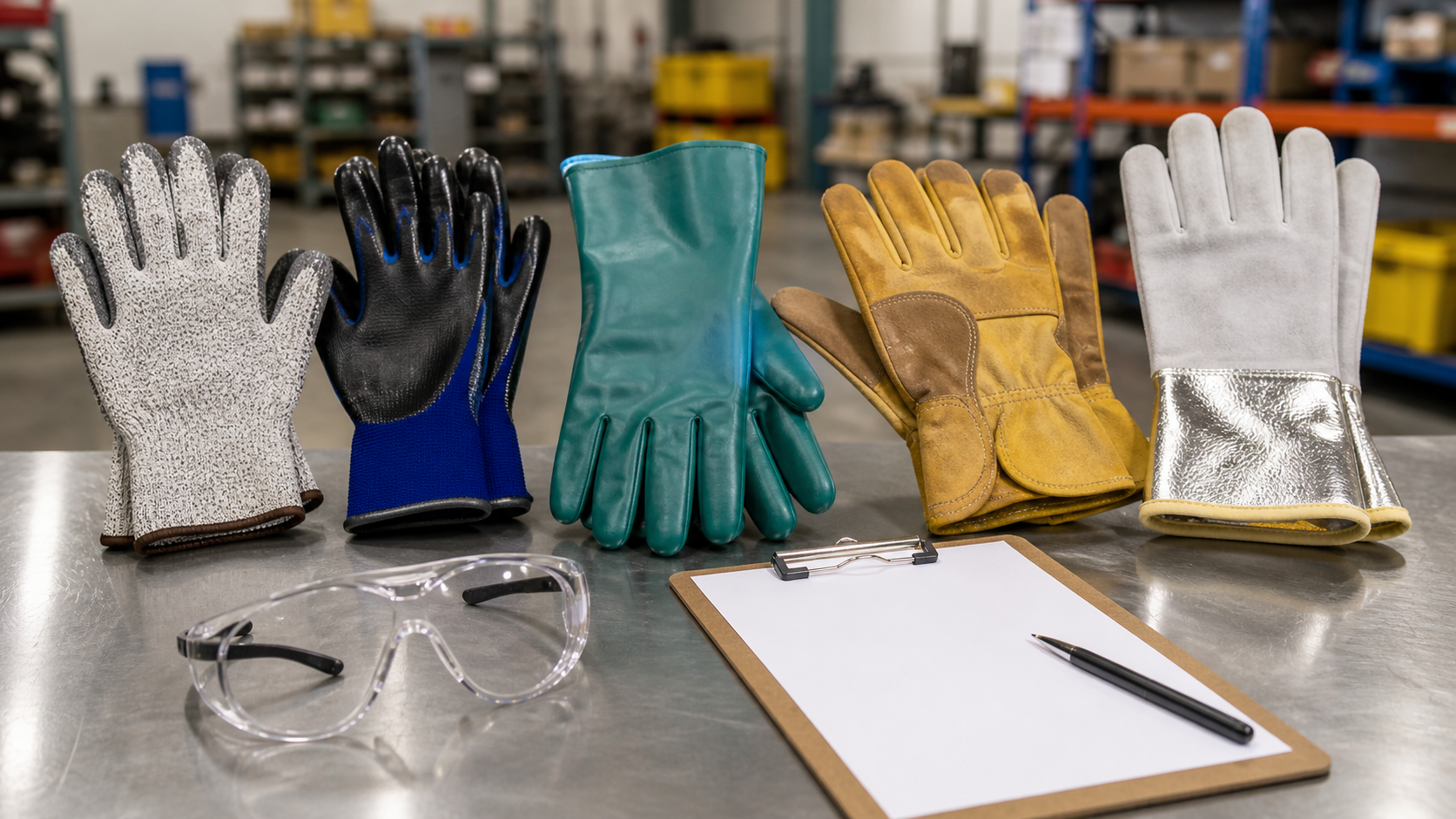
The best work glove is the one matched to the hazard: cut resistance for sharp edges, chemical resistance for liquids, coated grip for handling, leather for abrasion, and heat-rated protection where hot surfaces are present. OSHA requires employers to select and require appropriate hand protection when workers' hands are exposed to hazards such as skin absorption of harmful substances, severe cuts or lacerations, abrasions, punctures, chemical burns, thermal burns, or harmful temperature extremes.
A good glove program starts with the task, not the glove rack. Identify what the worker touches, how long contact lasts, whether grip matters, and what failure would look like.
Work Glove Selection Checklist
| Hazard | Common glove type | What to check |
|---|---|---|
| Cuts and sharp edges | Cut-resistant knit gloves | Cut rating, dexterity, coating, and size. |
| Chemicals and liquids | Nitrile, neoprene, PVC, or other chemical-resistant gloves | Compatibility with the specific chemical and exposure time. |
| Abrasion and handling | Leather palm or coated work gloves | Palm wear, grip, comfort, and seams. |
| Heat or cold | Thermal or heat-resistant gloves | Temperature range, contact time, and liner condition. |
| Puncture risk | Puncture-resistant or reinforced gloves | Puncture rating and whether fingers need extra protection. |
| Wet or oily grip | Nitrile-coated or textured gloves | Grip pattern, oil resistance, and cuff style. |
How to Match Gloves to the Job
Start with a short job hazard review. Workers handling sheet metal need a different glove than workers mixing chemicals or stocking shelves. A thin coated glove may improve dexterity, but it may not provide enough cut or chemical protection. A thick chemical glove may protect against liquid exposure, but it may reduce touch sensitivity and make small-part work harder.
When chemicals are involved, check the safety data sheet and glove compatibility information. Do not assume all nitrile, latex, neoprene, PVC, or rubber gloves protect against the same substances.
Inspection and Replacement
- Check gloves before use for holes, tears, swelling, stiffness, cracking, contamination, or worn coatings.
- Replace disposable gloves after contamination or when torn.
- Remove reusable gloves from service when the material is degraded or the glove no longer fits securely.
- Store gloves away from chemicals, heat, sunlight, and sharp objects when possible.
- Keep multiple sizes available so workers are not forced into loose or tight gloves.
Common Mistakes to Avoid
Do not use one glove for every task. Do not buy only by price if the glove fails quickly or makes workers remove it to do detailed work. Do not ignore sizing; poor fit reduces grip and can create new hazards around moving equipment.
FAQ
Are cut-resistant gloves also puncture-resistant?
Not always. Cut and puncture resistance are different performance needs, so review the glove rating and the actual hazard.
Can chemical-resistant gloves be reused?
Some can, depending on the material, chemical, exposure, and manufacturer instructions. Replace gloves that show degradation or contamination concerns.
What gloves are best for warehouse work?
Many warehouse tasks use coated work gloves for grip and abrasion resistance, but sharp edges, cold rooms, chemicals, or wet handling may require a different glove.
About Mick Chan
Mick Chan is a safety supply specialist who helps businesses choose practical PPE, facility safety, and emergency readiness products for real workplace conditions. His guidance focuses on simple, usable safety programs that are easier for teams to follow every day.
Final CTA
Choose the right hand protection with work gloves, cut-resistant gloves, chemical-resistant gloves, coated gloves, safety glasses, and PPE supplies from eSafetySupplies.com.
Sources: OSHA 29 CFR 1910.138 Hand Protection.