Quick Answer
Respirator fit testing confirms that a tight-fitting respirator can seal properly to a specific worker's face. OSHA respiratory protection rules require fit testing before the employee uses a tight-fitting respirator, whenever a different respirator facepiece is used, and at least annually after that. Fit testing is one part of a complete respiratory protection program.
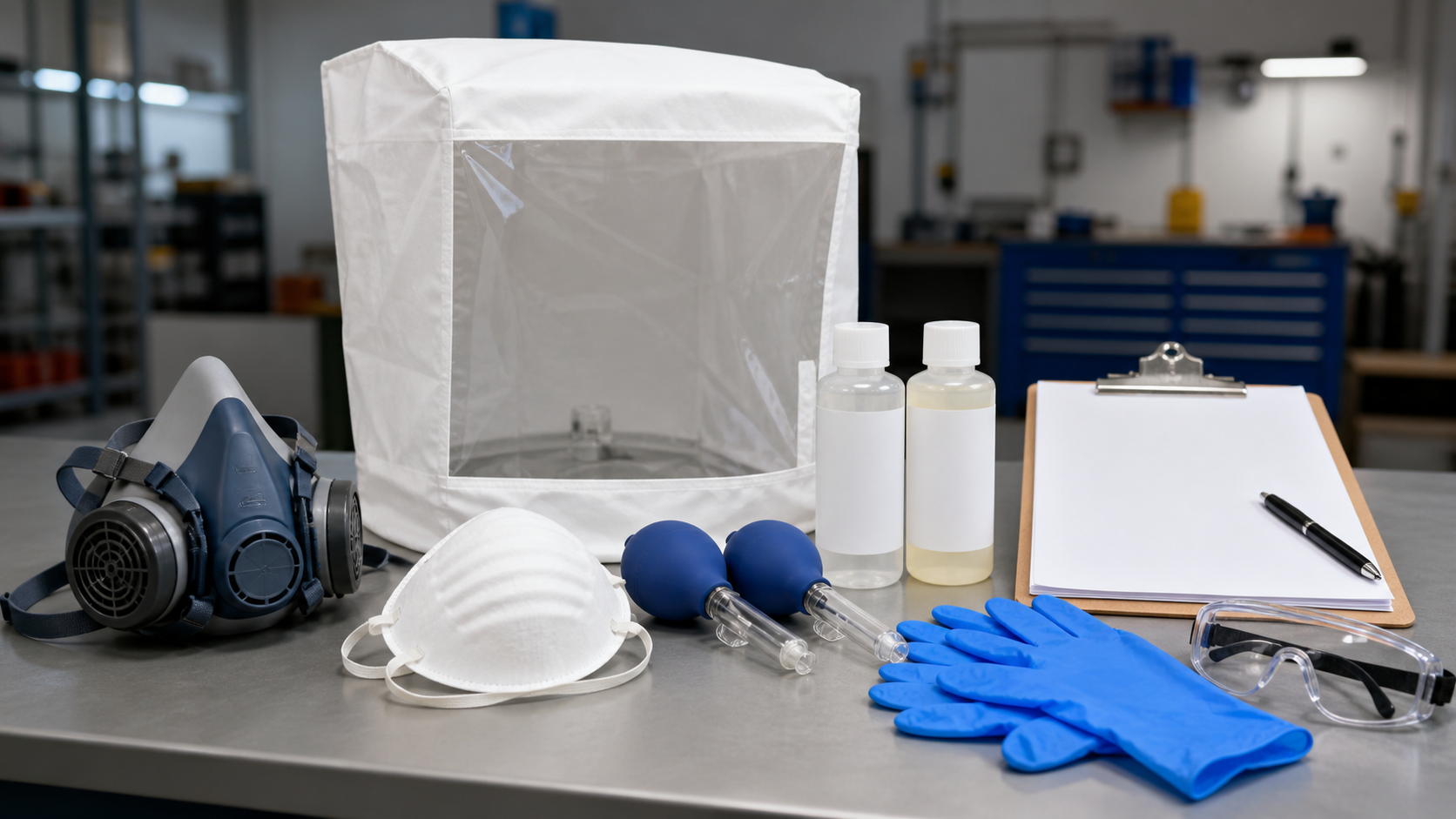
A practical fit testing station should include the correct test kit, test solutions, hood or enclosure, nebulizers or test equipment, respirator models and sizes, cleaning supplies, records, and trained personnel who know the procedure.
Respirator Fit Testing Supplies Checklist
| Supply | Use | Planning tip |
|---|---|---|
| Qualitative fit test hood | Creates the test environment for taste or smell-based fit testing. | Keep it clean and replace damaged parts. |
| Sensitivity and fit test solutions | Used to confirm the worker can detect the test agent and then test the seal. | Stock replacement bottles before expiration or heavy training days. |
| Nebulizers | Generate the test aerosol for qualitative testing. | Keep extras for backup during group sessions. |
| Respirator options | Allows workers to try the correct model and size. | Carry multiple sizes and styles when fit issues are common. |
| Record forms | Documents employee, respirator model, size, test method, and result. | Keep records with the respiratory protection program. |
| Cleaning supplies | Helps keep reusable respirators sanitary between users. | Follow manufacturer instructions for cleaning and storage. |
| Mirror and instruction sheet | Helps workers position straps and perform seal checks. | Use visual aids to reduce repeated fit failures. |
When Fit Testing Is Needed
- Before a worker first uses a required tight-fitting respirator.
- At least annually for workers who continue using tight-fitting respirators.
- When switching to a different respirator make, model, style, or size.
- When facial changes could affect fit, such as weight change, dental work, facial injury, or other physical changes.
- When the worker or program administrator reports that the fit may no longer be acceptable.
Fit Testing vs User Seal Check
Fit testing and user seal checks are not the same. Fit testing is a formal procedure used to determine whether a specific respirator fits a specific worker. A user seal check is a quick check the wearer performs each time the respirator is put on. Both matter, but one does not replace the other.
Facial hair that interferes with the sealing surface can prevent a tight-fitting respirator from sealing correctly. Address those issues before testing, not after repeated failures.
Common Mistakes to Avoid
Do not test only one respirator size and assume it fits everyone. Do not skip training on proper donning, strap placement, and seal checks. Do not forget to document the exact respirator model and size tested. And do not use fit testing as a substitute for exposure assessment, cartridge selection, medical evaluation, or written program requirements.
FAQ
Do disposable respirators need fit testing?
If the respirator is a tight-fitting respirator required for workplace protection, fit testing may apply even if the respirator is disposable. Follow OSHA rules and your respiratory protection program.
How often is respirator fit testing required?
OSHA requires fit testing before initial use, whenever a different tight-fitting respirator facepiece is used, and at least annually thereafter.
What should be recorded after a fit test?
Common records include employee name, date, test method, respirator make, model, style, size, result, and the person conducting the test.
About Mick Chan
Mick Chan is a safety supply specialist who helps businesses choose practical PPE, facility safety, and emergency readiness products for real workplace conditions. His guidance focuses on simple, usable safety programs that are easier for teams to follow every day.
Final CTA
Support your respiratory protection program with fit test supplies, respirators, gloves, safety glasses, cleaning supplies, and PPE program essentials from eSafetySupplies.com.
Sources: OSHA 29 CFR 1910.134 Respiratory Protection; OSHA Respiratory Protection.