
Quick Answer
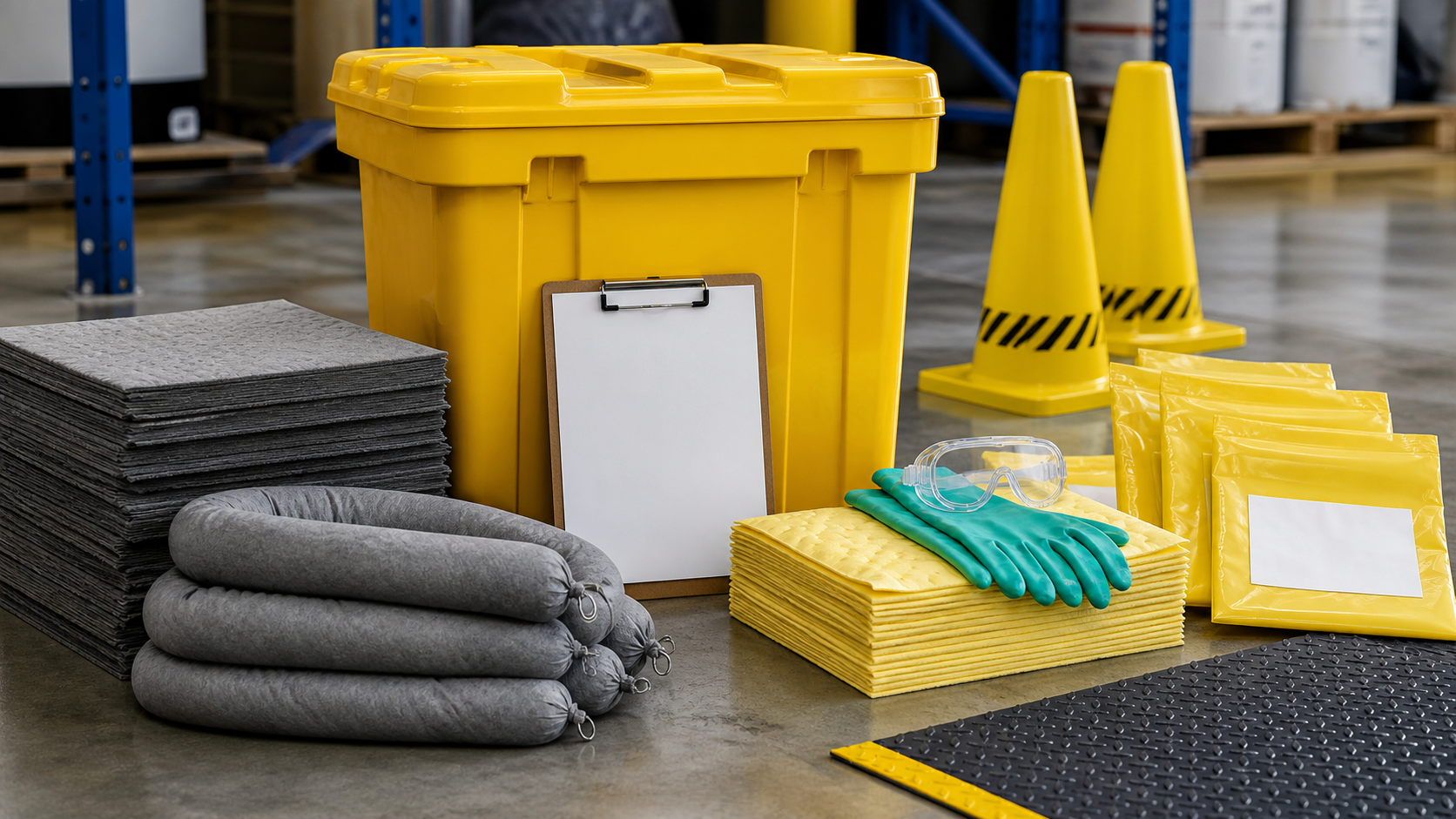
A workplace spill kit should contain the absorbents, PPE, warning devices, and disposal supplies workers need to respond quickly to small, manageable spills. The right kit depends on what could spill: water, oil, coolant, chemicals, battery acid, cleaning products, or unknown liquids.
OSHA housekeeping rules require work areas, passageways, storerooms, service rooms, and walking-working surfaces to be kept clean, orderly, and sanitary. When spills create slip hazards, chemical exposure, or blocked access, a stocked spill kit helps workers control the area and start the right response.
Spill Kit Checklist
| Supply | Use | Selection tip |
|---|---|---|
| Absorbent pads | Covering and absorbing liquid on flat surfaces. | Choose general-purpose, oil-only, or chemical absorbents based on the spill risk. |
| Absorbent socks | Containing or diverting liquid around drains, doors, and equipment. | Stock enough length for the largest likely small spill. |
| Loose absorbent or pillows | Handling deeper pools or irregular surfaces. | Keep compatible disposal supplies nearby. |
| Nitrile or chemical-resistant gloves | Protecting hands during response. | Match glove material to the chemicals used onsite. |
| Safety goggles or face shield | Reducing splash exposure. | Add splash protection when chemicals or pressure are involved. |
| Disposal bags and ties | Collecting used absorbents. | Label waste according to your site procedure. |
| Warning cones or floor signs | Keeping people away from wet or contaminated areas. | Place signs before cleanup begins. |
How to Match the Kit to the Spill
Universal absorbents work for many non-aggressive liquids. Oil-only absorbents are useful around petroleum products because they repel water and absorb oils. Chemical or hazmat absorbents are designed for more aggressive liquids, but compatibility should be checked against the safety data sheet and site procedure.
If employees cannot identify the material, do not treat it like a normal mop-up job. Isolate the area, notify the right person, and follow the emergency response plan.
Where to Place Spill Kits
- Near liquid storage areas, drums, totes, and transfer points.
- Near battery charging stations, maintenance rooms, and hydraulic equipment.
- Near loading docks and warehouse aisles where containers are moved.
- On mobile carts for facilities with multiple risk zones.
- Beside eyewash or chemical PPE stations when chemicals are handled nearby.
Inspection Routine
Inspect spill kits monthly and after every use. Replace missing pads, socks, bags, gloves, goggles, and signs. Check that the kit is visible, sealed if required, and not buried behind inventory. If a kit is repeatedly used, consider adding a larger kit or moving supplies closer to the spill source.
FAQ
What size spill kit do I need?
Base the size on the largest small spill employees are expected to handle safely, plus the types of liquids used in that area.
Can employees clean every spill with a spill kit?
No. Some spills require evacuation, specialized PPE, trained responders, or outside cleanup. The spill kit should match the training and procedures at your site.
Should spill kits include PPE?
Yes. Gloves, eye protection, and other PPE should be available when workers may contact the spilled material.
About Mick Chan
Mick Chan is a safety supply specialist who helps businesses choose practical PPE, facility safety, and emergency readiness products for real workplace conditions. His guidance focuses on simple, usable safety programs that are easier for teams to follow every day.
Final CTA
Prepare your facility with spill kits, absorbent pads, absorbent socks, gloves, goggles, floor signs, and cleanup supplies from eSafetySupplies.com.
Sources: OSHA 29 CFR 1910.22 Walking-Working Surfaces; OSHA 29 CFR 1910.1200 Hazard Communication.