Quick Answer
Emergency eyewash stations help workers flush the eyes quickly after exposure to corrosive or irritating materials. OSHA requires suitable facilities for quick drenching or flushing of the eyes and body where workers may be exposed to injurious corrosive materials. The exact setup depends on the chemicals used, work layout, and your safety program.
A good eyewash program combines correct placement, clear access, visible signage, routine inspection, replacement supplies, and employee training. Bottled eyewash can support immediate response in some situations, but it should not be treated as a full substitute where a plumbed or self-contained emergency eyewash station is required by the hazard assessment.
Eyewash Station Checklist
| Check area | What to verify | Why it matters |
|---|---|---|
| Location | The station is close to the chemical hazard area. | Workers need fast flushing after exposure. |
| Access | The route is clear of boxes, pallets, cords, and stored materials. | Blocked access delays emergency response. |
| Signage | The station is clearly marked and visible from normal work areas. | Visitors and new employees need quick identification. |
| Flow or supply | Plumbed units activate properly; portable units are filled and within service date. | Unreliable flow can turn a station into decoration. |
| Cleanliness | No dust, contamination, blocked nozzles, or damaged caps. | Flush water should not introduce new hazards. |
| Inspection record | Checks are documented with date, initials, and corrective action. | Records help supervisors catch missed maintenance. |
Where Bottled Eyewash Fits
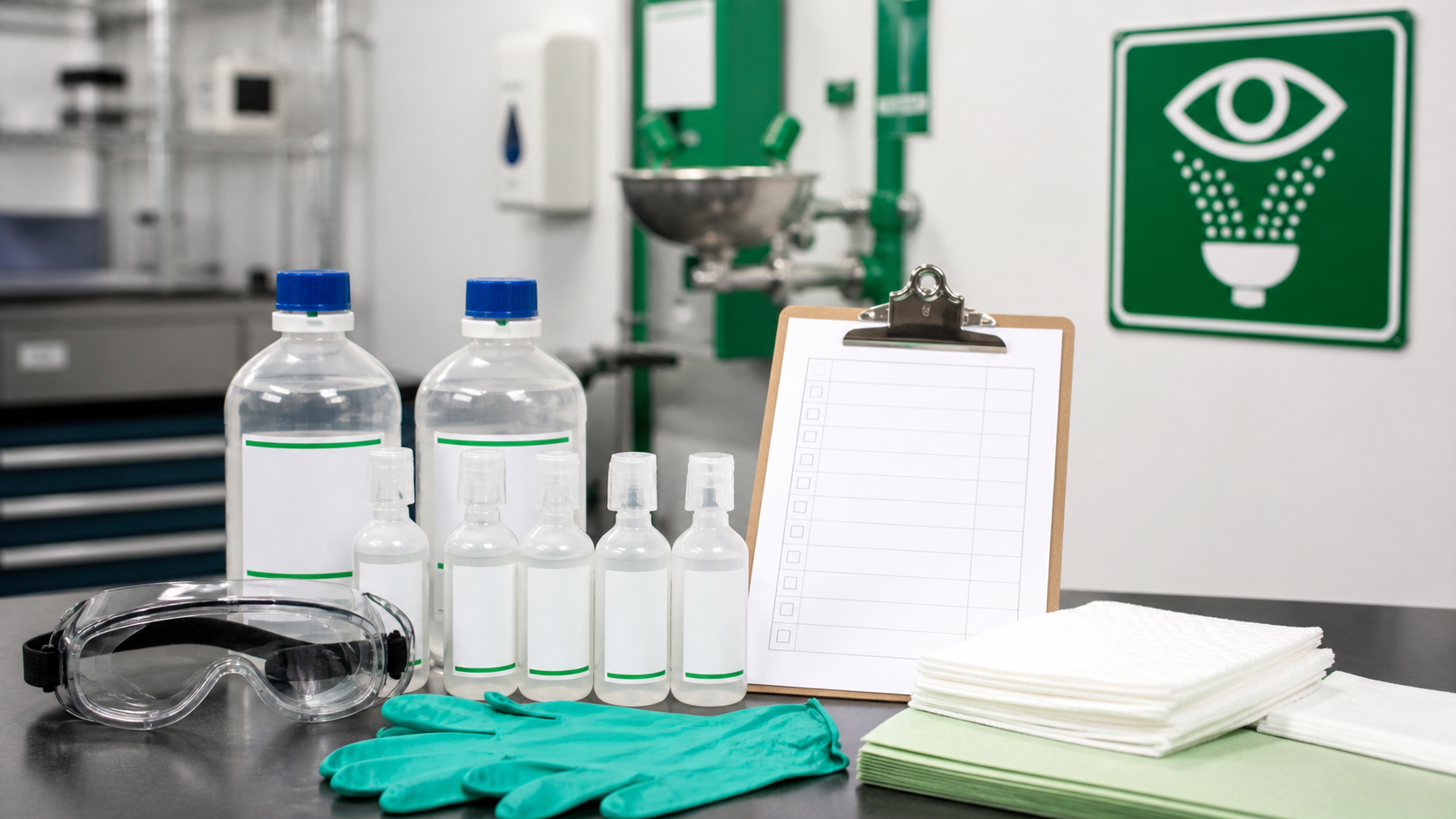
Bottled eyewash is useful for first response, mobile work areas, tool rooms, spill carts, and temporary tasks. It can help a worker begin flushing while moving toward the primary eyewash station. Keep bottles sealed, clean, easy to reach, and replaced before expiration.
Use the chemical safety data sheets and your hazard assessment to decide whether bottles, a self-contained station, or a plumbed unit is appropriate.
Common Mistakes to Avoid
- Letting inventory block the station.
- Installing a station but forgetting signs and employee training.
- Keeping expired bottles in spill kits or maintenance carts.
- Ignoring nozzles, caps, dust covers, and drain condition.
- Assuming eyewash supplies replace goggles, face shields, gloves, or chemical controls.
FAQ
Do all workplaces need an eyewash station?
Not every workplace does. The need depends on whether workers may be exposed to injurious corrosive materials or similar hazards identified in the workplace assessment.
How often should eyewash stations be checked?
Follow manufacturer instructions, applicable standards, and site policy. Many facilities use frequent activation checks for plumbed units and monthly checks for supplies, access, and expiration dates.
Can safety goggles replace an eyewash station?
No. Eye protection helps prevent exposure, but emergency flushing is still needed when the hazard assessment calls for it.
About Mick Chan
Mick Chan is a safety supply specialist who helps businesses choose practical PPE, facility safety, and emergency readiness products for real workplace conditions. His guidance focuses on simple, usable safety programs that are easier for teams to follow every day.
Final CTA
Improve chemical exposure readiness with eyewash supplies, goggles, face shields, gloves, absorbents, emergency signs, and inspection supplies from eSafetySupplies.com.
Sources: OSHA 29 CFR 1910.151 Medical Services and First Aid.