
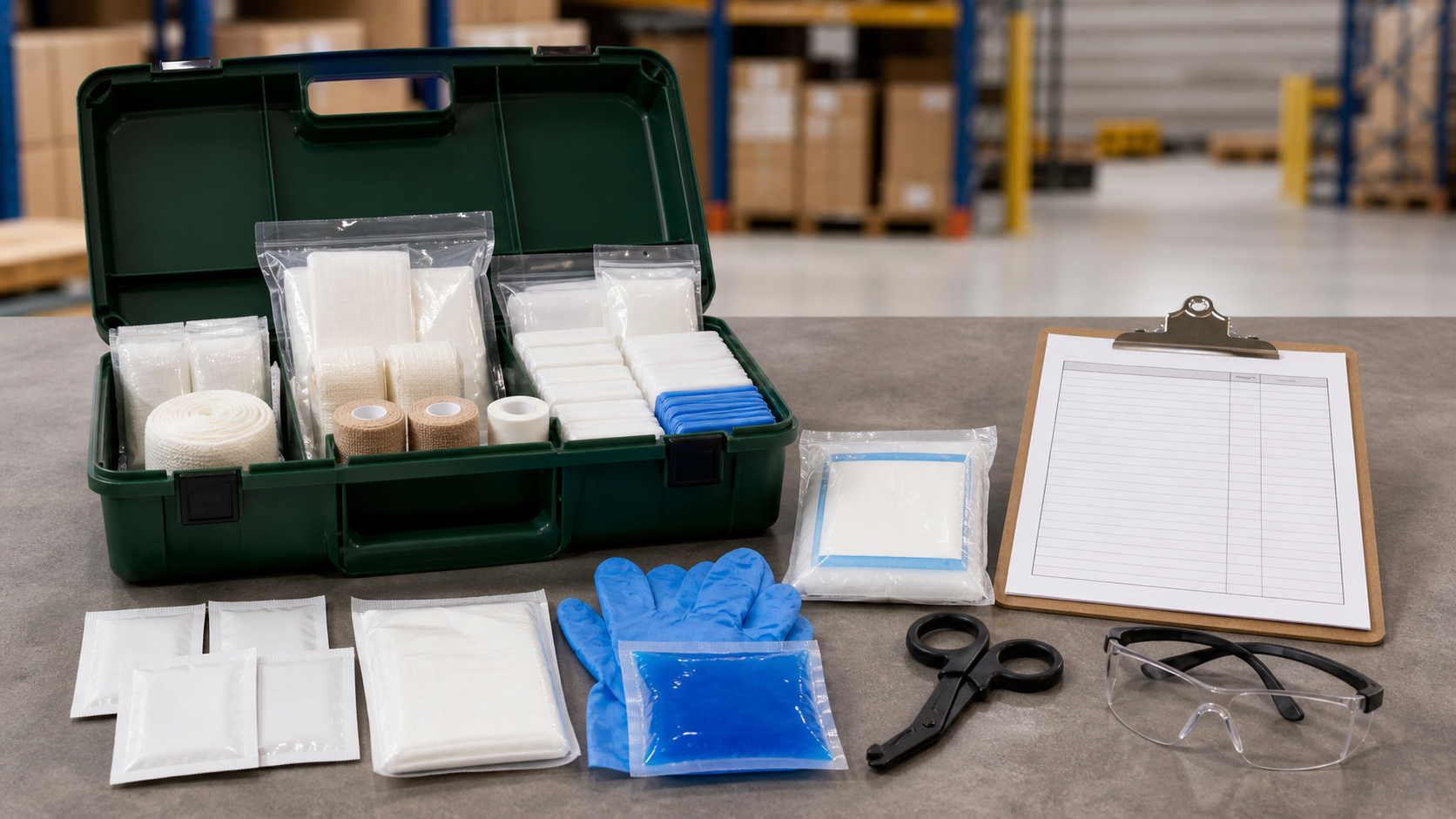
Quick Answer
A workplace first aid kit should be easy to find, easy to inspect, and stocked for the injuries your team is most likely to face. OSHA requires employers to make medical personnel available for advice and consultation, and when a workplace is not near an infirmary, clinic, or hospital, a person or people must be adequately trained to render first aid. First aid supplies must also be readily available.
For most facilities, the best approach is to match the kit to the work: minor cuts in offices, eye irritation in shops, burns in kitchens, strains in warehouses, and more serious trauma risks on jobsites or maintenance teams.
First Aid Kit Checklist
| Supply | Use | Inspection tip |
|---|---|---|
| Adhesive bandages | Minor cuts and scrapes. | Restock common sizes often. |
| Sterile gauze and trauma pads | Covering larger wounds. | Check packaging for damage or contamination. |
| Roller bandages and tape | Securing dressings. | Keep multiple widths available. |
| Antiseptic wipes | Cleaning around minor wounds. | Watch expiration dates and dried packets. |
| Nitrile gloves | Body-fluid barrier protection. | Stock multiple sizes if possible. |
| Cold packs | Sprains, strains, and bumps. | Replace used or damaged packs immediately. |
| Scissors and tweezers | Cutting tape or removing small debris. | Keep tools clean and secured in the kit. |
| CPR barrier or face shield | Emergency response support. | Make sure trained responders know where it is. |
Where to Place First Aid Kits
- Place kits near normal work areas, not locked in a distant office.
- Add kits near loading docks, maintenance rooms, fleet areas, production lines, and field vehicles.
- Use wall signs or labels so employees can identify the kit quickly.
- Keep path access clear, especially in warehouses where pallets and carts move daily.
- Assign an owner to inspect the kit and restock used items.
Inspection Routine
Inspect first aid kits at least monthly and after any known use. Check for missing supplies, opened packaging, expired items, damaged containers, dirty tools, and low quantities. If a kit is used often, add a quick weekly visual check.
Keep a simple inspection card inside the kit or on a nearby clipboard. Record date, initials, missing items, and restock actions. That small habit keeps the kit from slowly turning into an empty box.
Common Mistakes to Avoid
Do not buy one small kit and assume it covers the whole building. Distance matters. So does the type of work being done. Also avoid stocking supplies that employees are not trained or authorized to use. A practical kit should support your written emergency plan and the training level of your team.
FAQ
How often should workplace first aid kits be checked?
Monthly is a good baseline for many facilities, with additional checks after use or in high-traffic work areas.
Should trucks and field crews have separate kits?
Yes. Mobile crews should not rely only on a kit stored at the main facility.
What is the most common first aid kit problem?
Used supplies are not replaced. Assign ownership and keep restock items nearby.
About Mick Chan
Mick Chan is a safety supply specialist who helps businesses choose practical PPE, facility safety, and emergency readiness products for real workplace conditions. His guidance focuses on simple, usable safety programs that are easier for teams to follow every day.
Final CTA
Keep your team prepared with first aid kits, gloves, eye protection, emergency signs, inspection tags, and workplace safety supplies from eSafetySupplies.com.
Sources: OSHA 29 CFR 1910.151 Medical Services and First Aid.