
Quick Answer
Portable gas detectors help confined space teams check the atmosphere before and during entry. A single-gas detector monitors one hazard, such as oxygen, carbon monoxide, hydrogen sulfide, or a combustible gas. A multi-gas detector monitors several hazards at once and is usually the better fit when the space could contain oxygen deficiency, flammable vapors, and toxic gases.
OSHA confined space rules require employers to evaluate hazards and test permit spaces as needed before entry. The right detector depends on the gases that could be present, the work being performed, ventilation, rescue planning, and the written confined space program.
Single-Gas vs Multi-Gas Detector
| Detector type | Best for | Limitations |
|---|---|---|
| Single-gas detector | Known, narrow hazards such as carbon monoxide in a specific area or hydrogen sulfide near certain processes. | It can miss hazards outside its sensor type. |
| Multi-gas detector | Confined space entry, utility work, tanks, pits, vaults, and changing industrial environments. | Requires the correct sensor mix, charging, calibration, and worker training. |
| Pump-equipped monitor | Pre-entry sampling from outside the space, especially in tanks, manholes, and deeper entries. | Tubing length, pump function, and sample time must be managed correctly. |
| Diffusion monitor | Personal monitoring during work when the monitor is worn in the breathing zone. | It may not identify a hazard in a lower or remote part of the space before the worker reaches it. |
What To Check Before Buying
- Identify the gases that could reasonably be present based on the space, process, chemicals, and previous readings.
- Confirm whether you need oxygen, combustible gas, carbon monoxide, hydrogen sulfide, chlorine, ammonia, VOC, or other sensors.
- Decide whether workers need pre-entry sampling, continuous personal monitoring, or both.
- Check battery life, alarm style, data logging, calibration method, bump test process, and accessory availability.
- Match the detector to your confined space permit, rescue plan, ventilation equipment, and respiratory protection program.
Bump Tests, Calibration, And Confidence
A gas detector only helps if it responds correctly. Follow the manufacturer instructions and your site policy for bump testing, calibration, sensor replacement, charging, and recordkeeping. Keep calibration gas, tubing, regulators, and docking equipment organized so crews can complete checks before entry work begins.
Do not treat a quiet alarm as proof that a space is safe. Sampling location, ventilation, stratification, sensor condition, and changing work conditions all matter. Hot work, cleaning chemicals, welding, coating, decay, or nearby operations can change the atmosphere after initial testing.
Confined Space Kit Checklist
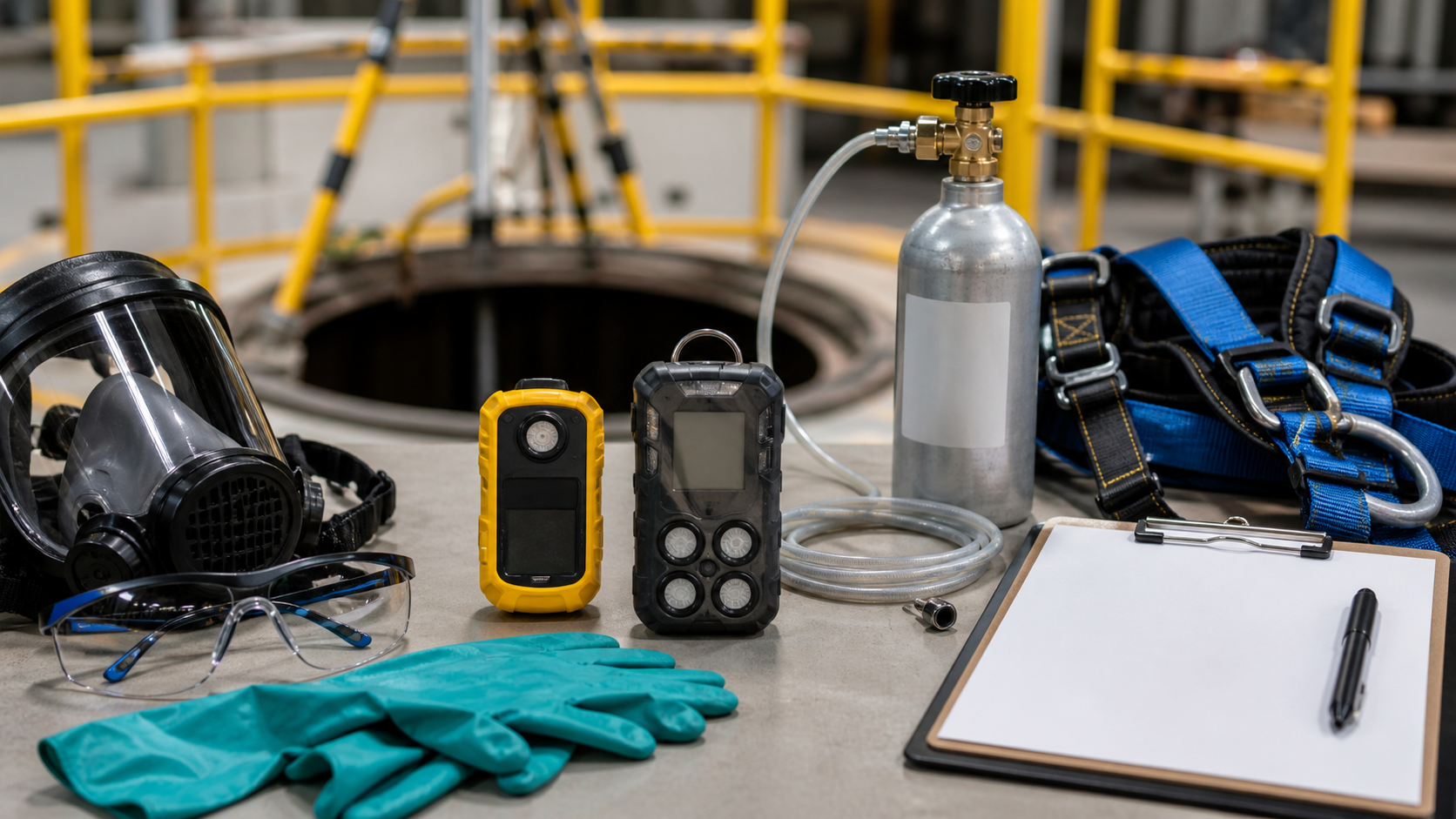
- Gas detector with the right sensor configuration.
- Sampling pump, tubing, filters, and probes when pre-entry sampling is needed.
- Calibration gas, regulator, bump test supplies, and records.
- Tripod, winch, harness, retrieval line, and rescue supplies where required by the plan.
- Ventilation blower and ducting when ventilation is part of hazard control.
- Gloves, eye protection, respiratory protection, signage, barricades, and permit forms.
FAQ
Is a single-gas detector enough for confined space entry?
Only when the hazard evaluation supports that choice. Many confined spaces can present multiple atmospheric hazards, so a multi-gas detector is often a more practical starting point.
Where should workers wear a personal gas detector?
Follow manufacturer and site instructions. Personal monitors are commonly worn near the breathing zone so alarms reflect the air the worker is likely to inhale.
Do gas monitors replace ventilation or permits?
No. Gas detection is one part of a confined space program. Permits, hazard control, ventilation, rescue planning, PPE, and trained workers are still needed.
About Mick Chan
Mick Chan is a safety supply specialist who helps businesses choose practical PPE, facility safety, and emergency readiness products for real workplace conditions. His guidance focuses on simple, usable safety programs that are easier for teams to follow every day.
Final CTA
Support confined space work with gas detection supplies, calibration accessories, respiratory protection, gloves, safety glasses, signage, and emergency response supplies from eSafetySupplies.com.
Sources: OSHA 29 CFR 1910.146 Permit-Required Confined Spaces; OSHA Confined Spaces.