
Quick Answer
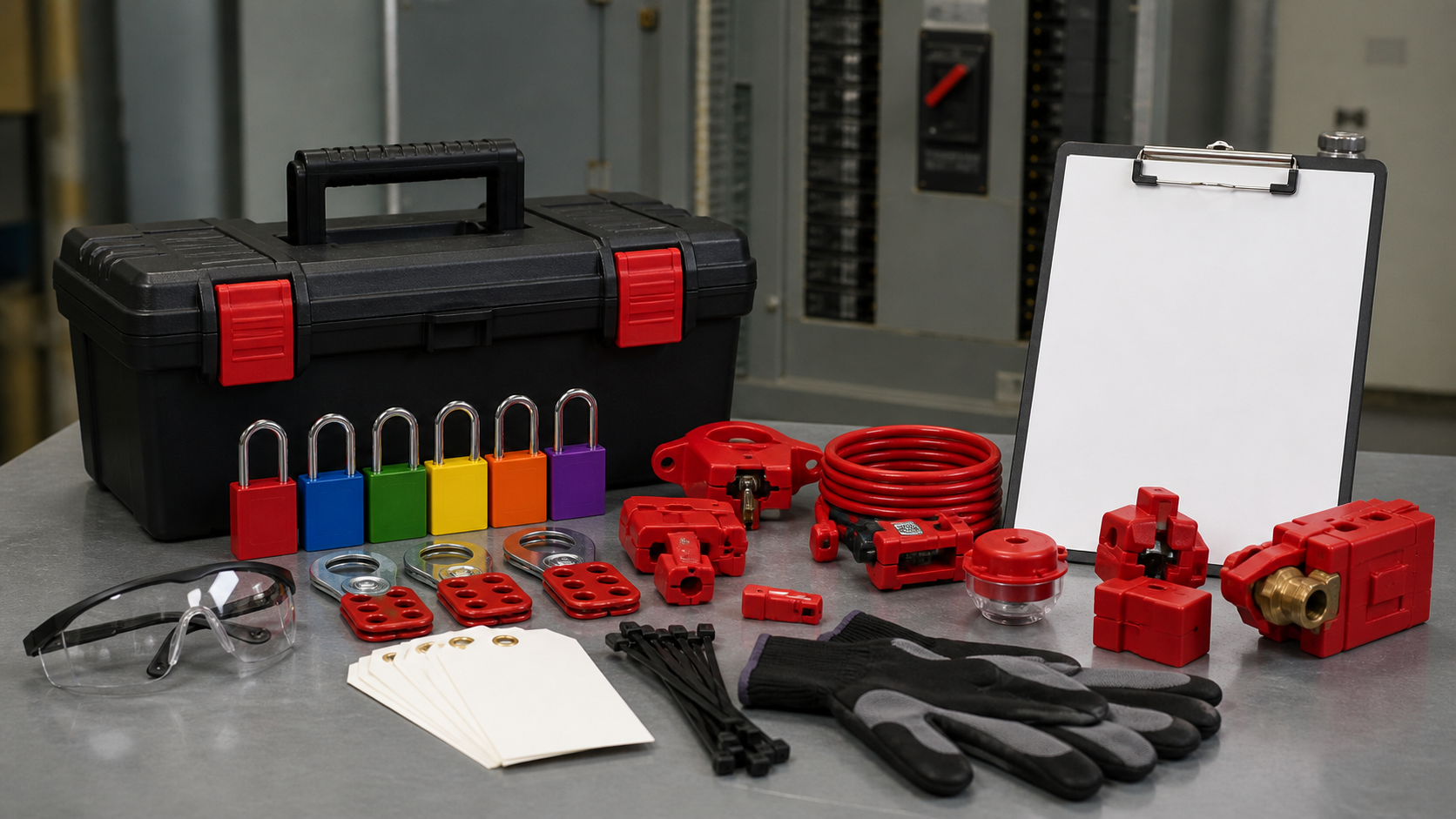
A lockout tagout kit should stock the devices maintenance teams need to isolate hazardous energy before servicing equipment. At a minimum, most teams need lockout padlocks, hasps, tags, breaker lockouts, valve lockouts, cable lockout devices, group lockout supplies, and a clear storage system. The kit supports the program, but it does not replace written procedures, employee training, or verification steps.
OSHA lockout/tagout rules require energy control procedures and specific practices for controlling hazardous energy during servicing and maintenance. Devices should be durable, standardized, substantial, and identifiable so workers can recognize and trust the lockout system.
Core Lockout Tagout Kit Checklist
| Supply | Use it for | Buying tip |
|---|---|---|
| Lockout padlocks | Securing energy-isolating devices so equipment cannot be restarted. | Use clearly assigned locks and avoid sharing personal lock keys. |
| Lockout hasps | Allowing multiple workers to lock out the same energy point. | Stock several hasp sizes for group work and tight spaces. |
| Lockout tags | Communicating who applied the lockout and why equipment is not to be operated. | Choose durable tags with room for name, date, department, and contact information. |
| Breaker lockouts | Securing electrical breakers in panel work. | Carry clamp-on and universal styles for different breaker shapes. |
| Valve lockouts | Controlling ball valves, gate valves, and other fluid or gas isolation points. | Match sizes to the valves found in your plant or facility. |
| Cable lockout devices | Locking out multiple points or odd-shaped equipment. | Use them for valves, handles, and complex isolation points that standard devices cannot fit. |
| Storage box or station | Keeping devices visible, organized, and easy to audit. | Label compartments so missing items are obvious. |
How To Build The Right Kit
Start by walking the equipment, not by buying a generic assortment. List electrical panels, disconnects, valves, plugs, air lines, hydraulic systems, stored-energy points, and machines with multiple isolation points. Then match each energy source to the correct lockout device.
For maintenance teams that travel between areas, create portable kits. For fixed production lines, use wall stations near the equipment. High-use areas should have backup tags, ties, pens, and replacement hasps so work does not stall because a simple item is missing.
Program Items That Belong Near The Kit
- Machine-specific lockout procedures.
- Authorized employee list and supervisor contact information.
- Training reminders for affected and authorized employees.
- Group lockout instructions for multi-person work.
- Defective-device bin or tag for removing damaged locks, hasps, and devices.
- Audit sheet for checking that kits are complete before each shift or project.
Common Mistakes To Avoid
Do not rely on tags alone when a device can be locked. Do not assume one breaker lockout fits every breaker style. Do not let shared locks become anonymous; workers need to know who controls each lockout point. And never skip verification after applying locks. The equipment should be tested or verified according to the procedure before work begins.
A clean lockout kit makes safe work easier, but the real goal is consistent control of hazardous energy every time maintenance is performed.
FAQ
What is the difference between lockout and tagout?
Lockout uses a physical lockout device to hold an energy-isolating device in a safe position. Tagout uses a warning tag to communicate that equipment must not be operated. Where lockout is possible, it provides stronger physical control.
How many lockout locks should a maintenance team carry?
It depends on the number of isolation points and employees involved. Count the highest-risk equipment first, then stock enough personal locks, group lockout supplies, and spares for real maintenance conditions.
Should lockout tagout kits be audited?
Yes. A quick kit audit helps teams replace missing tags, broken hasps, damaged lockout devices, or used cable ties before the next job.
About Mick Chan
Mick Chan is a safety supply specialist who helps businesses choose practical PPE, facility safety, and emergency readiness products for real workplace conditions. His guidance focuses on simple, usable safety programs that are easier for teams to follow every day.
Final CTA
Prepare maintenance teams with lockout tags, padlocks, hasps, breaker lockouts, valve lockouts, gloves, safety glasses, and LOTO supplies from eSafetySupplies.com.
Sources: OSHA 29 CFR 1910.147 Control of Hazardous Energy; OSHA Control of Hazardous Energy.