
Quick Answer
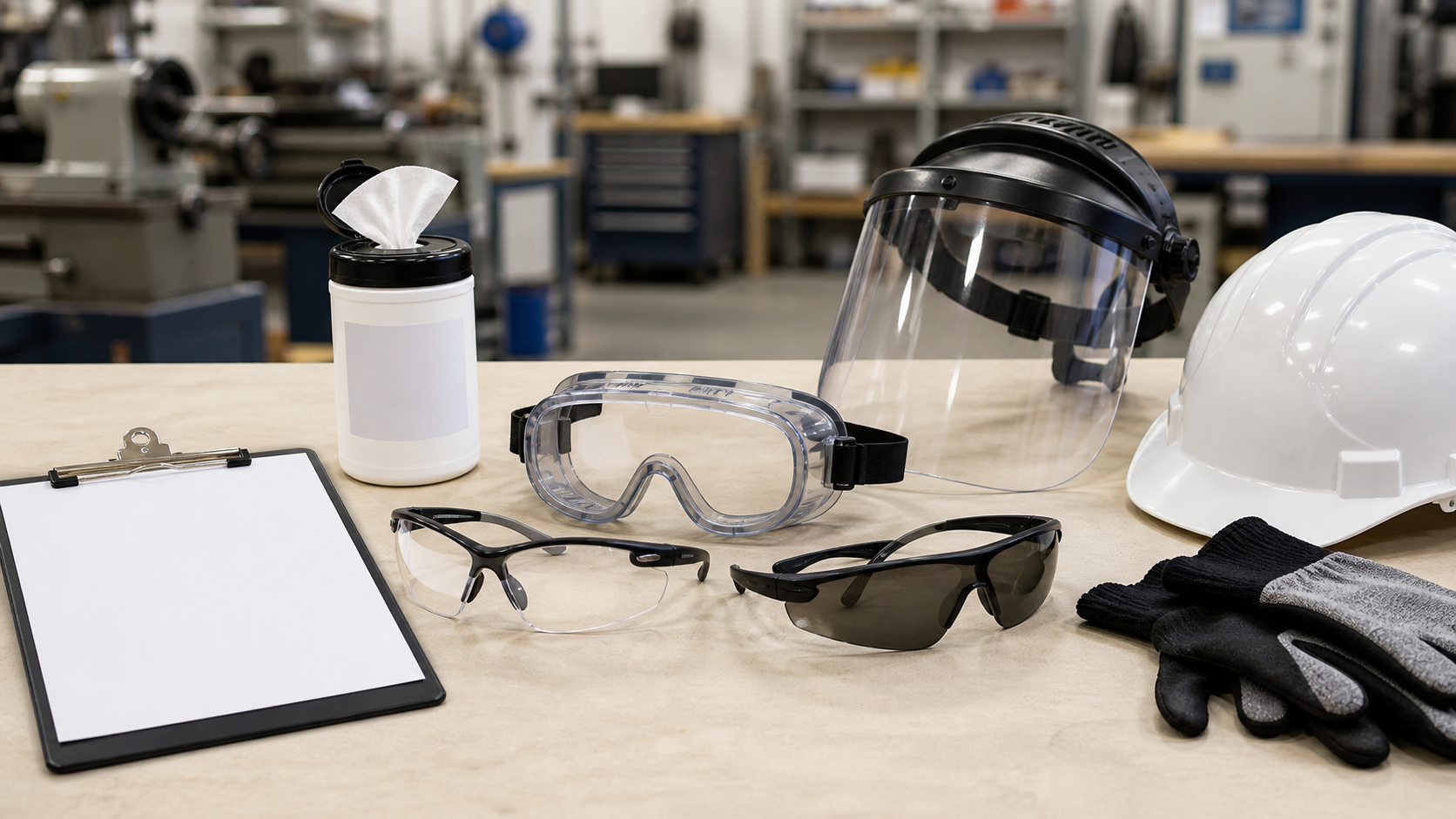
Safety glasses are a strong everyday choice for flying particles, dust, and general impact hazards. Goggles are usually better when workers need a closer seal against splash, fine dust, or airborne irritants. Face shields add coverage for the face, but they are commonly used with safety glasses or goggles rather than as the only eye protection.
OSHA requires employers to ensure affected employees use appropriate eye or face protection when exposed to hazards such as flying particles, molten metal, liquid chemicals, acids or caustic liquids, chemical gases or vapors, or potentially injurious light radiation.
Safety Glasses vs Goggles
| Protection type | Best for | Watch-outs |
|---|---|---|
| Safety glasses | General impact, warehouse work, shop tasks, and visitor protection. | May not seal well against splash, fine dust, or vapors. |
| Wraparound glasses | Side protection and better coverage without a full goggle seal. | Fit varies by face shape; check gaps at cheeks and temples. |
| Sealed goggles | Chemical splash, heavy dust, and tasks needing a closer fit. | Can fog if ventilation and lens coating are not matched to the task. |
| Face shield | Face coverage for splash, grinding, and higher-debris tasks. | Often needs safety glasses or goggles underneath. |
| Tinted lenses | Outdoor glare or bright work environments. | Do not use dark lenses where visibility or indoor color recognition matters. |
How to Choose the Right Eye Protection
- Identify whether the main hazard is impact, splash, dust, chemical vapor, heat, or light radiation.
- Check fit across different face shapes, not only one sample user.
- Use goggles where gaps around glasses would leave workers exposed.
- Choose anti-fog lenses for humid, cold, or high-exertion tasks.
- Keep lens cleaning wipes or stations nearby so scratched or dirty lenses do not reduce visibility.
When to Add a Face Shield
Face shields help protect more of the face during grinding, pouring, chemical transfer, pressure washing, and similar tasks. They should not be selected as an automatic replacement for eye protection underneath. Review the task and use the combination that protects against the actual exposure.
Common Mistakes to Avoid
Do not issue one style and assume it fits everyone. Poor fit creates gaps and encourages workers to remove PPE. Also avoid heavily scratched lenses, dirty eyewear, or tinted lenses in work areas where they make it harder to see hazards.
FAQ
Are safety glasses enough for chemical splash?
Often no. Chemical splash work commonly needs goggles and may also require a face shield, depending on the task and chemical.
Do side shields matter?
Yes. Side protection helps when particles or debris can approach from an angle.
How often should safety glasses be replaced?
Replace them when lenses are scratched, frames are damaged, fit is poor, or visibility is reduced.
About Mick Chan
Mick Chan is a safety supply specialist who helps businesses choose practical PPE, facility safety, and emergency readiness products for real workplace conditions. His guidance focuses on simple, usable safety programs that are easier for teams to follow every day.
Final CTA
Protect workers' eyes with safety glasses, sealed goggles, face shields, lens cleaning supplies, gloves, and PPE essentials from eSafetySupplies.com.