Quick Answer
Hard hats should be inspected before use for cracks, dents, brittleness, UV damage, damaged suspension parts, poor fit, missing labels, or signs of impact. OSHA requires protective helmets when employees work in areas where there is a possible danger of head injury from impact, falling or flying objects, or electrical shock and burns.
Replacement timing depends on manufacturer instructions, exposure, storage, impact history, and condition. If a hard hat has taken a significant impact or shows damage, remove it from service rather than trying to stretch its life.
Hard Hat Inspection Checklist
| Part | Inspect for | Remove from service if |
|---|---|---|
| Shell | Cracks, dents, gouges, chalking, fading, brittleness, or deformation. | The shell is cracked, brittle, deeply gouged, or visibly deformed. |
| Suspension | Frayed straps, broken clips, worn ratchet, missing parts, or poor fit. | Suspension cannot hold the helmet securely or parts are damaged. |
| Labels and markings | Readable manufacturer and rating information. | Required identification is missing or unreadable. |
| Accessories | Chin straps, earmuff mounts, face shield mounts, and sweatbands. | Accessories interfere with fit or are damaged. |
| Storage condition | Heat, chemical exposure, sunlight, or improper modifications. | The helmet has been altered, drilled, painted improperly, or exposed to damaging conditions. |
Hard Hat vs Bump Cap
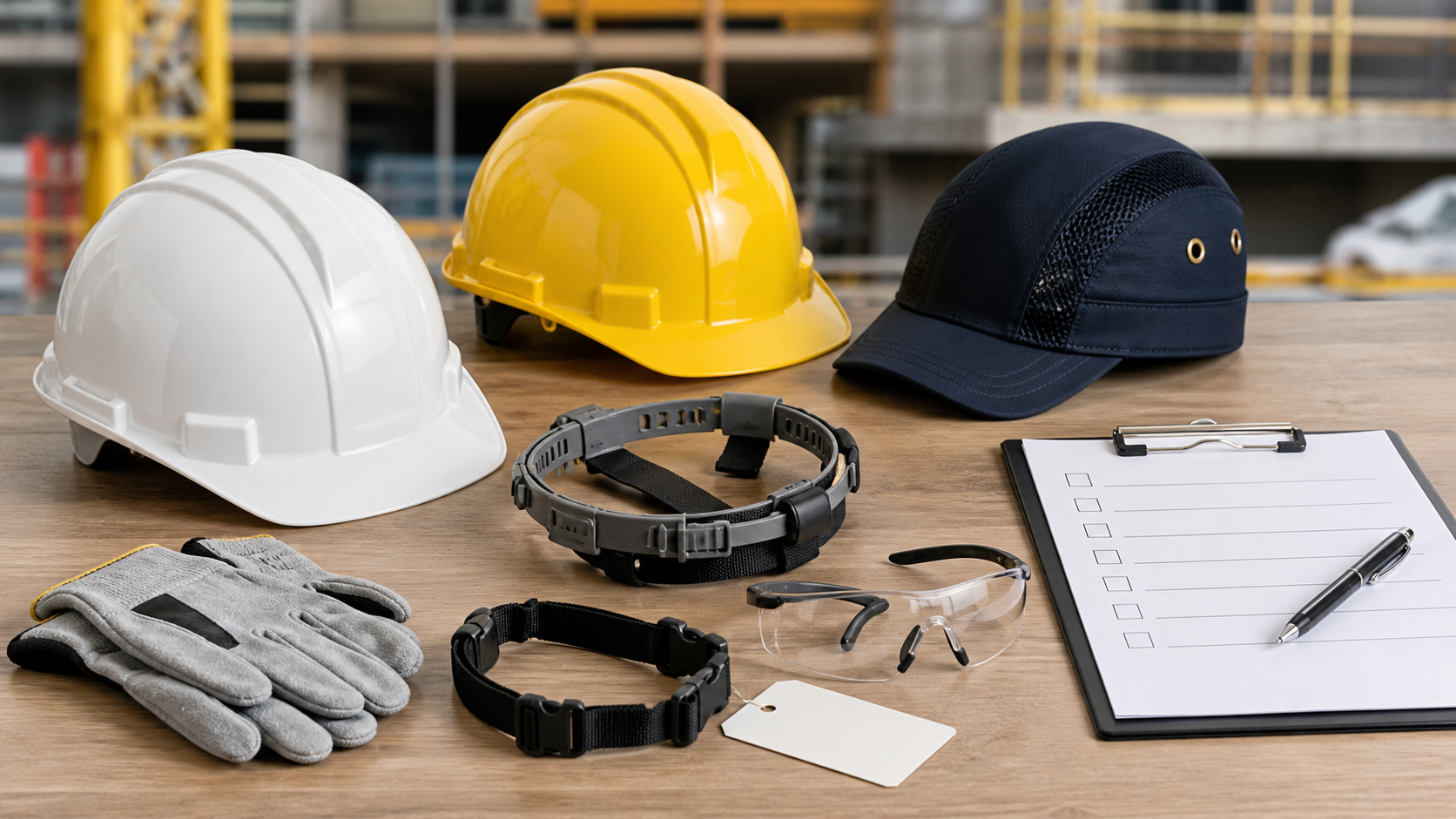
A hard hat is designed for recognized head protection needs such as falling or flying objects and certain electrical hazards when properly selected. A bump cap is for minor bumps against fixed objects and is not a substitute for a hard hat where head protection is required.
Use the workplace hazard assessment to decide what protection is needed. Construction, maintenance, warehousing, utilities, and overhead work often require hard hats rather than bump caps.
Good Storage Habits
- Store helmets away from direct sunlight, excessive heat, and chemicals.
- Do not drill holes or make unauthorized modifications.
- Replace damaged suspensions instead of mixing random parts.
- Keep spare hard hats available for visitors and replacement needs.
- Document inspection or replacement when your site policy requires it.
Common Mistakes to Avoid
Do not put a hard hat back into service after a major impact just because the damage is hard to see. Do not ignore suspension condition; the shell and suspension work together. Do not use stickers, paint, or accessories if they hide damage or conflict with manufacturer instructions.
FAQ
How often should hard hats be inspected?
Inspect before use and during routine PPE checks. High-exposure environments may need more frequent documented inspections.
Do hard hats expire?
Manufacturers provide service life and replacement guidance. Replace sooner if condition, impact, sunlight, chemicals, or heat exposure raises concern.
Can a bump cap replace a hard hat?
No. Bump caps are not a substitute where protective helmets are required for impact, falling objects, flying objects, or electrical hazards.
About Mick Chan
Mick Chan is a safety supply specialist who helps businesses choose practical PPE, facility safety, and emergency readiness products for real workplace conditions. His guidance focuses on simple, usable safety programs that are easier for teams to follow every day.
Final CTA
Support head protection programs with hard hats, bump caps, suspensions, chin straps, safety glasses, gloves, and jobsite PPE from eSafetySupplies.com.
Sources: OSHA 29 CFR 1910.135 Head Protection; OSHA 29 CFR 1926.100 Head Protection.