
Quick Answer
Workplace foot protection should match the hazards on the floor: impact, compression, puncture, electrical exposure, chemicals, wet surfaces, oils, temperature, and contamination control. OSHA requires protective footwear when employees are exposed to foot injury from falling or rolling objects, objects piercing the sole, or electrical hazards.
The best checklist looks at both the shoe and the surface. Safety boots help protect the worker, while slip control supplies, mats, signs, housekeeping, and spill response reduce the chance of the incident happening in the first place.
Foot Protection Checklist
| Hazard | Protection to consider | What to check |
|---|---|---|
| Falling or rolling objects | Safety toe footwear | Toe rating, condition, and fit. |
| Puncture hazards | Puncture-resistant soles or insoles | Nails, scrap metal, pallets, debris, and sole wear. |
| Wet or oily floors | Slip-resistant soles, overshoes, mats, and floor signs | Tread condition, floor contaminants, and drainage. |
| Chemical contact | Chemical-resistant boots or covers | Material compatibility and cleanup procedure. |
| Visitor or temporary work | Toe caps or temporary protective covers | Whether temporary protection is appropriate for the hazard. |
| Clean areas | Disposable shoe covers | Contamination control and slip risk from cover material. |
Safety Footwear vs Slip Prevention
Safety footwear is only one part of foot safety. A worker can wear good boots and still slip on oil, water, powder, plastic wrap, or loose debris. Combine footwear with housekeeping, spill kits, absorbents, traction mats, wet floor signs, and floor marking where needed.
Inspect footwear regularly. Worn tread, cracked uppers, separated soles, exposed toe caps, or poor fit can reduce protection and comfort.
Where Overshoes and Shoe Covers Fit
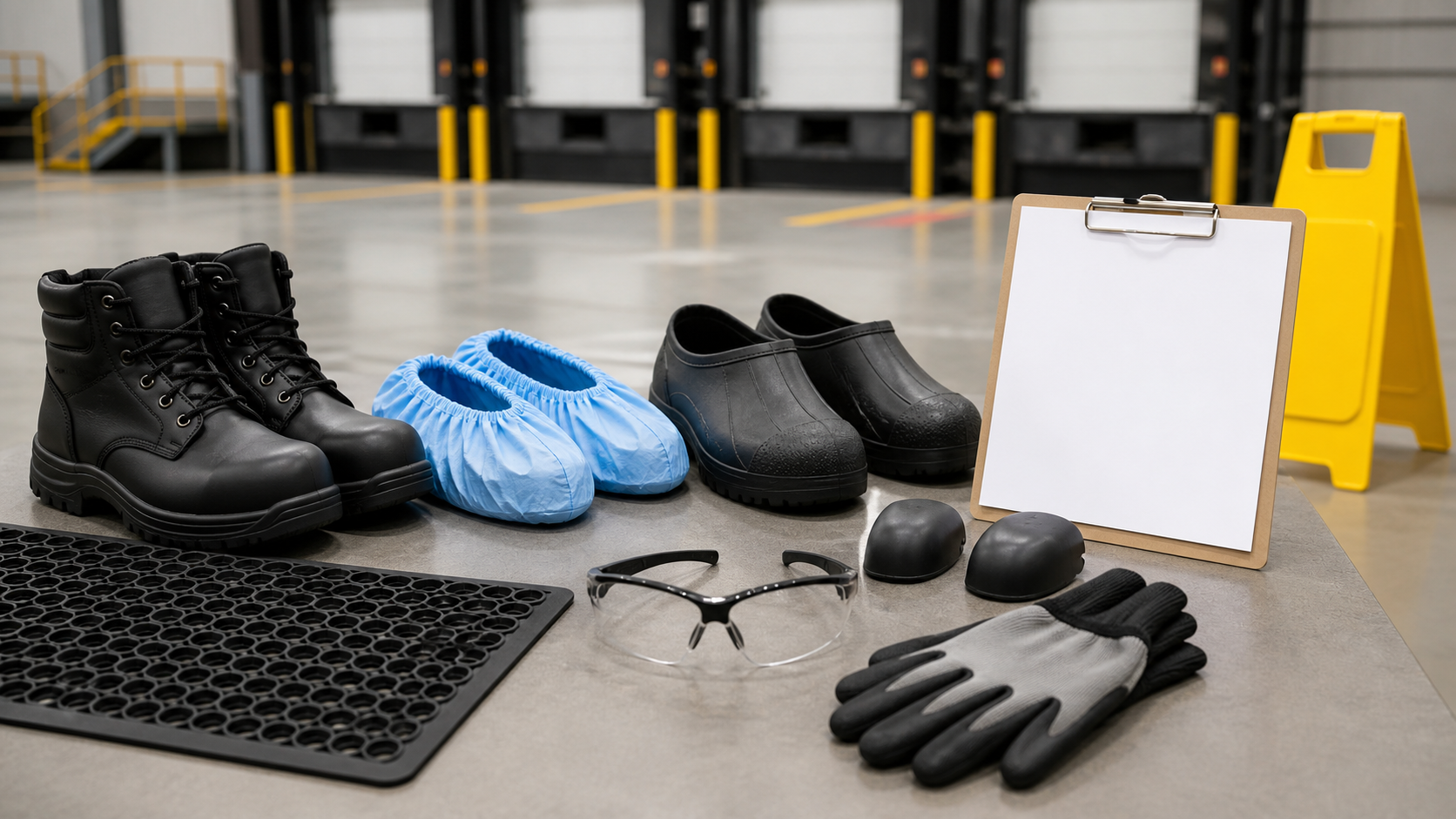
- Anti-slip overshoes can support visitors or workers moving through temporary wet or slick areas.
- Disposable shoe covers can help reduce contamination transfer in clean areas.
- Toe caps may help short-term visitors in controlled areas, but they are not a universal substitute for proper safety footwear.
- Chemical boots or covers should be matched to the material being handled.
- Floor mats and signs should be used where footwear alone does not control the hazard.
Common Mistakes to Avoid
Do not assume every black work boot is protective footwear. Do not ignore comfort and sizing, because workers are more likely to avoid PPE that hurts. Do not let worn soles stay in service. And do not rely on shoe covers in areas where they may create a slip hazard.
FAQ
When is protective footwear required?
It is required when the workplace exposes employees to foot injury from falling or rolling objects, sole puncture hazards, or electrical hazards.
Are slip-resistant shoes enough on wet floors?
Not by themselves. Use housekeeping, drainage, mats, spill response, and warning signs to control the walking surface too.
Can visitors use temporary toe caps?
They may be useful in some controlled visitor areas, but the hazard assessment should decide whether temporary protection is enough.
About Mick Chan
Mick Chan is a safety supply specialist who helps businesses choose practical PPE, facility safety, and emergency readiness products for real workplace conditions. His guidance focuses on simple, usable safety programs that are easier for teams to follow every day.
Final CTA
Support safer walking and working surfaces with safety footwear supplies, shoe covers, overshoes, traction mats, floor signs, gloves, and PPE from eSafetySupplies.com.
Sources: OSHA 29 CFR 1910.136 Foot Protection; OSHA 29 CFR 1910.22 Walking-Working Surfaces.