Quick Answer
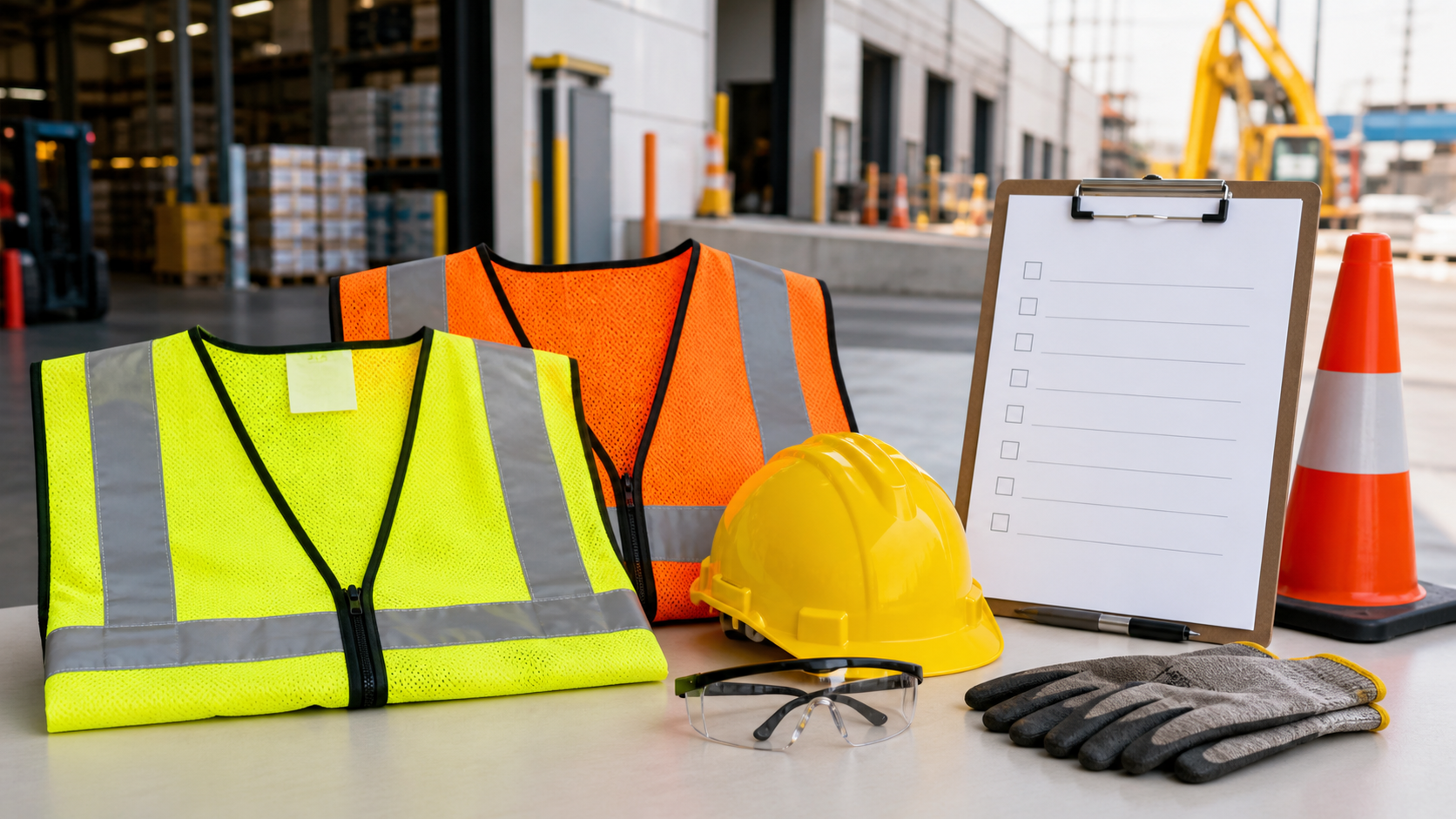
High-visibility safety vests help workers stand out around vehicles, forklifts, mobile equipment, loading docks, parking lots, and roadway work zones. The right vest depends on the work environment, background colors, lighting, vehicle speed, weather, task movement, and whether the job requires a specific class of high-visibility safety apparel.
For roadway and construction settings, visibility should be treated as part of the traffic control plan, not just a clothing choice. In warehouses and yards, vests help forklift operators and pedestrians see each other earlier, especially near intersections, dock doors, and staging areas.
High-Visibility Vest Selection Checklist
| Decision point | What to check | Why it matters |
|---|---|---|
| Work environment | Roadway, warehouse, yard, construction, utility, or visitor use. | Different settings need different visibility levels and durability. |
| Color | Lime/yellow-green or orange-red based on background contrast. | The vest should stand out from equipment, walls, cones, vegetation, and traffic. |
| Reflective material | Placement, width, condition, and nighttime visibility. | Retroreflective striping helps workers be seen in low-light conditions. |
| Fit and closure | Correct size, breakaway needs, zipper or hook-and-loop closure. | A poor fit can catch, shift, or cover reflective material. |
| Task needs | Pockets, ID holder, radio clip, cooling mesh, or weather layer. | Workers are more likely to wear PPE that supports the job. |
| Condition | Fading, dirt, tears, missing closures, and worn striping. | A dirty or damaged vest can lose visibility value. |
Where High-Visibility Vests Matter Most
- Loading docks and forklift aisles.
- Parking lots, delivery lanes, and outdoor yards.
- Roadway work and temporary traffic control zones.
- Construction sites with mobile equipment.
- Visitor routes where people may be unfamiliar with site hazards.
Inspection and Replacement
Inspect vests regularly for fading, dirt, torn fabric, broken closures, and damaged reflective striping. Replace vests that no longer provide strong contrast or reflectivity. Laundering can help, but a vest that is permanently stained, faded, or torn should be removed from service.
Keep extra sizes available. If workers layer jackets or sweatshirts underneath, the vest should still close properly and remain visible from front, back, and sides.
Common Mistakes to Avoid
Do not assume any bright vest is adequate for every job. Background contrast matters. Orange may stand out in one area and blend with cones or equipment in another. Lime can be effective in many settings, but not if it blends into the surrounding environment. Also avoid letting workers cover reflective striping with backpacks, tools, or outerwear.
FAQ
What color safety vest is best?
The best color depends on the background and the task. Choose the color that provides the strongest contrast where the worker will actually be seen.
When should safety vests be replaced?
Replace them when they are faded, torn, permanently dirty, missing closures, or no longer visibly reflective.
Do warehouse workers need high-visibility vests?
Many warehouses use them around forklifts, loading docks, and shared pedestrian-equipment areas. The need should come from the site's hazard assessment.
About Mick Chan
Mick Chan is a safety supply specialist who helps businesses choose practical PPE, facility safety, and emergency readiness products for real workplace conditions. His guidance focuses on simple, usable safety programs that are easier for teams to follow every day.
Final CTA
Improve worker visibility with high-visibility vests, hard hats, traffic cones, safety glasses, gloves, and worksite safety supplies from eSafetySupplies.com.
Sources: OSHA 29 CFR 1926.201 Signaling; FHWA Manual on Uniform Traffic Control Devices.