
Quick Answer
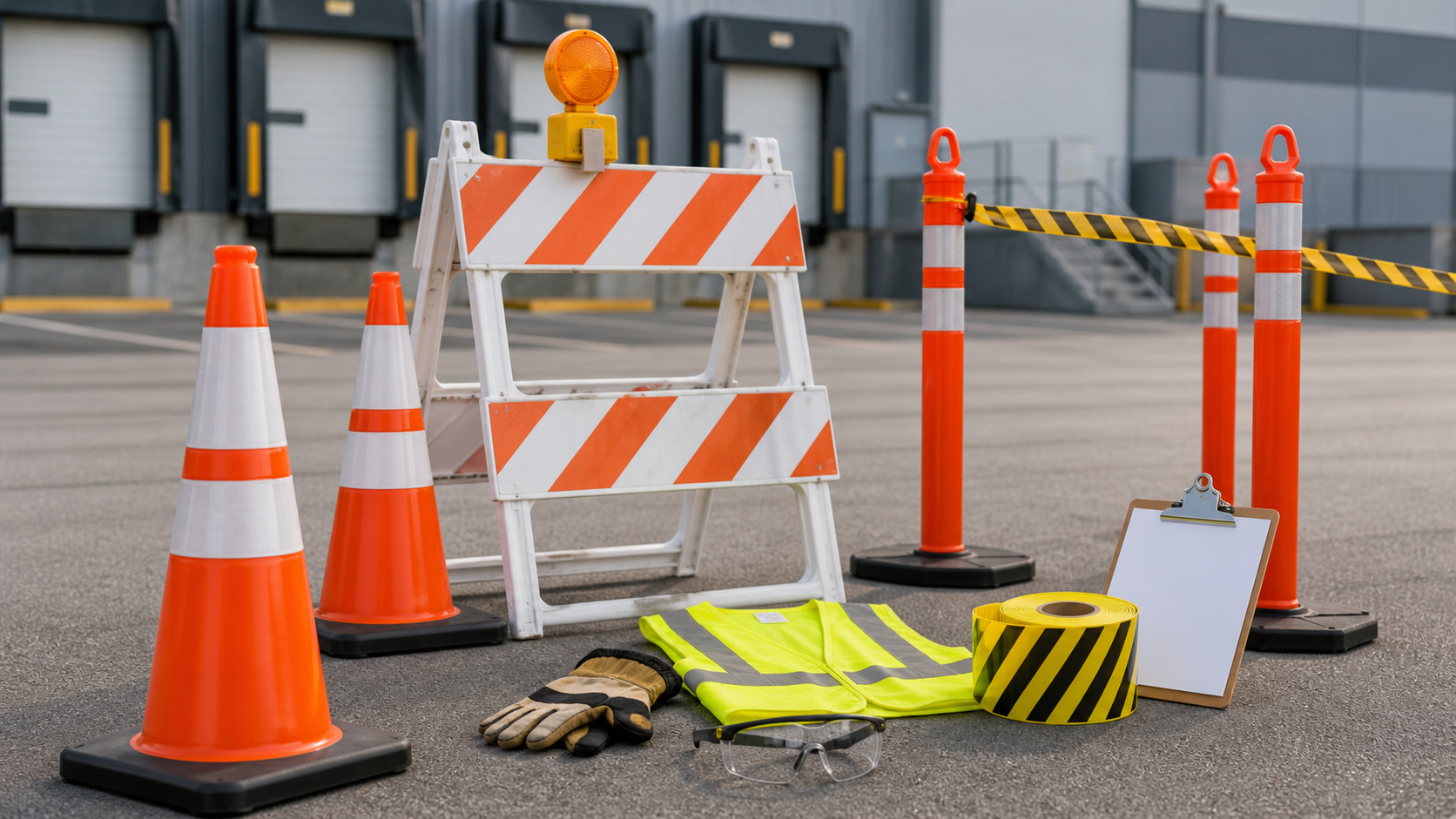
Traffic cones, barricades, delineators, and warning devices help separate people, vehicles, and hazards in temporary work areas. They are useful for loading docks, parking lots, maintenance zones, construction sites, utility work, spill response, and pedestrian detours. The right setup depends on traffic speed, work duration, visibility, pedestrian exposure, vehicle path, and whether public roadway rules apply.
For roadway work, temporary traffic control should follow the applicable traffic control plan and the Manual on Uniform Traffic Control Devices. For private facilities, the same practical goal still applies: give drivers and pedestrians clear, early, consistent direction.
Traffic Control Supplies Checklist
| Supply | Use | Inspection tip |
|---|---|---|
| Traffic cones | Channelizing vehicles, marking temporary hazards, and guiding pedestrians. | Check height, base stability, reflective collars, cracks, and fading. |
| Barricades | Blocking access, creating work zone boundaries, and warning of closures. | Replace damaged panels, missing reflective material, or unstable legs. |
| Delineator posts | Creating longer visual paths or separating lanes and pedestrian routes. | Inspect bases, reflective bands, and alignment. |
| Caution tape | Short-term visual warning around low-risk restricted areas. | Do not use tape as a physical barrier where impact protection is needed. |
| Warning lights | Improving visibility at night or in low-light conditions. | Check batteries, mounting, and lens condition. |
| High-visibility PPE | Making workers easier to see while setting up or working near traffic. | Check reflective striping, color contrast, and fit. |
Planning the Setup
- Start warnings far enough ahead that drivers and pedestrians can react safely.
- Use consistent paths so people do not have to guess where to walk or drive.
- Separate pedestrians from vehicles where practical.
- Keep cones and barricades upright, visible, and free from dirt or damage.
- Review the setup after weather, shift changes, deliveries, or layout changes.
Where Facilities Commonly Need Cones and Barricades
Private facilities often use traffic control supplies around dock doors, temporary repairs, potholes, wet floors near entrances, forklift crossings, outdoor storage areas, parking lot work, and emergency response scenes. The layout should be simple. If a driver or visitor cannot understand the route quickly, the setup needs improvement.
Common Mistakes to Avoid
Do not rely on one cone to protect a work area from moving vehicles. Do not leave faded cones or cracked barricades in service. Do not create a pedestrian route that directs people into forklift traffic. And do not let temporary setups stay in place so long that workers stop noticing them.
FAQ
Are traffic cones enough for every temporary hazard?
No. Cones are useful visual devices, but some hazards need barricades, signs, physical separation, lighting, flaggers, or a formal traffic control plan.
When should cones have reflective collars?
Reflective collars improve visibility in low-light and nighttime conditions. Roadway requirements depend on the applicable traffic control rules and work zone plan.
How often should cones and barricades be inspected?
Inspect before setup, during longer work periods, after weather or impacts, and before storage. Remove damaged or badly faded devices.
About Mick Chan
Mick Chan is a safety supply specialist who helps businesses choose practical PPE, facility safety, and emergency readiness products for real workplace conditions. His guidance focuses on simple, usable safety programs that are easier for teams to follow every day.
Final CTA
Build clearer work zones with traffic cones, barricades, delineators, caution tape, high-visibility vests, gloves, safety glasses, and facility safety supplies from eSafetySupplies.com.
Sources: OSHA 29 CFR 1926.200 Accident Prevention Signs and Tags; FHWA Manual on Uniform Traffic Control Devices.