
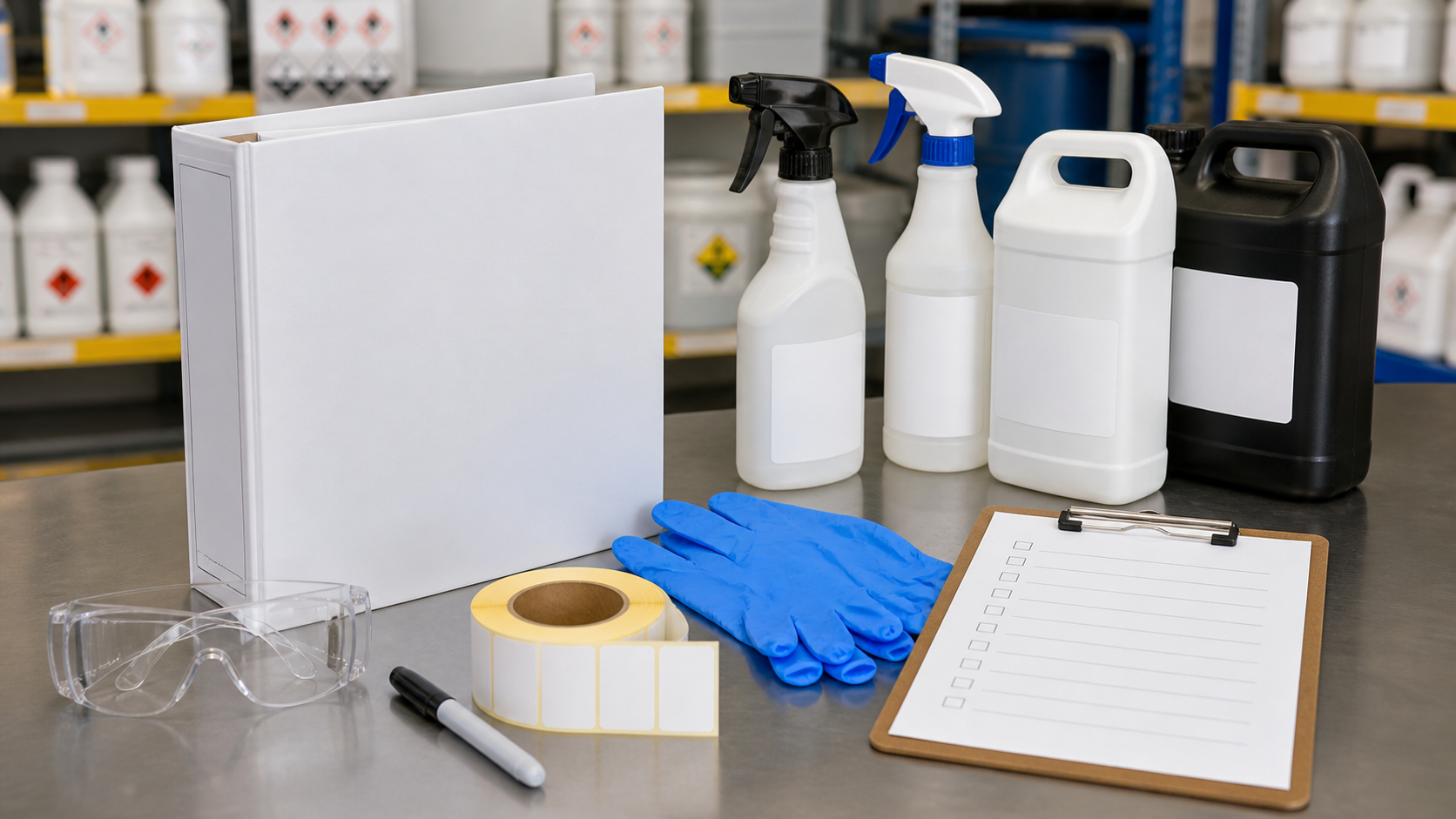
Quick Answer
An SDS binder and chemical label system helps workers quickly identify chemical hazards, find safety data sheets, choose PPE, and respond correctly during spills or exposures. OSHA's Hazard Communication Standard requires chemical hazard information to be communicated through labels, safety data sheets, and employee training.
The goal is practical access. If workers transfer chemicals into secondary bottles, work across multiple shifts, or store chemicals in several rooms, labels and SDS organization must stay current and easy to use.
SDS Binder and Label Checklist
| Item | What to check | Why it matters |
|---|---|---|
| SDS binder or station | Current SDS documents are accessible to workers. | Employees need hazard, PPE, first aid, and spill information quickly. |
| Chemical inventory | Products in storage match SDS records. | Outdated inventories create gaps during emergencies. |
| Primary labels | Manufacturer labels are intact and readable. | Workers must know product identity and hazards. |
| Secondary labels | Transferred containers are labeled according to site procedure. | Unmarked bottles are a recurring chemical safety problem. |
| PPE references | Gloves, goggles, face shields, and respirators align with SDS guidance. | PPE should match the actual chemical exposure. |
| Training records | Workers know how to read labels and find SDS information. | The system fails if employees do not know how to use it. |
Where to Place SDS Information
- Near chemical storage rooms, maintenance shops, labs, and janitorial closets.
- In shared digital systems when workers have reliable access during the shift.
- On mobile carts or vehicles when crews use chemicals away from the main facility.
- Near spill response supplies, eyewash areas, and PPE stations.
Common Mistakes to Avoid
Do not let the SDS binder become a forgotten archive. Review it when new chemicals arrive, old products leave, or suppliers change formulations. Do not leave spray bottles, squeeze bottles, or small transfer containers blank. If a worker cannot identify the contents quickly, the label system is not doing its job.
FAQ
Do SDS documents need to be printed?
Not always. Electronic access may be acceptable if employees can reliably access the information when needed. Many facilities still keep binders as a practical backup.
What should be on a secondary container label?
Follow your hazard communication program and applicable label requirements. At minimum, workers should be able to identify the chemical and understand the hazard.
How often should SDS binders be reviewed?
Review them whenever chemicals are added or removed and during routine safety audits.
About Mick Chan
Mick Chan is a safety supply specialist who helps businesses choose practical PPE, facility safety, and emergency readiness products for real workplace conditions. His guidance focuses on simple, usable safety programs that are easier for teams to follow every day.
Final CTA
Organize hazard communication with SDS binders, chemical labels, label rolls, gloves, goggles, spill supplies, and PPE from eSafetySupplies.com.