
Quick Answer
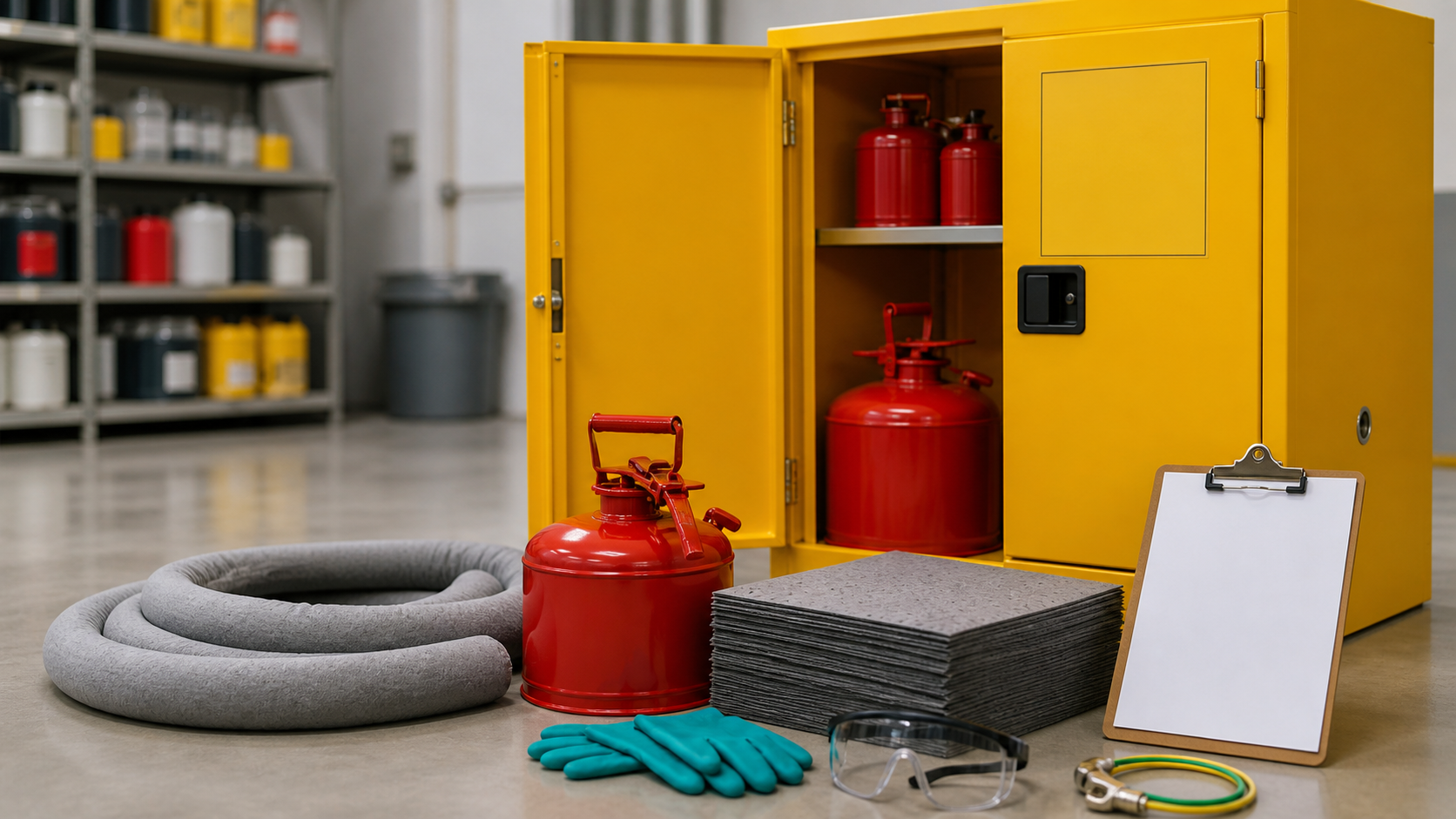
Flammable liquid storage needs the right containers, clear labeling, controlled quantities, spill readiness, and clean housekeeping. Safety cabinets and approved safety cans help reduce fire risk, but they work only when employees use them consistently and keep incompatible materials, ignition sources, and clutter under control.
OSHA's flammable liquids requirements address container types, storage practices, and fire-risk controls. Your exact setup should also account for local fire code, insurer requirements, and the specific liquids used onsite.
Flammable Storage Checklist
| Area | What to inspect | Why it matters |
|---|---|---|
| Storage cabinet | Doors close, shelves are stable, labels are visible, and cabinet is not overloaded. | Cabinets help organize and isolate flammable liquids. |
| Safety cans | Cans are compatible, closed, in good condition, and clearly identified. | Damaged or open containers increase spill and vapor risk. |
| Labels | Product and hazard labels are readable. | Workers need quick identification during use or emergency response. |
| Spill supplies | Absorbents, socks, disposal bags, gloves, and goggles are nearby. | Small spills need fast containment by trained workers. |
| Ignition control | Storage is away from heat, sparks, and prohibited ignition sources. | Flammable vapors can ignite under the wrong conditions. |
| Housekeeping | No trash, cardboard, blocked access, or unlabeled containers around the cabinet. | Clutter makes fire and spill response harder. |
Safety Cans and Transfer Areas
Use safety cans and transfer equipment matched to the liquid and task. Keep containers closed when not in use and train workers on filling, dispensing, and cleanup procedures. Where static electricity is a concern, follow site procedures for bonding and grounding.
Common Mistakes to Avoid
Do not use a cabinet as general storage for unrelated items. Do not place unlabeled bottles in the cabinet. Do not keep spill supplies so far away that workers must leave the area to start containment. And do not assume a cabinet fixes poor handling practices during daily use.
FAQ
Do all flammable liquids need a storage cabinet?
Requirements depend on quantity, liquid classification, container type, location, and applicable rules. Use OSHA, fire code, and site policy to determine cabinet needs.
Can regular plastic containers be used for flammable liquids?
Only use containers appropriate for the liquid and allowed by the applicable requirements. Many facilities use approved safety cans for daily handling.
What should be kept near flammable liquid storage?
Keep compatible spill supplies, PPE, labels, and inspection records accessible, while avoiding clutter around the cabinet.
About Mick Chan
Mick Chan is a safety supply specialist who helps businesses choose practical PPE, facility safety, and emergency readiness products for real workplace conditions. His guidance focuses on simple, usable safety programs that are easier for teams to follow every day.
Final CTA
Support flammable liquid safety with storage cabinets, safety cans, chemical labels, absorbents, spill socks, gloves, goggles, and safety supplies from eSafetySupplies.com.
Sources: OSHA 29 CFR 1910.106 Flammable Liquids; OSHA 29 CFR 1910.1200 Hazard Communication.