
Quick Answer
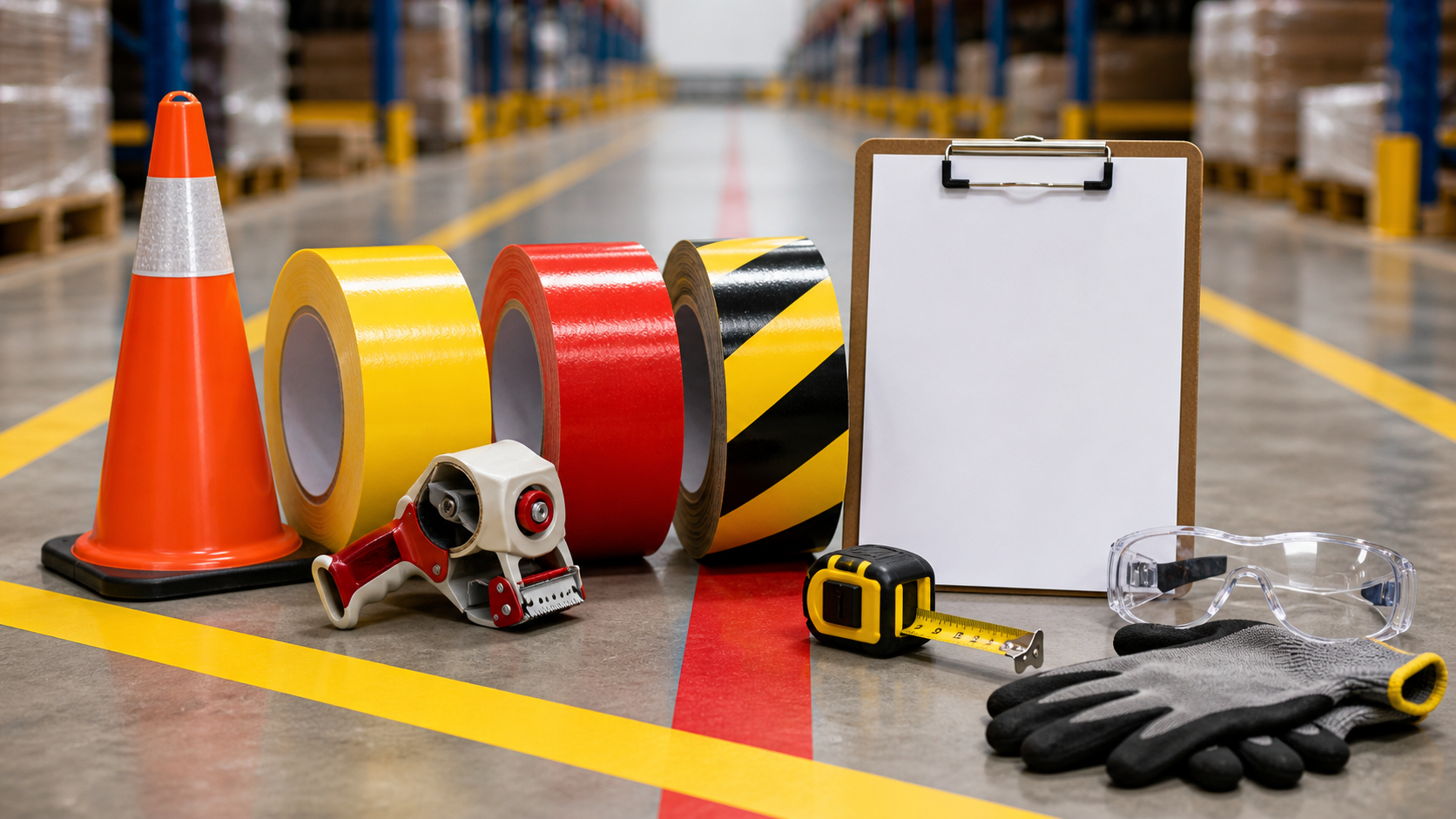
Warehouse floor marking tape helps workers, forklift operators, visitors, and supervisors understand where to walk, drive, stage, store, and avoid hazards. It is most useful when markings are simple, consistent, visible, and maintained as the layout changes.
OSHA requires walking-working surfaces to be kept clean, orderly, sanitary, and free of hazards. OSHA also requires permanent aisles and passageways where mechanical handling equipment is used to be appropriately marked. Floor marking tape can support these requirements when it is planned and maintained correctly.
Floor Marking Checklist
| Marking area | What to define | Why it matters |
|---|---|---|
| Pedestrian paths | Walkways, crossings, and safe routes around equipment. | Separates people from forklifts and moving loads. |
| Forklift aisles | Travel lanes, corners, intersections, and restricted zones. | Creates predictable movement through the warehouse. |
| Storage areas | Pallet positions, staging lanes, returns, and quarantine zones. | Reduces blocked exits, aisles, and equipment access. |
| Hazards | Drop-offs, electrical panels, fire equipment, eyewash stations, and spill kits. | Keeps critical access points visible and clear. |
| Color system | Meaning of each tape color and pattern. | Consistency prevents confusion between departments. |
| Maintenance | Worn tape, dirty surfaces, peeling edges, and layout changes. | Damaged markings stop guiding behavior. |
How to Build a Practical Color System
Keep the color system limited and documented. For example, one color can mark pedestrian paths, another can define storage, and striped tape can identify caution zones. Too many colors create interpretation problems, especially for temporary workers and visitors.
Post the color legend at entrances, training areas, and supervisor stations. Use the same scheme across buildings whenever possible.
Installation Tips
- Clean and dry the floor before applying tape.
- Use cones or temporary barriers while installing new markings.
- Measure lanes and paths before applying tape.
- Replace worn tape before it disappears under forklift traffic.
- Review markings after rack moves, process changes, or new equipment installs.
FAQ
Is floor marking tape better than paint?
Tape is faster to install and easier to change. Paint can be more durable in some settings. Choose based on traffic, surface condition, downtime, and layout stability.
What areas should be marked first?
Start with pedestrian paths, forklift intersections, fire equipment access, exits, electrical panels, and high-risk staging areas.
How often should floor markings be inspected?
Inspect during routine housekeeping or safety walks and after layout changes.
About Mick Chan
Mick Chan is a safety supply specialist who helps businesses choose practical PPE, facility safety, and emergency readiness products for real workplace conditions. His guidance focuses on simple, usable safety programs that are easier for teams to follow every day.
Final CTA
Improve warehouse organization with floor marking tape, hazard tape, cones, signs, gloves, safety glasses, and facility safety supplies from eSafetySupplies.com.
Sources: OSHA 29 CFR 1910.22 Walking-Working Surfaces; OSHA 29 CFR 1910.176 Handling Materials.