
Quick Answer
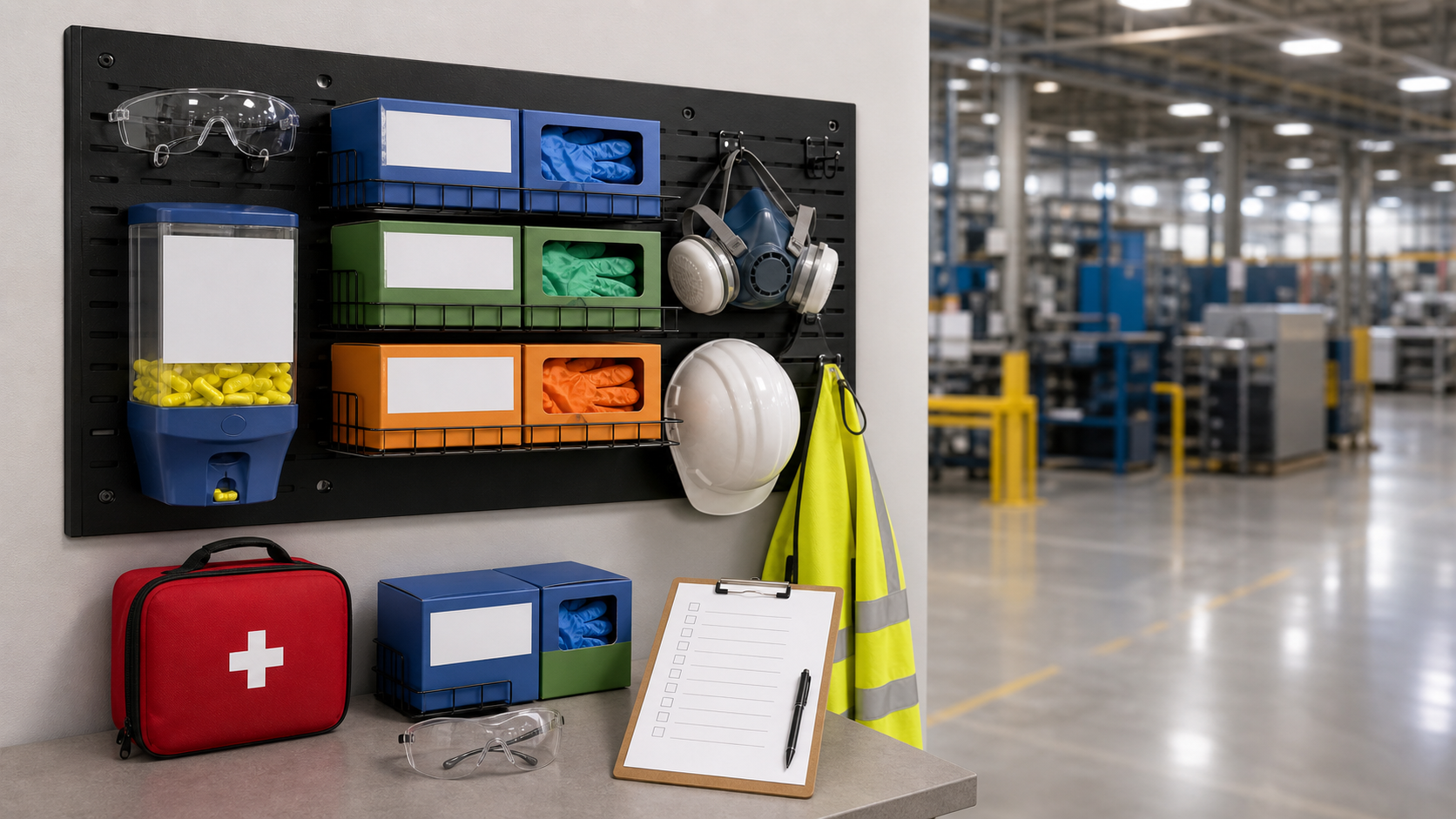
A workplace PPE station keeps essential protective equipment visible, organized, and ready to use. The best stations are placed near the work, stocked by hazard, checked on a schedule, and assigned to a clear owner. OSHA's general PPE rules require employers to assess workplace hazards and select appropriate PPE where needed.
A PPE station does not replace training or hazard controls. It supports the program by making the right equipment easier to find, use, inspect, and restock.
PPE Station Checklist
| Supply area | What to stock | Restock trigger |
|---|---|---|
| Hand protection | Task-specific gloves in common sizes. | Low box count, wrong sizes missing, damaged packaging. |
| Eye protection | Safety glasses, goggles, face shields, and lens wipes. | Scratched eyewear, missing goggles, empty wipe container. |
| Hearing protection | Earplugs, earmuffs, or dispensers. | Dispenser below minimum level or earmuffs damaged. |
| Respiratory protection | Respirators, filters, storage bags, and cleaning supplies where applicable. | Expired filters, missing sizes, or improper storage. |
| Head and visibility | Hard hats, bump caps, high-visibility vests, and visitor PPE. | Cracked helmets, dirty vests, or missing visitor sizes. |
| Emergency support | First aid kit, spill supplies, eyewash bottles, and signs where needed. | Used or expired supplies. |
Where to Put PPE Stations
- Near entrances to production floors, warehouses, labs, and maintenance shops.
- Beside task areas where PPE is required before work starts.
- At visitor check-in points when visitors enter controlled work areas.
- Near loading docks, battery charging rooms, chemical storage, and tool cribs.
- In mobile carts for field crews or temporary work zones.
Inspection Routine
Assign an owner for each station. Check supply levels, sizes, expiration dates, damaged items, cleanliness, and labeling. Use a reorder point instead of waiting until a box is empty. For multi-shift facilities, inspect high-use stations more often than office-area stations.
Keep the station layout simple. Workers should be able to find the right item quickly without sorting through unrelated supplies.
Common Mistakes to Avoid
Do not stock PPE that does not match the hazard. Do not place the station far away from the work area. Do not forget sizes; a glove or respirator that does not fit properly is not a reliable control. Do not let the station become a general storage shelf.
FAQ
What should every PPE station include?
It depends on the hazard assessment. Many stations include gloves, safety glasses, hearing protection, hard hats, high-visibility vests, and first aid or spill response supplies.
How often should PPE stations be inspected?
Inspect based on use. High-traffic stations may need daily or weekly checks; lower-use areas may be checked monthly.
Who should own PPE restocking?
Assign one accountable owner per station or area, with backup coverage for weekends, nights, and absences.
About Mick Chan
Mick Chan is a safety supply specialist who helps businesses choose practical PPE, facility safety, and emergency readiness products for real workplace conditions. His guidance focuses on simple, usable safety programs that are easier for teams to follow every day.
Final CTA
Build a cleaner PPE program with gloves, safety glasses, earplugs, respirators, hard hats, high-visibility vests, first aid supplies, and PPE station essentials from eSafetySupplies.com.