Quick Answer
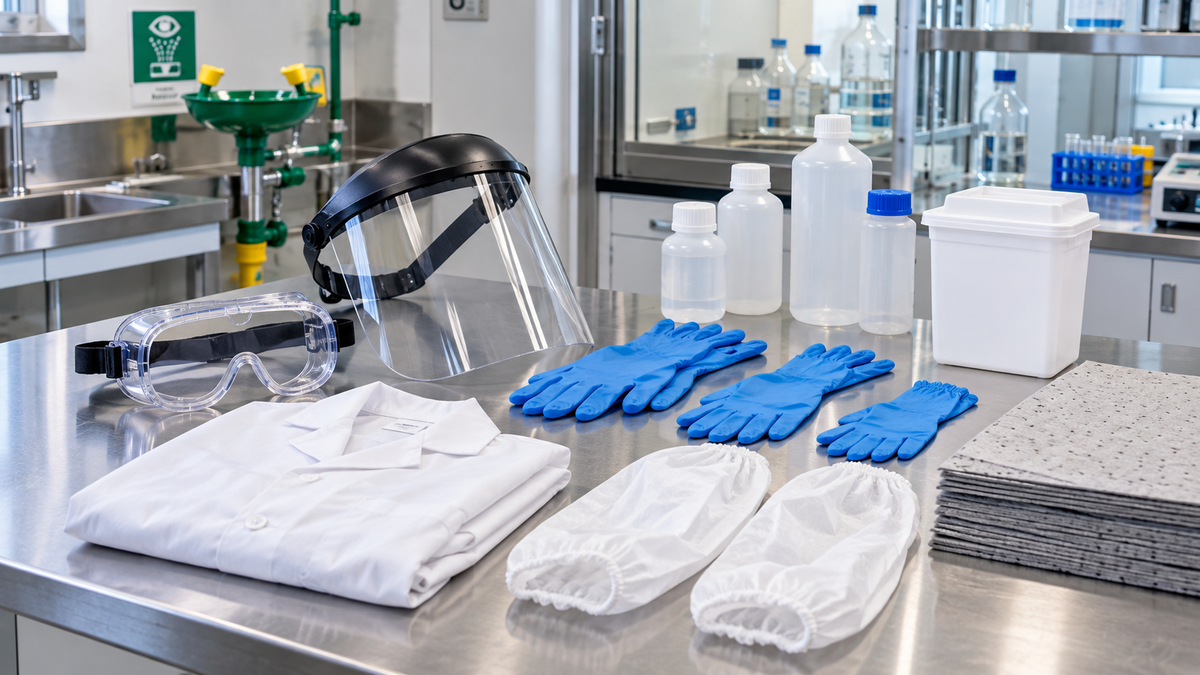
A complete lab safety equipment checklist starts with the lab's actual chemical, biological, physical, and procedural hazards. At minimum, many laboratories need task-selected eye and face protection, compatible gloves, protective clothing, closed-toe footwear rules, accessible emergency washing equipment where corrosives are present, spill supplies, first-aid and fire-response resources, labels, safety data sheets, and safe waste containers. Respirators require a separate, compliant program when they are necessary; they are not a default substitute for ventilation.
Who This Checklist Is For
This checklist is for chemical, testing, quality-control, educational, research, and light industrial laboratories. Clinical, biological, radiological, high-containment, cleanroom, and hazardous-drug settings may have additional requirements beyond this general guide.
Use it as a purchasing and inspection framework, not as a universal compliance list. Your Chemical Hygiene Plan, hazard assessment, safety data sheets, standard operating procedures, institutional biosafety requirements, fire code, state plan, and manufacturer instructions control the final selection.
Start With a Lab-Specific Hazard Assessment
OSHA's laboratory standard requires covered employers to develop a Chemical Hygiene Plan and provide information and training about chemical hazards. It also calls for additional protections where particularly hazardous substances are used.
Before filling a supply cabinet, document:
- Chemicals, concentrations, quantities, and physical forms used.
- Splash, aerosol, vapor, dust, thermal, pressure, glass, sharps, electrical, and mechanical hazards.
- Routine procedures, maintenance, transfers, scale-ups, and foreseeable emergencies.
- Existing engineering controls such as fume hoods, local exhaust, enclosures, and shields.
- Who enters the space, including students, visitors, custodial staff, and contractors.
- Required PPE, emergency equipment, inspection frequency, training, and ownership.
NIOSH places PPE last in the hierarchy of controls, after elimination, substitution, engineering controls, and administrative controls. A well-stocked PPE cabinet is useful, but it does not replace safer chemistry, containment, ventilation, or sound procedures.
Lab Safety Equipment Checklist
| Area | Typical equipment or supply | Selection questions |
|---|---|---|
| Eye protection | Safety glasses, chemical splash goggles, face shield | Splash, impact, vapor, optical radiation, prescription eyewear, compatibility |
| Hand protection | Disposable or reusable chemical gloves, thermal or cut protection where needed | Exact chemical, concentration, contact time, glove compatibility, dexterity, size |
| Body protection | Lab coat, chemical apron, sleeve covers, disposable apparel | Splash direction, chemical compatibility, flame hazard, contamination-control needs |
| Respiratory protection | Hazard-selected, NIOSH-approved respirator only when required | Exposure assessment, engineering controls, cartridge/filter, medical evaluation, fit testing |
| Emergency washing | Eyewash and safety shower where corrosive exposure may occur | Hazard location, unobstructed access, activation, inspection and maintenance |
| Spill response | Compatible absorbents, neutralization supplies where approved, disposal bags, tools, barricade signs | Chemical class, spill size, responder training, waste plan, PPE |
| Fire and first aid | Appropriate extinguishers, alarm access, first-aid supplies | Facility plan, local code, trained responders, inspection schedule |
| Communication | Labels, SDS access, emergency contacts, door and area signs | Legibility, current information, language needs, after-hours access |
| Waste and transport | Compatible waste containers, secondary containment, bottle carriers | Chemical compatibility, closure, labeling, segregation, pickup procedure |
1. Eye and Face Protection
OSHA 1910.133 requires appropriate eye or face protection for hazards including flying particles, molten metal, liquid chemicals, acids, caustics, chemical gases or vapors, and injurious light radiation.
Safety glasses with side protection may suit some impact hazards, but they do not seal like chemical splash goggles. A face shield can add face coverage for splash or impact, yet it is commonly used over primary eye protection rather than as a replacement. Match the device to the procedure and verify that goggles, shields, prescription eyewear, and any respirator can be worn together.
Compare safety goggles and protective eyewear by hazard, fit, lens treatment, and compatibility. Keep clean replacements available for scratched, chemically attacked, or damaged units.
2. Hand Protection
No disposable glove material protects against every laboratory chemical. Select gloves using the SDS and manufacturer chemical-resistance data for the exact substance, concentration, temperature, and contact duration. Distinguish incidental splash from extended contact or immersion.
Stock enough sizes to preserve dexterity. Include a process for glove changes, safe removal, disposal, and hand washing. Keep task-specific gloves separate when the lab also handles hot vessels, cryogenic materials, broken glass, sharps, or abrasive equipment; a chemical glove rating does not establish thermal or cut protection.
Use nitrile gloves or broader disposable gloves only after confirming the product matches the task. For heavier chemical work, compare chemical-resistant gloves with documented compatibility data.
3. Lab Coats, Aprons, and Disposable Apparel
Choose protective clothing for the likely route of exposure. A standard lab coat can help with limited contamination and minor splash, but specialized chemical, flame-resistant, cleanroom, or disposable garments may be needed for other hazards.
Check closure, cuff, length, material, laundering, and disposal requirements. Do not let contaminated lab coats travel into offices, break rooms, or homes. For contamination-control tasks, review disposable apparel and disposable shoe covers, then confirm that each product is appropriate for the substance and environment.
4. Respiratory Protection and Ventilation
Respirators should not be purchased as a casual backup for an uncontrolled airborne hazard. OSHA 1910.134 prioritizes prevention of atmospheric contamination through engineering controls where feasible. When respirators are required, employers need a written program that addresses hazard evaluation, selection, medical evaluation, fit testing for tight-fitting facepieces, training, maintenance, and program evaluation.
Do not select a cartridge by color or familiarity. Identify the contaminant, concentration, physical form, oxygen condition, task duration, and certification limitations first. Browse respiratory protection only after the program administrator has defined the correct equipment.
5. Emergency Eyewash and Safety Shower Readiness
OSHA 1910.151(c) requires suitable facilities for quick drenching or flushing of the eyes and body where workers may be exposed to injurious corrosive materials. Placement and performance should be determined through the applicable standard, facility design, and hazard assessment.
Emergency equipment must be reachable and usable, not hidden behind stored boxes or locked doors. Assign responsibility for inspection and maintenance. Workers should know the route and activation method before an exposure occurs; an emergency is the wrong moment to read instructions for the first time.
6. Spill Control Supplies
Build spill capability around the chemicals and quantities on site. A generic absorbent may not be suitable for every acid, base, solvent, oxidizer, mercury-containing device, reactive material, or biological agent.
Define which spills trained lab staff may handle and which require evacuation and an emergency response team. Place appropriate spill control kits where they can be reached without crossing the release. Include compatible absorbents, collection tools, waste containers, labels, and task-selected PPE. Never improvise neutralization unless the written procedure authorizes it.
7. Labels, SDS Access, Waste, and Secondary Containment
Lab safety depends on clear information. Maintain current chemical labels, secondary-container labels, accessible safety data sheets, emergency contacts, and written procedures. Make sure after-hours personnel can find the same information.
Use compatible, closable waste containers and segregate incompatible waste streams. Secondary containment can reduce the consequence of bottle failure during storage or movement. Bottle carriers, trays, and carts should fit the container and route without creating a tipping hazard.
8. Inspection and Reorder System
A checklist only works when someone owns it. Assign each item an inspection frequency, minimum stock level, reorder point, and responsible role. Track sizes and actual consumption instead of ordering one glove or garment size for everyone.
During inspections, look for expired or depleted first-aid supplies, damaged eyewear, degraded gloves, blocked emergency equipment, missing spill components, unreadable labels, full waste containers, and out-of-date contact information. Record corrective actions rather than treating the inspection as a box-checking exercise.
Common Lab Safety Equipment Gaps
- Stocking PPE before documenting the hazards and procedures.
- Treating safety glasses and splash goggles as interchangeable.
- Buying one disposable glove for every chemical.
- Using a face shield without primary eye protection where both are needed.
- Purchasing respirators without an exposure assessment and respiratory program.
- Blocking access to eyewash, shower, extinguishers, or exits.
- Keeping a spill kit that does not match the chemicals on site.
- Ignoring visitor, maintenance, and custodial exposure.
- Letting labels, SDS files, emergency contacts, or waste procedures go stale.
Key Takeaways
- Build the lab safety equipment list from a documented, procedure-specific hazard assessment.
- Use engineering controls and safer processes before relying on PPE alone.
- Select goggles, gloves, clothing, and respirators for the exact hazard and exposure route.
- Keep emergency washing and spill equipment accessible, compatible, inspected, and familiar to workers.
- Assign ownership for inventory, inspections, replacement, training, and corrective action.
FAQ
What safety equipment should every laboratory have?
There is no universal list for every laboratory. Common needs include hazard-selected eye protection, gloves, protective clothing, emergency communication, spill supplies, first-aid resources, and suitable emergency washing where corrosive exposure may occur, but the final list must follow the lab's hazards and procedures.
Are safety glasses enough for chemical work?
Not for every task. Chemical splash goggles may be more appropriate where liquids can reach the eyes, and some procedures also require a face shield over primary eye protection.
Which gloves are best for a laboratory?
The best glove depends on the exact chemical, concentration, contact type, temperature, and task. Use the SDS and manufacturer compatibility data instead of assuming nitrile, latex, or another material is universal.
Does a lab need an eyewash station?
Where workers may be exposed to injurious corrosive materials, OSHA requires suitable facilities for quick drenching or flushing of the eyes and body. A site assessment should determine the equipment, location, and maintenance program.
Can a lab keep respirators for emergency use?
Respirator selection and use must be part of a planned program when required, including hazard evaluation, medical evaluation, fit testing where applicable, training, and maintenance. An unassigned respirator on a shelf is not a complete emergency plan.
How often should lab safety equipment be inspected?
Use the applicable regulation, consensus standard, manufacturer instructions, Chemical Hygiene Plan, and facility procedure for each item. Document who inspects it, what they check, and how deficiencies are corrected.
About Mick Chan
Mick Chan contributes safety supply guidance for eSafetySupplies content, with a focus on practical PPE selection, workplace readiness, and helping teams connect safety requirements to the right supplies. His review perspective is included to keep recommendations grounded in real purchasing and jobsite use.
Final CTA
Walk the lab procedure by procedure, then build a reorder sheet by hazard, size, location, and owner. Compare safety goggles, laboratory glove options, disposable apparel, and spill control kits only after the hazard assessment defines what each item must do.