
Quick Answer
Drivers gloves are flexible, usually leather work gloves with a close-fitting, all-around hand design. They are often useful for material handling, equipment operation, general maintenance, and driving when the job calls for abrasion protection and a dependable grip. They are not automatically cut-resistant, chemical-resistant, electrically protective, or safe near rotating machinery. Choose the leather, lining, cuff, and size for the actual task, then verify any claimed protective rating on the specific product.
What Makes a Drivers Glove Different?
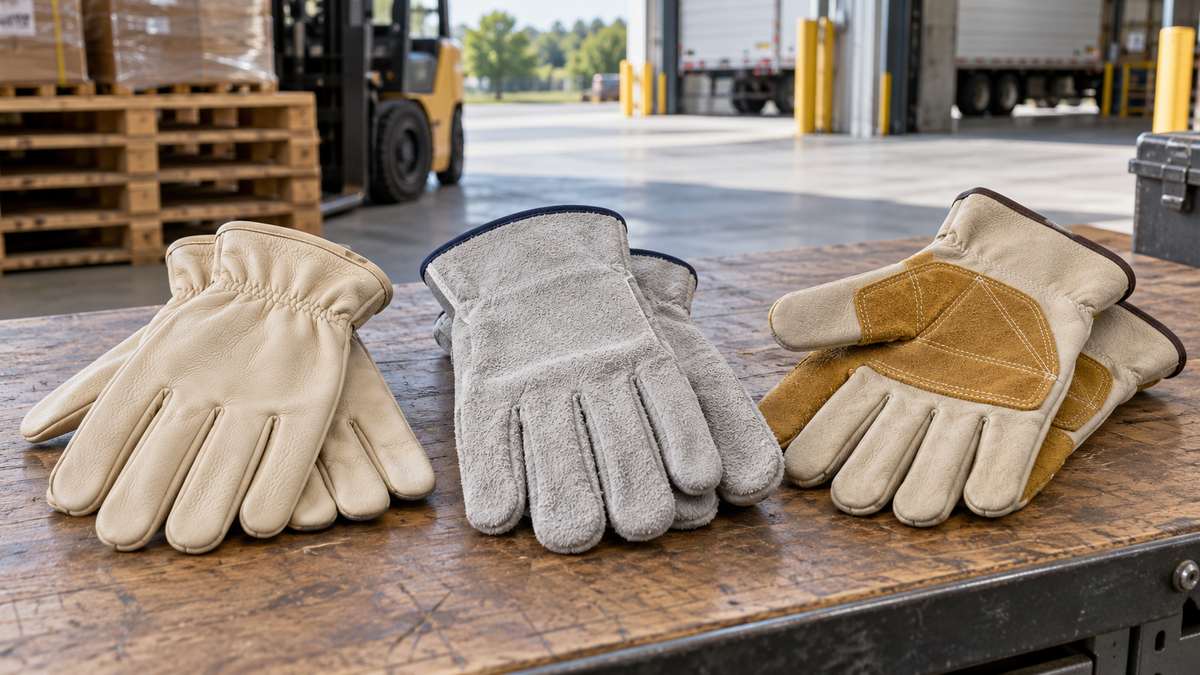
The name can be misleading. Drivers gloves are not only for steering wheels. The familiar pattern uses leather around the palm and fingers, with a flexible shape that generally allows more hand movement than a stiff leather-palm work glove. Some models are unlined for feel; others add insulation for cold work or a reinforced palm for wear.
That general description is a shopping category, not a performance standard. Two gloves called "drivers" can differ considerably in leather, seams, fit, and protection. The right comparison starts with the material a worker touches and the equipment they control.
OSHA requires task-based hand protection selection. Its guidance also cautions that no glove protects against every hazard. A comfortable leather glove can be a good everyday choice for one job and a poor choice for another.
Choose by Task, Not by a Familiar Name
| Task | Drivers glove may suit it when... | Check or choose something else when... |
|---|---|---|
| Dry material handling | Leather and seams tolerate the expected abrasion | Sharp edges need documented cut or puncture performance |
| Equipment operation | Fit allows reliable control of levers and switches | Glove bulk interferes with controls or creates snag risk |
| Light maintenance | Grip and dexterity suit hand tools | Chemicals, heat, electrical energy, or rotating parts change the hazard |
| Outdoor cold work | Lining and cuff protect against the weather | Wet conditions overwhelm the glove or insulation reduces feel |
| Loading and unloading | Palm durability suits cartons, straps, and rough surfaces | Pinch and crush hazards need process controls, not just gloves |
Try the glove with the actual handle, strap, fastener, or carton. Product photos rarely show whether a seam lands exactly where a worker grips all day.
Grain Leather, Split Leather, and Other Choices
Many buyers use leather type as a quick quality signal. It helps, but it does not tell the whole story. Grain leather keeps the outer surface of the hide and is often selected for flexibility and a smoother feel. Split leather comes from a lower layer and often has a rougher texture. Thickness, tanning, pattern, stitching, and finish also affect how a glove performs. These properties vary by product; do not infer a particular rating from the leather name alone.
Look at the palm and fingertips first. Those are high-wear contact areas for many handling jobs. Check seams in the finger crotch, the thumb attachment, and the wrist opening. A glove that feels supple but tears at a seam in a week is not a bargain. Conversely, a heavily reinforced model may cost hand control on detail work.
For wet handling, test grip after the leather is damp. Leather can change feel and shape with moisture, and ordinary leather is not a substitute for a glove specifically selected for persistent wet work. For chemicals, consult the SDS and a manufacturer chemical-resistance chart. OSHA's dermal exposure guidance lists chemical type, concentration, contact duration, grip, and dexterity among the factors that matter. Leather appearance cannot answer those questions.
Fit Is a Protection Feature
A drivers glove should let a worker make a fist and grip a tool without fighting the material. Finger tips should not have enough loose fabric to fold under a button or latch. The cuff should stay where intended when the worker reaches or lifts.
Ask a small group to try at least two adjacent sizes. People with the same palm width may need different finger lengths. A glove that fits one crew member beautifully may pinch another between the thumb and index finger. Record which size each worker chooses instead of estimating from a single sample.
The work trial is simple: pick up the usual tool, operate the normal controls, lift the actual material, and remove and replace the glove. If workers routinely take it off for the small but frequent steps, the glove is not serving the whole task. A second approved glove for detail work may be more honest than a one-glove policy.
Lined Versus Unlined Drivers Gloves
Unlined leather drivers gloves generally offer better feel and lower bulk for mild conditions. Lined versions can make sense in cold storage, early-morning loading, or outdoor material handling. Compare the lining's insulation with the task's dexterity demand. A lining that pulls out whenever the glove is removed can slow a crew and lead to improper use.
For cold and wet work, consider whether a general leather drivers glove is enough. NIOSH notes that insulating PPE helps when it stays dry, but overly tight gloves can reduce circulation. Browse cold-weather drivers gloves alongside broader cold-weather work gloves, then test a few options rather than assuming all insulated models perform alike.
Hazards a Drivers Glove Does Not Solve by Itself
Do not use a general leather drivers glove as a stand-in for a documented cut-resistant glove when workers handle sharp sheet edges or glass. Do not assume it is a chemical glove because it covers the whole hand. It is not electrical insulating PPE, and the presence of leather does not establish heat protection for welding or hot metal. Those tasks need their own hazard assessment and product documentation.
Most importantly, gloves can create entanglement risk around exposed rotating parts. OSHA's machine safeguarding guidance specifically warns that a protective glove can be caught between rotating parts. A maintenance task at a stopped, locked-out machine is not the same as operating a lathe or drill press. Follow the machine-specific procedure and control the machine hazard first.
For impact or high-abrasion work, compare the features of mechanics gloves or impact gloves against the task. The category name is not the rating; verify the specific product's performance data.
How to Buy for a Crew
- List the top two or three tasks and the surfaces workers touch.
- Identify cuts, punctures, chemicals, temperature, electricity, impact, and rotating-equipment hazards separately.
- Choose a few candidates from drivers gloves or leather gloves.
- Run a short fit and grip trial in every common crew size.
- Track seam wear, palm wear, comfort, glove removal, and replacement frequency.
- Document when the task requires a different glove altogether.
The best buying decision is not the thickest leather or the lowest case price. It is a glove people can use consistently, with protection documented for the hazards that matter.
FAQ
What are drivers gloves used for?
They are commonly used for general handling, equipment operation, and work where flexible leather, grip, and abrasion protection are useful. The exact suitability depends on the product and task.
Are leather drivers gloves cut-resistant?
Not automatically. Leather may offer some physical barrier, but a cut-resistance claim should be supported by product-specific test data. Select a rated glove when the hazard assessment calls for one.
Are drivers gloves good for winter?
Insulated versions can help, provided they fit, remain dry enough for the work, and preserve grip and control. Unlined models may not provide enough warmth for prolonged cold exposure.
Can I use drivers gloves with chemicals?
Do not assume so. Chemical suitability depends on the substance, concentration, contact type, and glove material. Use the SDS and manufacturer compatibility information.
How should drivers gloves fit?
They should allow a full grip and normal control of tools without tight pressure points or loose fingertips that catch on controls. Trial sizes with the real task before standardizing.
About Mick Chan
Mick Chan contributes safety supply guidance for eSafetySupplies content, with a focus on practical PPE selection, workplace readiness, and helping teams connect safety requirements to the right supplies. His review perspective is included to keep recommendations grounded in real purchasing and jobsite use.
Final CTA
Start with the work that wears gloves out fastest. Compare drivers gloves, leather work gloves, and cold-weather drivers gloves, then run a small field trial before ordering the full size range.