
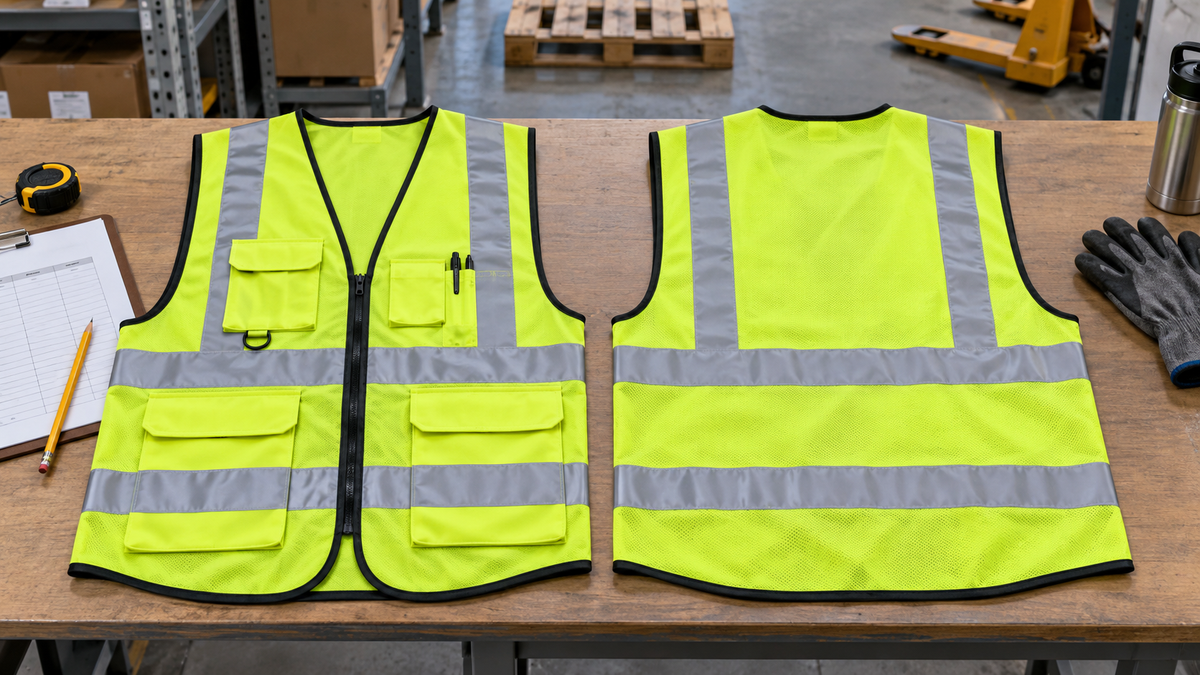
Quick Answer
Choose a safety vest with pockets by deciding the visibility type and performance class your work requires, then checking pocket layout, fit over work clothes, and how carried items affect movement. Pockets do not determine ANSI/ISEA classification, and a loaded vest should not cover or distort its visible material. Test a sample with the actual tools and layers before outfitting a crew.
Who This Guide Is For
This guide is for workers and buyers who need a vest that holds small everyday items without making the wearer harder to see. It is educational; confirm site rules, applicable standards, employer hazard assessments, and product labeling for the job.
Visibility Comes Before Storage
It is easy to choose a vest by pocket count. A surveyor may want a notebook, marker, radio, and measuring tool within reach. A warehouse lead may need only a pen and scanner. Those are different loads, and neither tells you which visibility garment the hazard assessment requires.
ANSI/ISEA 107-2020 classifies high-visibility apparel by type and performance class, with requirements for background and retroreflective material. The class comes from the garment's design and certification information, not the number of pockets or the word “surveyor” in a listing. For work near traffic or moving equipment, confirm the required type/class with the site safety plan and verify the actual product label. Our Class 2 vs. Class 3 guide explains the distinction in more detail.
Check the work's lighting and background, too. Fluorescent material helps daytime contrast; retroreflective material returns light toward a source in low-light conditions. A vest may need to be worn over rainwear or cold-weather clothing; when the layers change, the fit and visible area can change with them. In wet or cold conditions, high-visibility outerwear may be a better starting point than squeezing a vest over a bulky coat.
Put the Pocket Map on Paper
List what the worker actually carries for one normal shift. Measure or handle those objects before shopping. A vest with many pockets can still be awkward if the radio sits under a seat belt, a pencil pocket is too deep for gloved hands, or a heavy tool swings against the worker while climbing.
| Item or use | Pocket feature to test | Possible problem |
|---|---|---|
| Pen, marker, small notebook | Accessible chest pocket or slot | Flap or zipper is hard to use with gloves. |
| Radio | Secure pocket/loop in a reachable position | Antenna, cord, or weight interferes with PPE. |
| Phone or small device | Closure and size with the actual device | Device falls out during bending or climbing. |
| Work order or folded paper | Flat pocket with adequate opening | Paper covers reflective trim or bulges across the torso. |
| Small tools | Weight distribution and secure closure | Vest sags or catches on equipment. |
Do not turn a visibility garment into an overloaded tool carrier. Heavy or sharp tools may belong in a purpose-built belt, pouch, or other approved storage system. The vest should stay in position when the worker reaches overhead, kneels, turns, and sits.
Choose a Vest for the Work Pattern
Frequent notes and checks. A person recording inspections may value front pockets that open with gloves and keep paper flat. Test whether a clipboard or radio strap covers retroreflective bands when worn.
Moving equipment or traffic. Start with the required visibility class, then select storage within compliant options. Compare the Class II safety vests and Class III safety vests collections, but verify each product's label and intended use.
Warehouse supervision. A lighter load may be more comfortable and easier to keep zipped. If workers use scanners or radio equipment, check the exact device, cord route, and closing method. A pocket that looks generous in a photo can be unusable with the issued hardware.
Outdoor survey and utility work. Gloves, weather layers, and repeated bending make closure, fit adjustment, and durability important. If the vest is worn over a jacket, assess the complete outfit rather than the vest alone.
Fit Is a Visibility Feature
A vest that hangs open, rides up, or bunches under a harness may not present its designed visible surface to approaching people. A too-tight vest can pull the front panels apart or make a worker leave it unfastened. Size against the largest normal work layer, then have the worker move through a representative task. Do not assume the same nominal size works across brands or body shapes.
For procurement, record a size range rather than ordering only the most common size. Check measurements from the specific product manufacturer. If the site requires fall protection, respiratory equipment, or a tool harness, examine how the vest interacts with it; do not cover inspection points or interfere with closures. Some tasks call for a different garment configuration entirely.
The load matters as much as the empty fit. Put the normal pocket contents in place and have the wearer walk, bend, climb the permitted route, sit in the vehicle, and reach for the equipment they use. Watch for bouncing tools, snagging loops, blocked reflective bands, and a front closure that drifts open. One short trial can prevent a full crew order that looks right only on a hanger.
Questions for the Product Page or Supplier
- What ANSI/ISEA 107 type and performance class does the actual garment label identify?
- How much background and retroreflective material is visible when worn as intended?
- Where are the pockets, and do the issued tools fit with closures shut?
- Are the size chart and layering allowance realistic for the crew?
- What care instructions apply, and what wear or damage requires replacement?
- Are there site restrictions on dangling loops, metal components, or pocket contents?
Use the broader safety vests collection to compare available designs. A product name is a starting point; the label, measurements, and field trial settle the choice.
Care and Replacement
Inspect the vest before use for torn seams, failed closures, missing trim, heavy dirt, fading, or damage that reduces visibility. Follow the manufacturer's washing and replacement instructions. Avoid inventing a universal wash-count or service-life rule: wear depends on fabric, work, laundering, and the product's instructions. Reorder enough sizes to replace damaged garments promptly and to fit new crew members.
Common Mistakes
- Choosing the vest with the most pockets before confirming visibility requirements.
- Assuming every “hi-vis” or “surveyor” vest is the same ANSI/ISEA class.
- Filling pockets until the garment sags or the closure opens.
- Letting a radio, strap, or paperwork obscure visible material.
- Ordering one size for a crew that wears different layers and gear.
- Ignoring cleaning and replacement when the material becomes dirty or damaged.
Key Takeaways
- Determine the required visibility type/class from the work first.
- Use a pocket inventory based on the actual items carried.
- Evaluate fit and visible material with the vest loaded and layered.
- Read the specific garment label, size chart, and care instructions.
FAQ
Do pockets change a safety vest's ANSI class?
Pocket count alone does not determine classification. Verify the garment's actual ANSI/ISEA 107 labeling and the type/class required for the task.
Is a surveyor vest always Class 2?
No. “Surveyor” describes a style with storage, not a universal rating. Check the particular garment label and product documentation.
Should a vest be sized over a winter coat?
If that is how it will be worn, yes, test the complete outfit. A different high-visibility jacket may be more practical for repeated cold-weather use.
What should go in vest pockets?
Small, regularly used items that fit securely without pulling the vest out of position or covering visible material. Move heavier or sharp tools to an appropriate dedicated carrier.
Final CTA
Browse safety vests by the visibility class your site requires, then shortlist pocket layouts using your team's real carry list. Trial the loaded vest before setting the crew's size and reorder quantities.
About Mick Chan: Mick Chan contributes safety supply guidance for eSafetySupplies content, with a focus on practical PPE selection, workplace readiness, and helping teams connect safety requirements to the right supplies. His review perspective is included to keep recommendations grounded in real purchasing and jobsite use.