
Quick Answer
Workplace first aid kits should be stocked and placed based on the number of employees, worksite hazards, injury history, travel distance to medical care, and whether employees work across multiple areas. OSHA requires employers to ensure medical personnel are readily available for advice and consultation, and when there is no nearby infirmary, clinic, hospital, or physician reasonably accessible, a person or persons must be adequately trained to render first aid.
For buying decisions, use OSHA requirements, the ANSI/ISEA Z308.1 workplace first aid kit standard, site hazards, and supervisor review. A small office kit is not enough for every warehouse, construction, fleet, or industrial setting.
First Aid Kit Planning At A Glance
| Workplace type | Kit planning focus | Placement note |
|---|---|---|
| Office | Minor cuts, burns, eye irritation, common supplies | Place near common work areas and break rooms. |
| Warehouse | Cuts, strains, eye exposure, forklift or dock areas | Place kits near packing, docks, and supervisor stations. |
| Construction | Cuts, impact, burns, eye exposure, remote access | Use portable kits and review by phase of work. |
| Manufacturing | Machine areas, chemicals, burns, eye and hand injuries | Place kits near high-risk departments and eyewash where needed. |
| Fleet or field work | Vehicle kits, remote work, weather and travel delays | Stock mobile kits and inspect after each use. |
OSHA And ANSI/ISEA Z308.1
OSHA’s medical services and first aid rule is performance-oriented. It does not provide one universal kit contents list for every workplace. ANSI/ISEA Z308.1 is the widely used workplace first aid kit standard that classifies kits and minimum supplies. Many employers use it as the practical purchasing baseline, then add items based on site hazards and medical advice.
The key point is that first aid kits should reflect actual work. A warehouse with cutting tools, loading docks, and powered equipment may need more supplies and more kit locations than a small office. A field crew may need portable kits because the worksite changes.
What To Stock
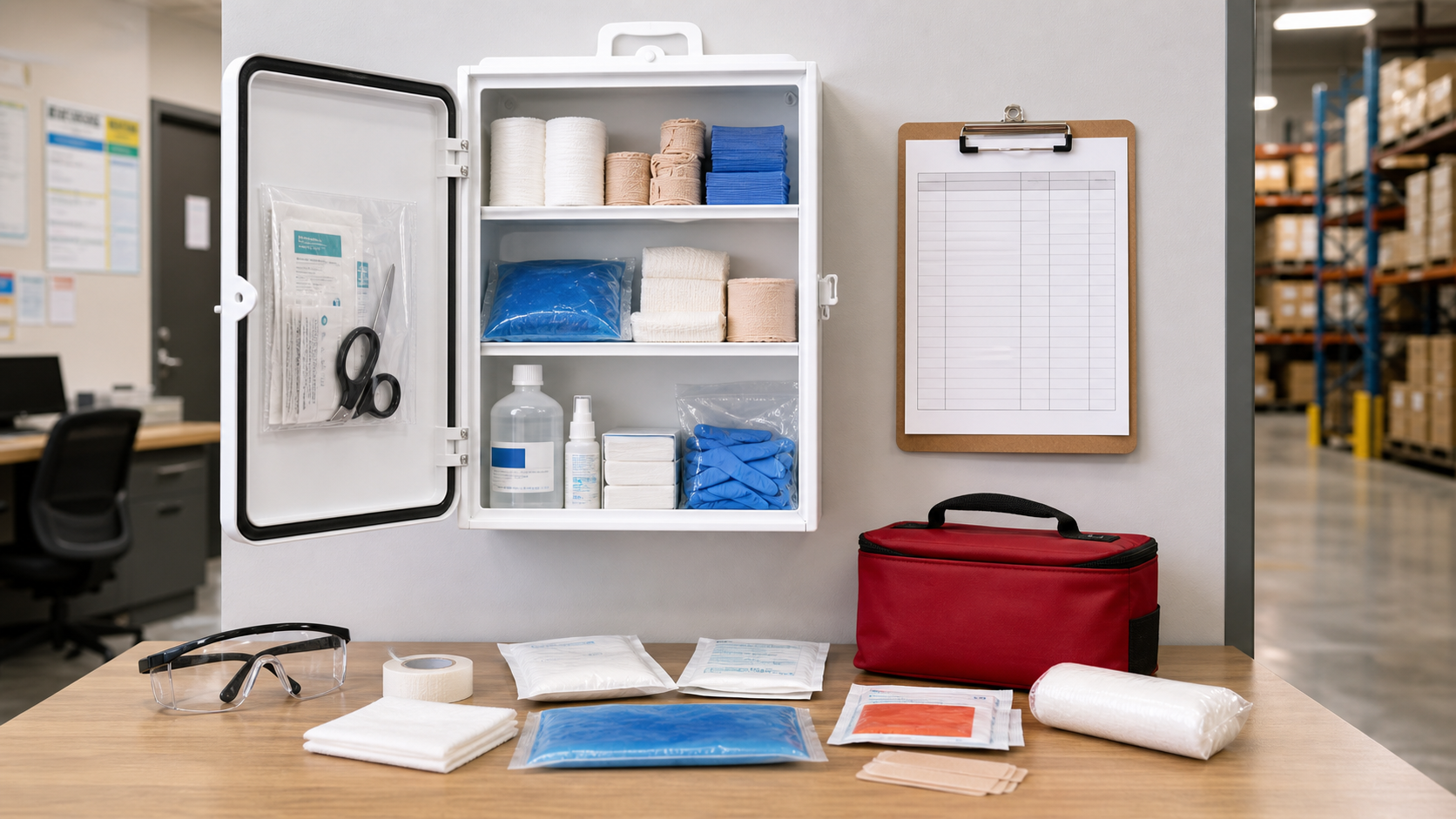
Common workplace kit supplies include adhesive bandages, gauze pads, roller bandages, medical tape, antiseptic wipes, burn dressings, cold packs, trauma pads, disposable gloves, scissors, tweezers, eye pads or eyewash supplies where appropriate, and a first aid guide. Higher-risk sites may need additional items based on the hazard assessment and medical direction.
Do not add medications, specialty items, or treatment supplies without reviewing workplace policy, applicable rules, and responsible medical guidance.
Where To Place First Aid Kits
Place kits where people can actually reach them quickly. Good locations include supervisor stations, break rooms, loading docks, production departments, maintenance shops, field vehicles, and areas with sharp tools or chemical exposure. Avoid locked offices or remote cabinets that delay access.
Use wall-mounted kits for fixed areas and portable kits for vehicles, mobile crews, construction phases, or temporary work zones. Mark kit locations clearly and keep access unobstructed.
Inspection Checklist
- Kit is visible, accessible, and not blocked.
- Supplies match the workplace hazard and employee count.
- Used items have been restocked.
- Expired, damaged, or contaminated supplies are replaced.
- Gloves and barriers are available for blood or body fluid exposure.
- Employees know where kits are located.
- First aid training coverage is reviewed where required.
- Remote or mobile crews have portable kits.
Common Mistakes To Avoid
Do not buy a kit once and ignore it. Kits are often discovered empty after the first real incident. Do not place the only kit in an office that is locked during part of the shift. Do not assume one small kit covers a large warehouse or multi-building site. Also avoid stocking supplies without assigning someone to inspect and restock them.
FAQ
What is required in a workplace first aid kit?
Requirements depend on the workplace. OSHA sets first aid access requirements, while ANSI/ISEA Z308.1 is commonly used to define kit classes and minimum supplies. Add site-specific supplies based on hazards.
How often should first aid kits be inspected?
Inspect kits regularly and after each use. Many workplaces inspect monthly, but higher-use areas may need more frequent checks.
Where should first aid kits be located?
Place kits close to the work, visible, accessible, and distributed across departments, docks, vehicles, or remote areas where delays could matter.
Mick Chan Bio
Mick Chan contributes practical safety supply guidance for eSafetySupplies.com, helping buyers compare PPE by hazard, task, compliance context, and day-to-day usability. His content is written to support safer purchasing decisions and should be paired with site-specific safety review.
Final CTA
Need workplace first aid kits, refill supplies, gloves, eyewash, or emergency response supplies? Compare first aid and safety supplies at eSafetySupplies.com, then match kit placement and contents to your workplace hazards.
Sources: OSHA 29 CFR 1910.151, OSHA Medical and First Aid, ANSI/ISEA Z308.1-2021.