
Quick Answer
A workplace first aid kit inspection checklist should verify that adequate first aid supplies are readily available, easy to access, matched to the workplace's expected injuries, not expired or depleted, and supported by PPE when blood or other potentially infectious materials could be present. OSHA requires adequate first aid supplies to be readily available when first aid services are needed under 29 CFR 1910.151.
The best checklist is practical: location, access, inventory, expiration dates, restocking, PPE, and whether the kit still matches the work being done.
Workplace First Aid Kit Inspection Checklist
| Area | What to Check | Useful Supplies |
|---|---|---|
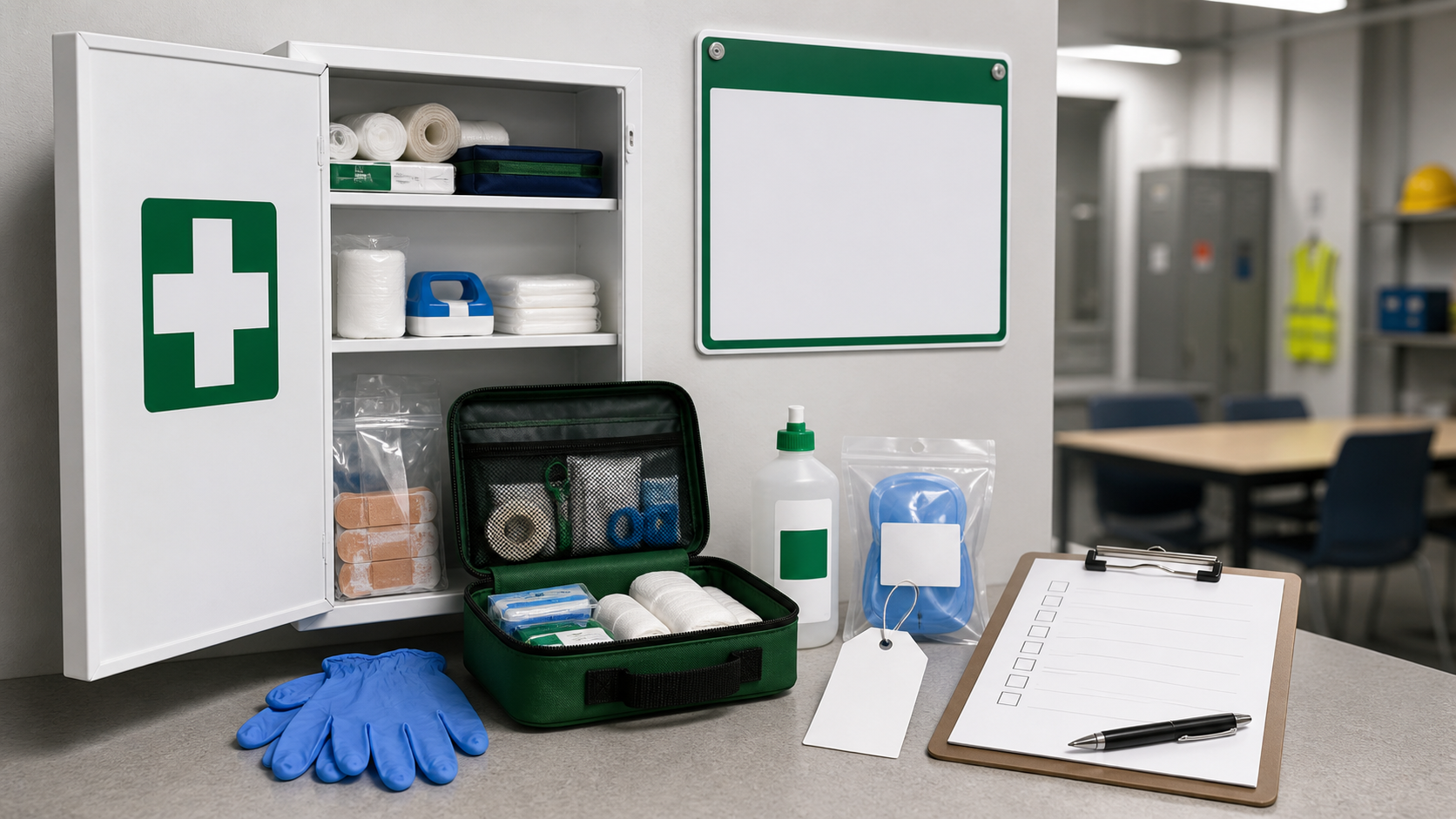
| Placement | First aid supplies are in an easily accessible location for the work area and not locked away from trained responders. | First aid signs, wall cabinets, directional labels |
| Inventory | Bandages, gauze, dressings, tape, antiseptic supplies, burn care, and other expected items are present. | First aid refills, cabinet organizers |
| Expiration and condition | Expired, damaged, contaminated, opened, or moisture-affected supplies are replaced. | Inspection tags, restock labels, resealable bags |
| Workplace fit | Supplies reflect likely injuries from warehouse, maintenance, chemical, outdoor, vehicle, or office work. | Specialty refills, burn supplies, eyewash bottles |
| PPE | Gloves, masks, eye protection, and other PPE are available where blood or bodily-fluid exposure is reasonably anticipated. | Nitrile gloves, face shields, masks, CPR barriers |
| Restocking | A responsible person, inspection frequency, and reorder process are documented. | Checklists, reorder tags, inventory sheets |
Common Mistakes to Avoid
- Buying one generic kit and never reassessing after work processes change.
- Keeping the cabinet locked when the trained first aid provider needs quick access.
- Letting frequently used items disappear while rarely used items make the kit look full.
- Ignoring PPE for blood or bodily-fluid exposure.
- Relying only on an old ANSI reference without checking the actual workplace injury profile.
FAQ
Does OSHA require first aid supplies?
OSHA requires adequate first aid supplies to be readily available under 29 CFR 1910.151(b), depending on the workplace's first aid arrangements and proximity to medical treatment.
Does OSHA specify one exact first aid kit list?
For general industry, OSHA does not provide one fixed list that fits every workplace. Appendix A to 1910.151 gives non-mandatory guidance and emphasizes assessing the specific needs of the worksite.
Should first aid kits include PPE?
Yes, where exposure to blood or other potentially infectious materials is reasonably anticipated. OSHA's first aid kit appendix points employers to bloodborne pathogens PPE requirements for that type of exposure.
About Mick Chan
Mick Chan is part of the eSafetySupplies safety content team, helping translate workplace safety requirements into practical checklists that purchasing teams, supervisors, and crews can use when selecting PPE, signs, labels, tags, and facility safety supplies.
Final CTA
Keep first aid stations ready with wall cabinets, first aid signs, inspection tags, refill supplies, nitrile gloves, CPR barriers, eye protection, eyewash bottles, and restock checklists. eSafetySupplies can help standardize first aid readiness across each work area.
Sources
- OSHA 29 CFR 1910.151, Medical services and first aid: https://www.osha.gov/laws-regs/regulations/standardnumber/1910/1910.151
- OSHA 1910.151 Appendix A, First aid kits: https://www.osha.gov/laws-regs/regulations/standardnumber/1910/1910.151AppA
- OSHA interpretation, first aid supplies specific to workplace needs: https://www.osha.gov/laws-regs/standardinterpretations/2007-02-02