
Quick Answer
A hazard communication checklist should verify that hazardous chemicals are identified, container labels are intact, secondary containers are labeled when required, safety data sheets are available during each work shift, employees know where to find chemical information, and the written HazCom program matches the chemicals actually used at the workplace.
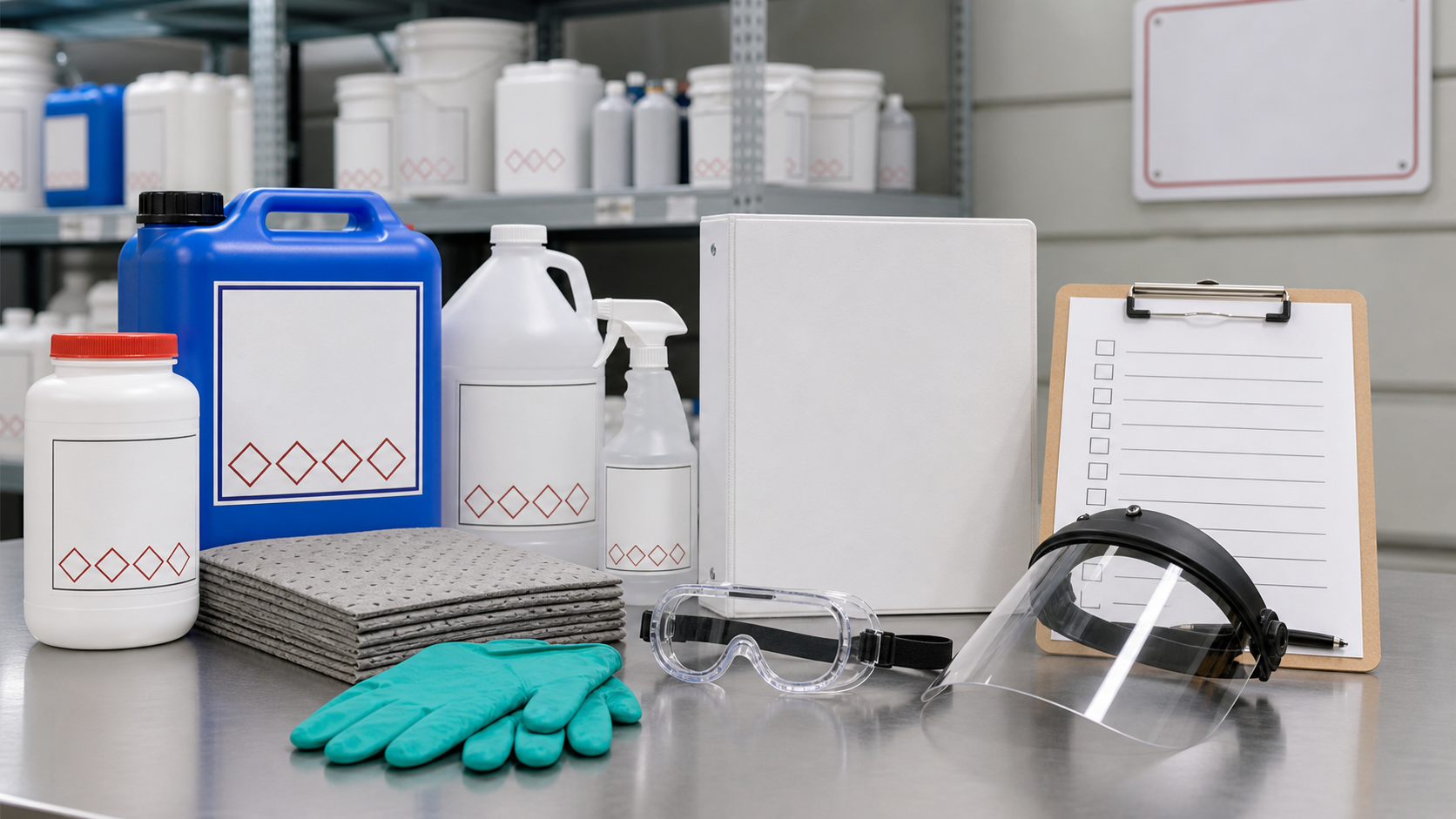
OSHA's Hazard Communication Standard is built around a practical information chain: labels, safety data sheets, and employee information and training. Supplies such as labels, signs, SDS binders, PPE, and spill materials help make that chain visible in the work area.
Hazard Communication Checklist
| Area | What to Check | Useful Supplies |
|---|---|---|
| Written program | Confirm the written HazCom program describes labels, SDS access, training, and the hazardous chemical list. | SDS binders, document holders, wall stations |
| Incoming containers | Labels on incoming containers are not removed or defaced. | Label protectors, storage signs |
| Secondary containers | Transferred chemicals are labeled unless the container is for immediate use by the employee who performed the transfer. | GHS-style labels, marker pens, spray bottle labels |
| SDS access | SDSs are readily accessible to employees in their work areas during each work shift. | SDS binders, wall racks, QR-code labels where approved |
| Stationary containers | Signs, placards, process sheets, or written materials identify containers and convey required hazard information where used. | Placards, wall signs, process labels |
| PPE and spill response | Task PPE and spill supplies align with the hazards listed on labels and SDSs. | Nitrile gloves, goggles, face shields, absorbents |
Common Mistakes to Avoid
- Letting spray bottles or transfer containers sit unlabeled after the immediate-use exception no longer applies.
- Keeping SDSs in an office employees cannot access during the shift.
- Using old labels that do not match the current chemical or concentration.
- Posting PPE signs that conflict with SDS recommendations or the hazard assessment.
- Failing to update the chemical inventory after a new cleaner, solvent, adhesive, or coating is introduced.
FAQ
What are the main parts of OSHA hazard communication?
OSHA's HazCom requirements include a written hazard communication program, container labels and other warnings, safety data sheets, and employee information and training.
Do secondary chemical containers need labels?
Generally yes, unless the chemical is transferred into a portable container for immediate use by the employee who performed the transfer. Workplaces should control this exception carefully.
Where should SDS binders be kept?
SDSs must be readily accessible to employees in their work area during each work shift. The best location depends on the facility layout and chemical-use areas.
About Mick Chan
Mick Chan is part of the eSafetySupplies safety content team, helping translate workplace safety requirements into practical checklists that purchasing teams, supervisors, and crews can use when selecting PPE, signs, labels, tags, and facility safety supplies.
Final CTA
Keep chemical communication visible with SDS binders, GHS-style labels, secondary container labels, chemical storage signs, PPE signs, nitrile gloves, goggles, face shields, and spill absorbents. eSafetySupplies can help standardize the supplies behind your HazCom program.
Sources
- OSHA 29 CFR 1910.1200, Hazard Communication: https://www.osha.gov/laws-regs/regulations/standardnumber/1910/1910.1200