
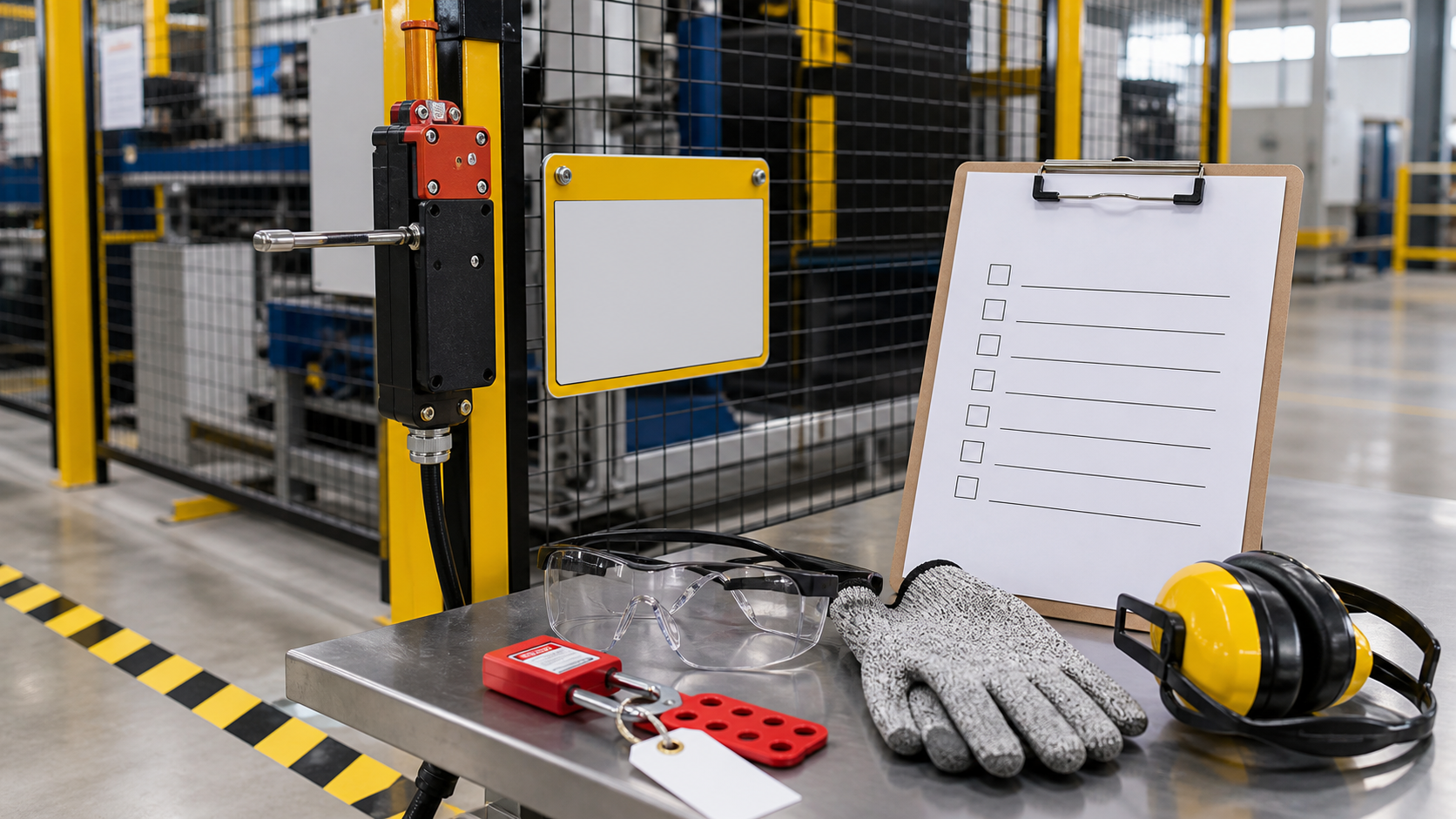
Quick Answer
A machine guarding checklist should verify that guards protect employees from point-of-operation hazards, ingoing nip points, rotating parts, flying chips, and sparks. OSHA requires one or more machine-guarding methods to protect the operator and other employees in the machine area.
For purchasing and maintenance teams, the goal is to keep guarding intact, make hazards visible, and keep PPE and lockout supplies close to the work that needs them.
Machine Guarding Safety Checklist
| Area | What to Check | Useful Supplies |
|---|---|---|
| Point of operation | Confirm exposed operating points are guarded when an employee could be injured during the operating cycle. | Guard panels, warning signs, checklist tags |
| Rotating and moving parts | Check belts, pulleys, gears, shafts, couplings, rollers, and other moving parts for adequate guarding. | Barrier guards, labels, floor marking tape |
| Nip points | Identify rollers, conveyors, feed points, and pinch zones where hands or clothing could be drawn in. | Caution labels, gloves matched to task rules |
| Guard condition | Make sure guards are secured, not bypassed, not damaged, and do not create a new hazard. | Inspection tags, maintenance labels |
| Flying chips and sparks | Use shielding and PPE where machining, grinding, cutting, or similar work can throw material. | Safety glasses, face shields, hearing protection |
| Service work | Use lockout/tagout before maintenance when unexpected startup or stored energy could injure employees. | Lockout tags, padlocks, hasps, lockout kits |
Common Mistakes to Avoid
- Removing a guard for convenience and treating it as a temporary production issue.
- Assuming PPE can replace required machine guarding.
- Ignoring employees near the machine who are not the operator.
- Using hand tools as a substitute for required point-of-operation guarding.
- Failing to add lockout supplies where maintenance actually opens guards or clears jams.
FAQ
What hazards does OSHA machine guarding address?
OSHA identifies hazards such as point of operation, ingoing nip points, rotating parts, flying chips, and sparks.
Can PPE replace machine guards?
No. PPE can reduce injury risk, but it does not replace required guarding. Guards and safeguarding devices must protect employees from machine hazards.
When should lockout be part of machine guarding safety?
Lockout/tagout should be used during covered servicing and maintenance when unexpected energization, startup, or stored energy release could injure employees.
About Mick Chan
Mick Chan is part of the eSafetySupplies safety content team, helping translate workplace safety requirements into practical checklists that purchasing teams, supervisors, and crews can use when selecting PPE, signs, labels, tags, and facility safety supplies.
Final CTA
Support your guarding program with warning labels, inspection tags, safety glasses, face shields, hearing protection, cut-resistant gloves, lockout tags, padlocks, hasps, and floor marking tape. eSafetySupplies can help keep machine-area supplies standardized and visible.
Sources
- OSHA 29 CFR 1910.212, General requirements for all machines: https://www.osha.gov/laws-regs/regulations/standardnumber/1910/1910.212
- OSHA 29 CFR 1910.147, The control of hazardous energy: https://www.osha.gov/laws-regs/regulations/standardnumber/1910/1910.147