
Quick Answer
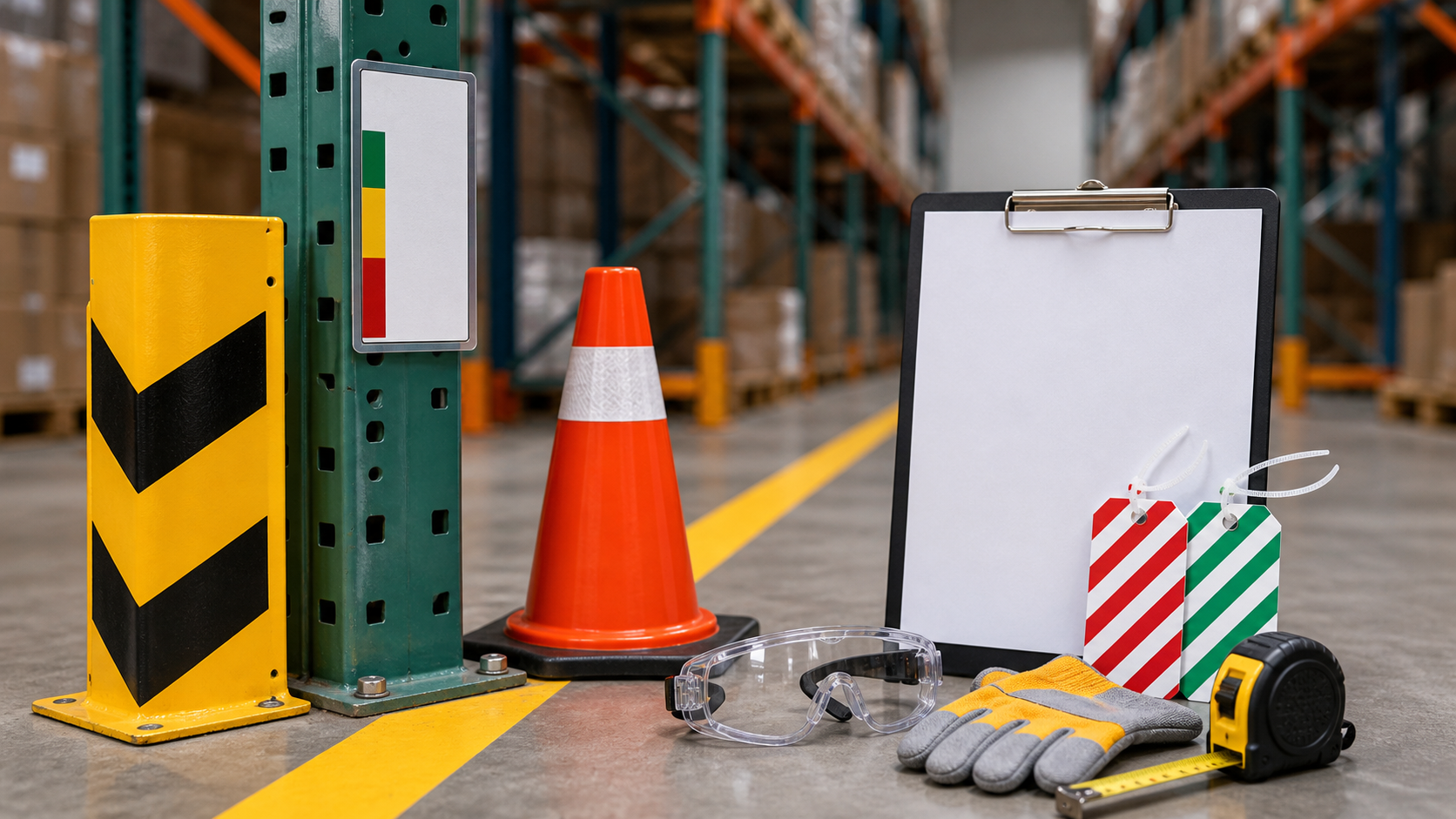
A warehouse rack safety inspection checklist should review rack damage, capacity labels, upright protectors, beam locks, pallet condition, load placement, aisle clearance, floor marking, and housekeeping. The goal is to catch impact damage and storage hazards before a normal warehouse day turns into a rack failure, falling-object incident, or blocked aisle problem.
OSHA's material-handling rules require storage to be stable and secure, and aisles and passageways must be kept clear and in good repair. A rack inspection program turns those broad requirements into visible daily controls.
Warehouse Rack Safety Checklist
| Area | What to Check | Useful Supplies |
|---|---|---|
| Capacity labels | Make sure rack load limits are posted, readable, and matched to the actual rack configuration. | Rack capacity labels, label holders |
| Uprights and frames | Look for dents, twists, missing anchors, damaged braces, rust, or impact marks at forklift contact points. | Rack inspection tags, column guards |
| Beams and connectors | Confirm beams are seated, safety pins or locks are present, and no beam is bent, overloaded, or dislodged. | Inspection checklist forms, replacement labels |
| Pallets and loads | Remove broken pallets, unstable loads, overhanging material, and items stored where they can fall into aisles. | Pallet tags, stretch wrap, warning labels |
| Aisles and access | Keep aisles, exits, emergency equipment, and passageways clear and in good repair. | Floor marking tape, cones, aisle signs |
| Pedestrian visibility | Mark forklift travel zones, rack ends, blind corners, and pedestrian crossings clearly. | High-vis vests, mirrors, signs, tape |
How Often Should Racks Be Inspected?
Many warehouses use a layered approach: quick operator observations every shift, supervisor walkthroughs weekly or monthly, and a deeper rack review after impacts, layout changes, seismic events, or repeated damage in one aisle. The right cadence depends on forklift traffic, load weight, rack age, and history of impacts.
Common Mistakes to Avoid
- Using old capacity labels after rack beams or elevations have changed.
- Replacing a damaged pallet but leaving the bent upright untagged.
- Letting floor marking fade until pedestrians and forklift operators no longer trust it.
- Ignoring minor-looking impact damage at the bottom of uprights.
- Allowing temporary overflow storage to block aisles, exits, eyewash, extinguishers, or electrical panels.
FAQ
Does OSHA have a specific pallet rack inspection standard?
OSHA does not publish one single pallet rack checklist standard. Rack safety is usually managed through OSHA's broader material storage, housekeeping, walking-working surface, and general duty expectations, plus manufacturer guidance and recognized engineering practices.
What should be on a rack capacity label?
A practical label should show the rack bay or section, maximum load information, beam level limits where applicable, and any restrictions that help workers avoid overloading or misloading the rack.
When should a rack be taken out of service?
Take a rack area out of service when damage, missing components, leaning, dislodged beams, unstable loads, or suspected overloads could create a hazard. Mark the area and have a qualified person evaluate it before reuse.
About Mick Chan
Mick Chan is part of the eSafetySupplies safety content team, helping translate workplace safety requirements into practical checklists that purchasing teams, supervisors, and crews can use when selecting PPE, signs, labels, tags, and facility safety supplies.
Final CTA
Keep your rack aisles easier to inspect with capacity labels, rack inspection tags, column guards, floor marking tape, cones, high-visibility PPE, and aisle signs. eSafetySupplies can help you build a warehouse rack safety kit that supervisors and operators will actually use.
Sources
- OSHA 29 CFR 1910.176, Handling materials, general: https://www.osha.gov/laws-regs/regulations/standardnumber/1910/1910.176
- OSHA 29 CFR 1910.22, Walking-working surfaces, general requirements: https://www.osha.gov/laws-regs/regulations/standardnumber/1910/1910.22