
Quick Answer
A forklift battery charging station checklist should verify that charging happens in a designated area with ventilation, fire protection, spill-control materials, eyewash or flushing provisions where corrosive exposure is possible, no-smoking controls, PPE, and clear signs. The station should also be kept clear of ignition sources and clutter.
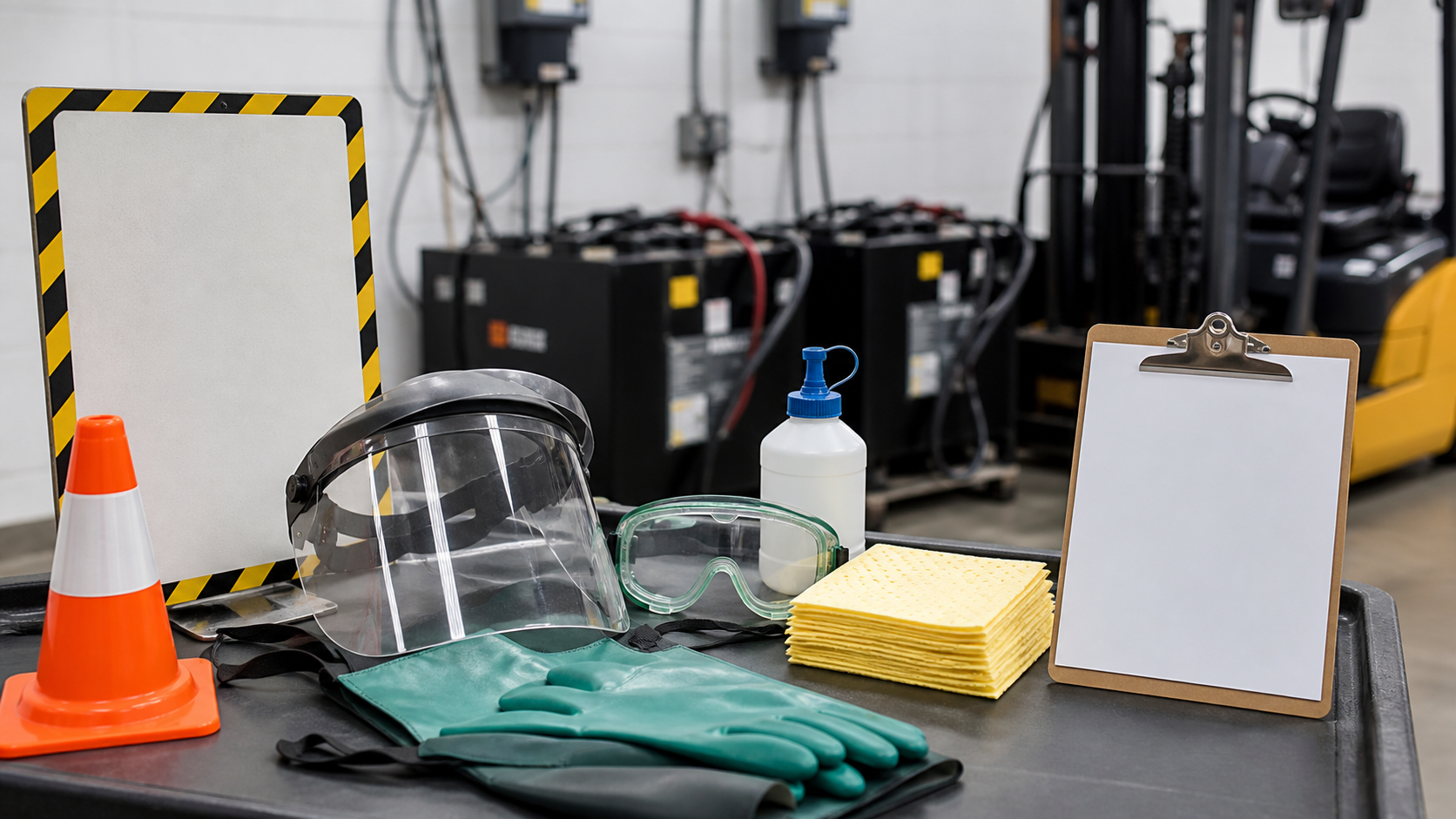
Battery charging can feel routine, which is exactly why the safety setup should be visible and repeatable. A good station makes the right PPE, spill supplies, and emergency equipment hard to miss.
Forklift Battery Charging Station Checklist
| Area | What to Check | Useful Supplies |
|---|---|---|
| Designated area | Keep charging in an assigned area with enough room for the truck, charger, battery handling equipment, and emergency access. | Floor marking tape, traffic cones, station signs |
| Ventilation and ignition control | Control hydrogen gas buildup and keep open flames, sparks, and smoking away from the area. | No-smoking signs, warning labels, fire extinguisher signs |
| Electrolyte spill readiness | Provide materials and instructions for flushing or neutralizing spilled electrolyte when lead-acid batteries are serviced. | Spill kits, absorbent pads, neutralizer, disposal bags |
| Eye and face protection | Stock protection for splash exposure during watering, maintenance, or electrolyte handling. | Chemical goggles, face shields, PPE signs |
| Hand and body protection | Use chemical-resistant gloves and aprons when employees may contact battery acid or contaminated surfaces. | Acid-resistant gloves, aprons, sleeve protection |
| Emergency flushing | Where employees may be exposed to corrosive materials, provide suitable facilities for quick drenching or flushing of the eyes and body. | Eyewash stations, eyewash bottles, inspection tags |
| Housekeeping | Keep cables off walkways, chargers protected from impact, and battery tools stored where workers can find them. | Cord covers, wall racks, labels, checklists |
What to Put on the Station Sign
Use short, action-oriented messages: authorized charging area, eye and face protection required, no smoking or open flame, emergency eyewash location, spill kit location, and report damaged batteries or chargers before use.
Common Mistakes to Avoid
- Stocking PPE in a cabinet across the warehouse instead of at the charging station.
- Letting absorbent pads run out after a small spill.
- Using a general caution sign without naming the charging and battery-acid hazards.
- Allowing charger cables to cross walking paths.
- Forgetting to inspect eyewash, spill kits, and fire protection supplies on a recurring schedule.
FAQ
Does OSHA require forklift battery charging areas to be designated?
Yes. OSHA's powered industrial truck rule says battery charging installations must be located in areas designated for that purpose.
What PPE is common for forklift battery charging?
Common PPE includes chemical goggles, a face shield, chemical-resistant gloves, an apron, and other protection based on the battery type and the work being performed.
Is eyewash needed near a battery charging station?
When employees may be exposed to injurious corrosive materials, OSHA requires suitable facilities for quick drenching or flushing of the eyes and body within the work area for immediate emergency use.
About Mick Chan
Mick Chan is part of the eSafetySupplies safety content team, helping translate workplace safety requirements into practical checklists that purchasing teams, supervisors, and crews can use when selecting PPE, signs, labels, tags, and facility safety supplies.
Final CTA
Turn the charging corner into a clearly marked safety station with chemical goggles, face shields, acid-resistant gloves, aprons, spill kits, eyewash supplies, no-smoking signs, floor marking, and inspection tags. eSafetySupplies can help you stock the station before the next battery service task.
Sources
- OSHA 29 CFR 1910.178, Powered industrial trucks, battery charging and changing: https://www.osha.gov/laws-regs/regulations/standardnumber/1910/1910.178
- OSHA 29 CFR 1910.151, Medical services and first aid: https://www.osha.gov/laws-regs/regulations/standardnumber/1910/1910.151