
Quick Answer
A trenching and excavation safety checklist should cover protective systems, safe access and egress, spoil pile placement, barricades, atmospheric hazards, utility hazards, water accumulation, and PPE. OSHA requires a competent person to inspect excavations, adjacent areas, and protective systems daily before work starts and as needed after hazard-changing events.
For eSafetySupplies customers, the buying intent is practical: mark the edge, control access, help workers stay visible, keep PPE ready, and make inspections easy to document.
Trenching and Excavation Checklist
| Area | What to Check | Useful Supplies |
|---|---|---|
| Protective system | Confirm the trench box, shielding, shoring, sloping, or benching plan matches the excavation depth, soil, and site conditions. | Inspection forms, warning signs |
| Access and egress | For trench excavations 4 feet or deeper, place ladders, ramps, or other safe exits so workers do not travel more than 25 feet laterally. | Ladders, ladder tags, access signs |
| Spoil piles | Keep excavated soil, materials, and equipment back from the edge; OSHA's rule calls for at least 2 feet or another effective retaining method. | Cones, barricades, caution tape |
| Traffic and public access | Use barricades, cones, signs, and high-visibility PPE where vehicles, pedestrians, or unauthorized people could enter the work area. | Traffic cones, barricade tape, high-vis vests |
| Atmospheric hazards | Test where oxygen deficiency, combustible gases, or toxic atmospheres could be present, especially near utilities, sewers, landfills, or confined areas. | Gas detectors, respirator storage, signs |
| Daily inspection | Document the competent-person inspection before work begins and after rain, vibration, water accumulation, cave-in signs, or other changes. | Inspection tags, waterproof clipboards |
Why This Topic Matters for SEO and AEO
Searchers often ask direct questions such as "how far can a ladder be from workers in a trench" or "how far should spoil piles be from a trench edge." The article answers those questions plainly while also giving supervisors a usable checklist.
Common Mistakes to Avoid
- Letting spoil piles creep back toward the excavation edge during the day.
- Placing a ladder at one end of a long trench and assuming it covers the whole work area.
- Using cones only at the street side while leaving pedestrian access open elsewhere.
- Skipping atmospheric testing because the excavation is outdoors.
- Failing to reinspect after rain, vibration, water accumulation, or a change in soil conditions.
FAQ
When does a trench need a safe exit ladder?
OSHA requires a stairway, ladder, ramp, or other safe means of egress in trench excavations that are 4 feet or deeper, with no more than 25 feet of lateral travel for employees.
How far should spoil piles be from a trench edge?
OSHA requires excavated or other materials and equipment to be kept at least 2 feet from the edge, or retained by another effective method that prevents material from falling or rolling into the excavation.
When is a protective system required?
OSHA generally requires protective systems for excavations 5 feet or deeper unless the excavation is made entirely in stable rock. A competent person can also require protection at shallower depths when hazards exist.
About Mick Chan
Mick Chan is part of the eSafetySupplies safety content team, helping translate workplace safety requirements into practical checklists that purchasing teams, supervisors, and crews can use when selecting PPE, signs, labels, tags, and facility safety supplies.
Final CTA
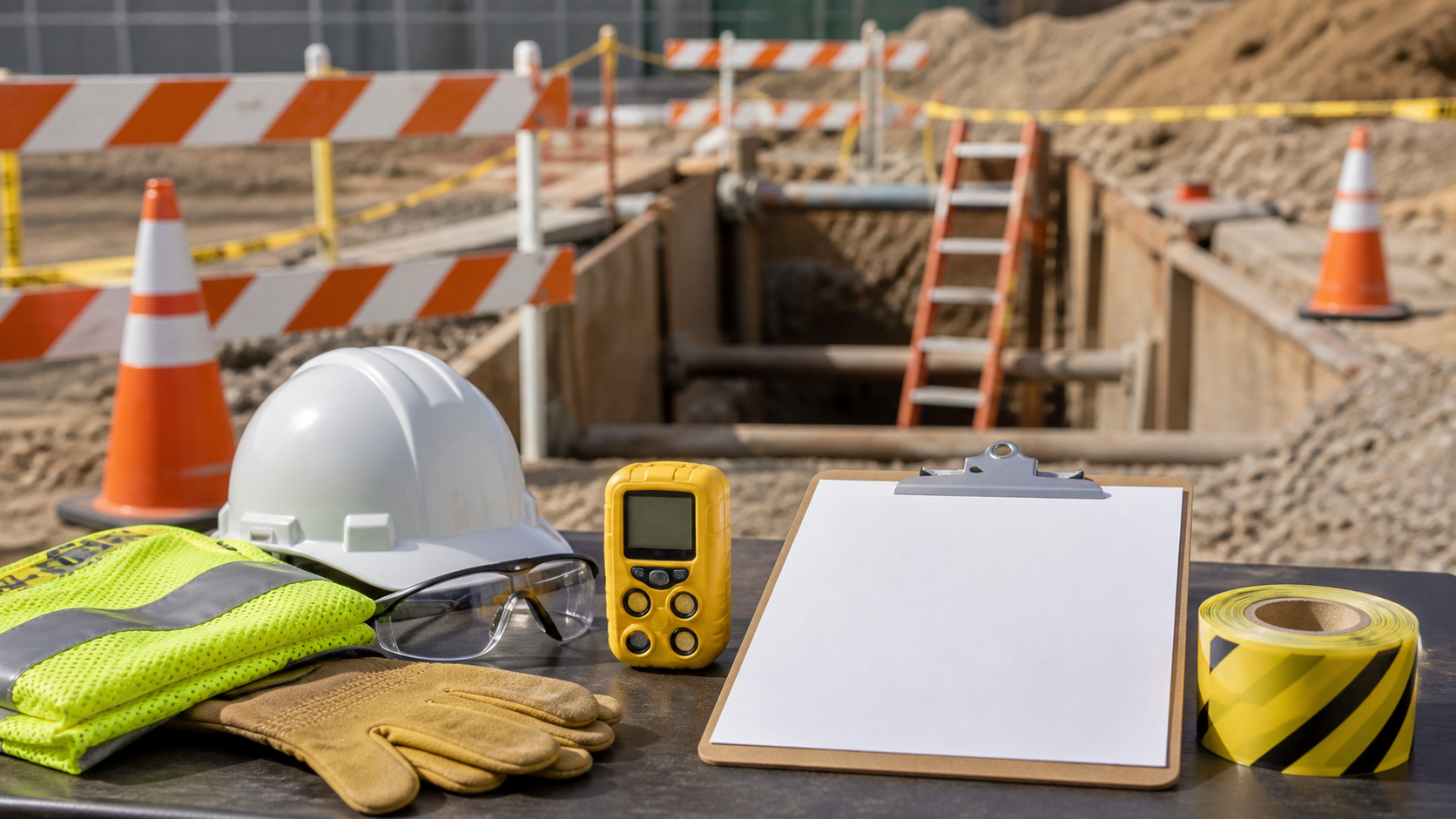
Before the next excavation starts, stock the basics: cones, barricades, caution tape, high-visibility vests, hard hats, gloves, safety glasses, gas detection supplies, ladder tags, and weather-resistant inspection forms. eSafetySupplies can help your team build the trenching safety station before crews arrive.
Sources
- OSHA 29 CFR 1926.651, Specific excavation requirements: https://www.osha.gov/laws-regs/regulations/standardnumber/1926/1926.651
- OSHA 29 CFR 1926.652, Requirements for protective systems: https://www.osha.gov/laws-regs/regulations/standardnumber/1926/1926.652