
Quick Answer
A fire extinguisher inspection checklist should confirm that each extinguisher is in its assigned location, mounted or stored so employees can reach it, clearly identified, visually inspected monthly, professionally maintained annually, and tagged with current inspection information. OSHA requires employers to be responsible for inspection, maintenance, and testing of workplace portable fire extinguishers.
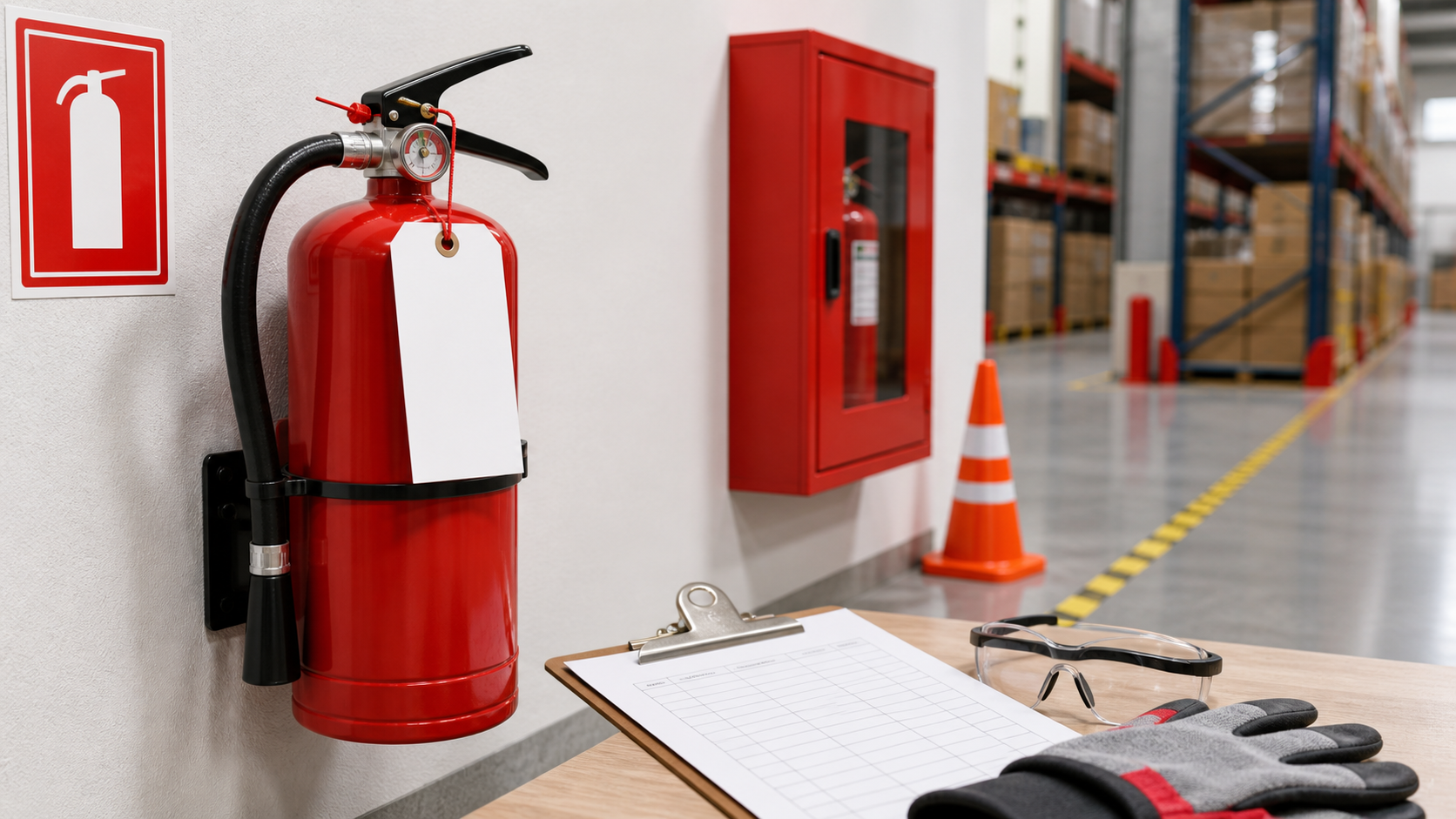
For a facility team, the practical goal is simple: workers should be able to find the extinguisher quickly, read the operating label, see that the gauge and seal look right, and know when the unit needs service.
Fire Extinguisher Inspection Checklist
| Area | What to Check | Useful Supplies |
|---|---|---|
| Location and access | Confirm the extinguisher is in its designated place, visible, identified, and not blocked by pallets, carts, coats, boxes, or equipment. | Fire extinguisher signs, floor marking tape, cones |
| Mounting | Check that the wall bracket, cabinet, or stand is secure and the extinguisher has not been moved to an informal location. | Brackets, cabinets, location labels |
| Inspection tag | Verify the monthly visual inspection is recorded and the annual maintenance date is current. | Inspection tags, tag holders, pens |
| Gauge and charge | Check that the pressure gauge or indicator shows the extinguisher is in the operable range. | Checklist forms, replacement tags |
| Pin and seal | Confirm the pull pin and tamper seal are intact and the hose/nozzle is in place. | Tamper seals, inspection labels |
| Condition | Look for corrosion, leakage, dents, missing labels, clogged nozzles, broken handles, or other physical damage. | Out-of-service tags, barricade tape |
Monthly vs Annual Checks
OSHA requires portable extinguishers to be visually inspected monthly. OSHA also requires an annual maintenance check and a retained record of the annual maintenance date. If an extinguisher is removed for maintenance or recharge, provide alternate equivalent protection while it is out of service.
Common Mistakes to Avoid
- Recording the month on the tag without actually checking access, gauge, seal, and condition.
- Letting seasonal displays, pallets, or carts block the extinguisher location.
- Leaving an extinguisher in service after visible corrosion, leakage, or mechanical damage.
- Using a sign that is hidden behind shelving or too low to see across the room.
- Removing a unit for recharge without temporary replacement protection.
FAQ
How often should workplace fire extinguishers be inspected?
OSHA requires portable fire extinguishers or hose used in lieu of extinguishers to be visually inspected monthly and subjected to an annual maintenance check.
What should a monthly extinguisher check include?
Check location, visibility, access, operating-label legibility, pressure indication, pin and tamper seal, hose/nozzle condition, and obvious damage, corrosion, or leakage.
Do fire extinguishers need inspection tags?
Tags are a practical way to document monthly checks and annual service status. OSHA requires records for annual maintenance, and tags help employees and supervisors see status quickly.
About Mick Chan
Mick Chan is part of the eSafetySupplies safety content team, helping translate workplace safety requirements into practical checklists that purchasing teams, supervisors, and crews can use when selecting PPE, signs, labels, tags, and facility safety supplies.
Final CTA
Keep extinguisher stations inspection-ready with fire extinguisher signs, inspection tags, tamper seals, wall brackets, floor marking tape, out-of-service tags, and checklist forms. eSafetySupplies can help you standardize the supplies used across every facility location.
Sources
- OSHA 29 CFR 1910.157, Portable fire extinguishers: https://www.osha.gov/laws-regs/regulations/standardnumber/1910/1910.157
- OSHA eTool, Portable extinguisher placement and monthly checklist guidance: https://www.osha.gov/etools/evacuation-plans-procedures/emergency-standards/portable-extinguishers/placement