Quick Answer
An emergency eyewash station inspection checklist should confirm that eyewash or flushing equipment is available where employees may be exposed to injurious corrosive materials, the route is clear, the station is identified with visible signs, inspection tags are current, and splash PPE and spill-control supplies are stocked nearby.
OSHA's first-aid rule requires suitable facilities for quick drenching or flushing of the eyes and body within the work area for immediate emergency use when corrosive exposure is possible. The checklist should turn that requirement into a visible, repeatable inspection routine.
Emergency Eyewash Station Inspection Checklist
| Area | What to Check | Useful Supplies |
|---|---|---|
| Hazard match | Confirm the station is placed for work involving corrosive materials or chemical splash exposure. | Chemical area signs, PPE requirement signs |
| Access route | Keep the route clear of pallets, carts, stored chemicals, hoses, packaging, or locked doors. | Floor marking tape, cones, aisle labels |
| Identification | Use visible eyewash signs so workers can find the station quickly during a splash emergency. | Eyewash signs, wall labels, directional signs |
| Inspection record | Use tags or logs to record recurring activation, condition checks, and corrective actions. | Inspection tags, waterproof log sheets |
| Condition | Check caps, bowls, nozzles, drains, dust covers, leaks, corrosion, and physical damage. | Replacement caps, maintenance tags |
| Splash PPE | Stock PPE for the task so workers can reduce exposure before an emergency occurs. | Chemical goggles, face shields, gloves, aprons |
| Spill readiness | Keep absorbents and cleanup supplies close enough to control minor spills without blocking emergency access. | Spill kits, absorbent pads, disposal bags |
Where Eyewash Supplies Fit
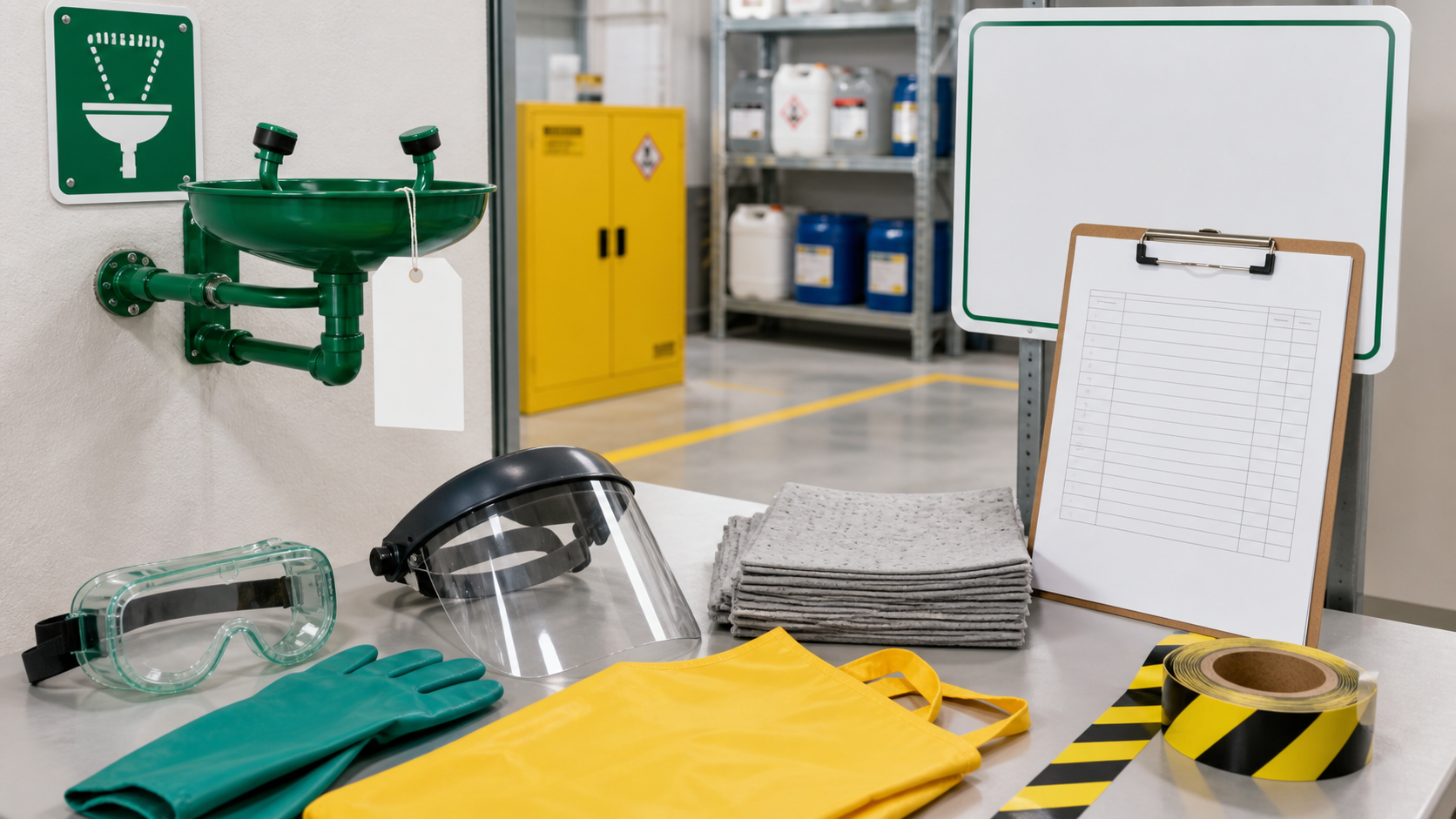
Eyewash equipment should not sit alone. A practical chemical-safety area also includes splash-rated eye and face protection, compatible gloves, aprons or sleeves, spill supplies, clear signs, and an inspection tag that shows the station is being checked.
Do not let eyewash bottles create a false sense of coverage where a plumbed or self-contained station is needed. The right equipment depends on the corrosive material, exposure risk, work layout, and applicable safety plan.
Common Mistakes to Avoid
- Blocking the route with pallets, carts, trash cans, or chemical containers.
- Letting signs fade or face the wrong direction.
- Checking the tag but not checking dust covers, nozzles, leaks, or physical damage.
- Separating chemical goggles and face shields from the actual splash-risk task.
- Using temporary storage in front of the station because the area looks unused.
FAQ
When does OSHA require eyewash or flushing facilities?
OSHA requires suitable facilities for quick drenching or flushing of the eyes and body where the eyes or body of any person may be exposed to injurious corrosive materials.
What should be inspected on an eyewash station?
Check access, signs, activation readiness, nozzles, dust covers, leaks, drainage, physical condition, inspection records, and whether the surrounding area is free of obstructions.
What PPE belongs near an eyewash station?
Common chemical splash PPE includes goggles, face shields, compatible chemical-resistant gloves, aprons, and sleeves. Match PPE to the chemical and task hazard assessment.
About Mick Chan
Mick Chan is part of the eSafetySupplies safety content team, helping translate workplace safety requirements into practical checklists that purchasing teams, supervisors, and crews can use when selecting PPE, signs, labels, tags, and facility safety supplies.
Final CTA
Build a practical eyewash safety station with visible signs, inspection tags, floor marking, chemical goggles, face shields, compatible gloves, aprons, spill kits, and maintenance labels. eSafetySupplies can help you keep those emergency and PPE supplies standardized across work areas.
Sources
- OSHA 29 CFR 1910.151, Medical services and first aid: https://www.osha.gov/laws-regs/regulations/standardnumber/1910/1910.151
- OSHA standard interpretation, clarification regarding eyewash stations: https://www.osha.gov/laws-regs/standardinterpretations/1996-08-22