Quick Answer
A respiratory protection checklist should verify that respirators are selected for the actual hazard, employees are medically evaluated and fit tested when required, respirators are stored cleanly, cartridges and filters are changed on schedule, and workers are trained to inspect, seal-check, use, clean, and maintain the equipment. OSHA requires a written respiratory protection program whenever respirators are necessary to protect employee health or whenever an employer requires respirator use.
For facility teams, the operational goal is to keep respirators from becoming loose, dirty, expired, mismatched, or informally shared. Respiratory protection only works when the program and the supplies support each other.
Respiratory Protection Checklist
| Area | What to Check | Useful Supplies |
|---|---|---|
| Hazard match | Confirm respirator type, filter, cartridge, or supplied-air setup matches the contaminant and exposure level. | Respirator labels, cartridge storage, hazard signs |
| Written program | Make sure the written program covers selection, medical evaluation, fit testing, use, maintenance, and training. | Document holders, checklist forms |
| Fit testing | Verify required fit testing is current before employees use tight-fitting facepiece respirators. | Fit test kits, test records, tags |
| User seal check | Workers should perform a seal check each time they put on a tight-fitting respirator. | Training cards, mirrors, reminder signs |
| Storage | Store respirators away from dust, sunlight, moisture, chemicals, crushing, and contamination. | Respirator bags, wall stations, storage bins |
| Cleaning and replacement | Inspect facepieces, straps, valves, gaskets, cartridges, and filters; replace damaged or expired components. | Replacement cartridges, filters, cleaning wipes |
Common Mistakes to Avoid
- Buying respirators before confirming the exposure and cartridge/filter requirement.
- Letting employees share reusable respirators without cleaning and assignment controls.
- Storing respirators loose on benches, dashboards, or dusty shelves.
- Using tight-fitting respirators with facial hair that interferes with the seal.
- Forgetting cartridge change schedules and relying on smell or irritation as the only warning.
FAQ
When is a written respiratory protection program required?
OSHA requires a written respiratory protection program when respirators are necessary to protect employee health or when the employer requires respirator use.
Do all respirators require fit testing?
Fit testing is required for tight-fitting facepiece respirators before initial use, whenever a different respirator facepiece is used, and at least annually thereafter under OSHA's respiratory protection standard.
How should respirators be stored?
Store respirators to protect them from damage, contamination, dust, sunlight, extreme temperatures, moisture, and chemicals, and to prevent deformation of the facepiece and exhalation valve.
About Mick Chan
Mick Chan is part of the eSafetySupplies safety content team, helping translate workplace safety requirements into practical checklists that purchasing teams, supervisors, and crews can use when selecting PPE, signs, labels, tags, and facility safety supplies.
Final CTA
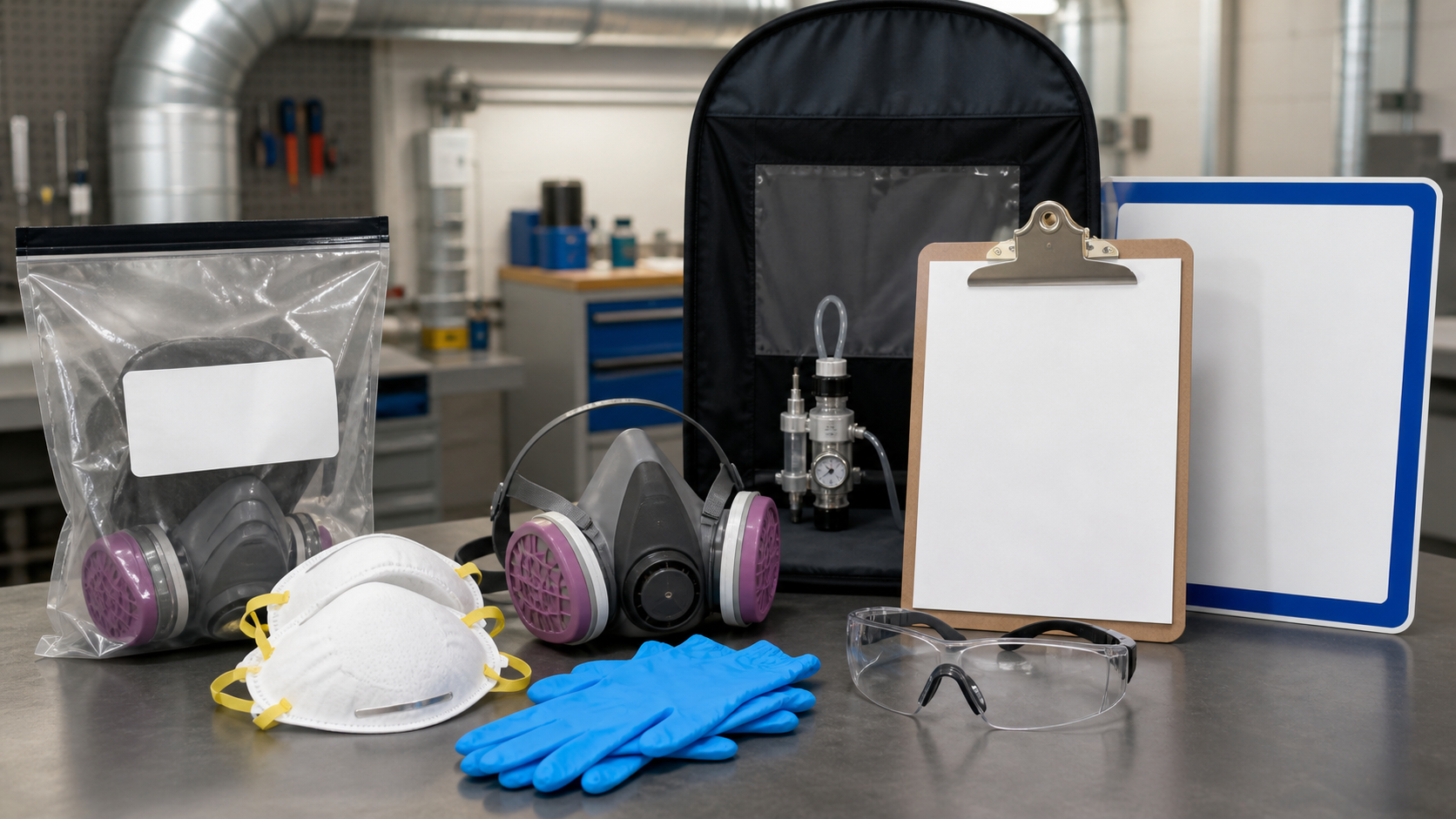
Build a respiratory protection station with respirator storage bags, fit test supplies, replacement cartridges and filters, cleaning supplies, PPE signs, checklist tags, gloves, and eye protection. eSafetySupplies can help keep the supplies behind your respiratory program visible and organized.
Sources
- OSHA 29 CFR 1910.134, Respiratory protection: https://www.osha.gov/laws-regs/regulations/standardnumber/1910/1910.134
- OSHA Respiratory Protection safety and health topics page: https://www.osha.gov/respiratory-protection