Quick Answer
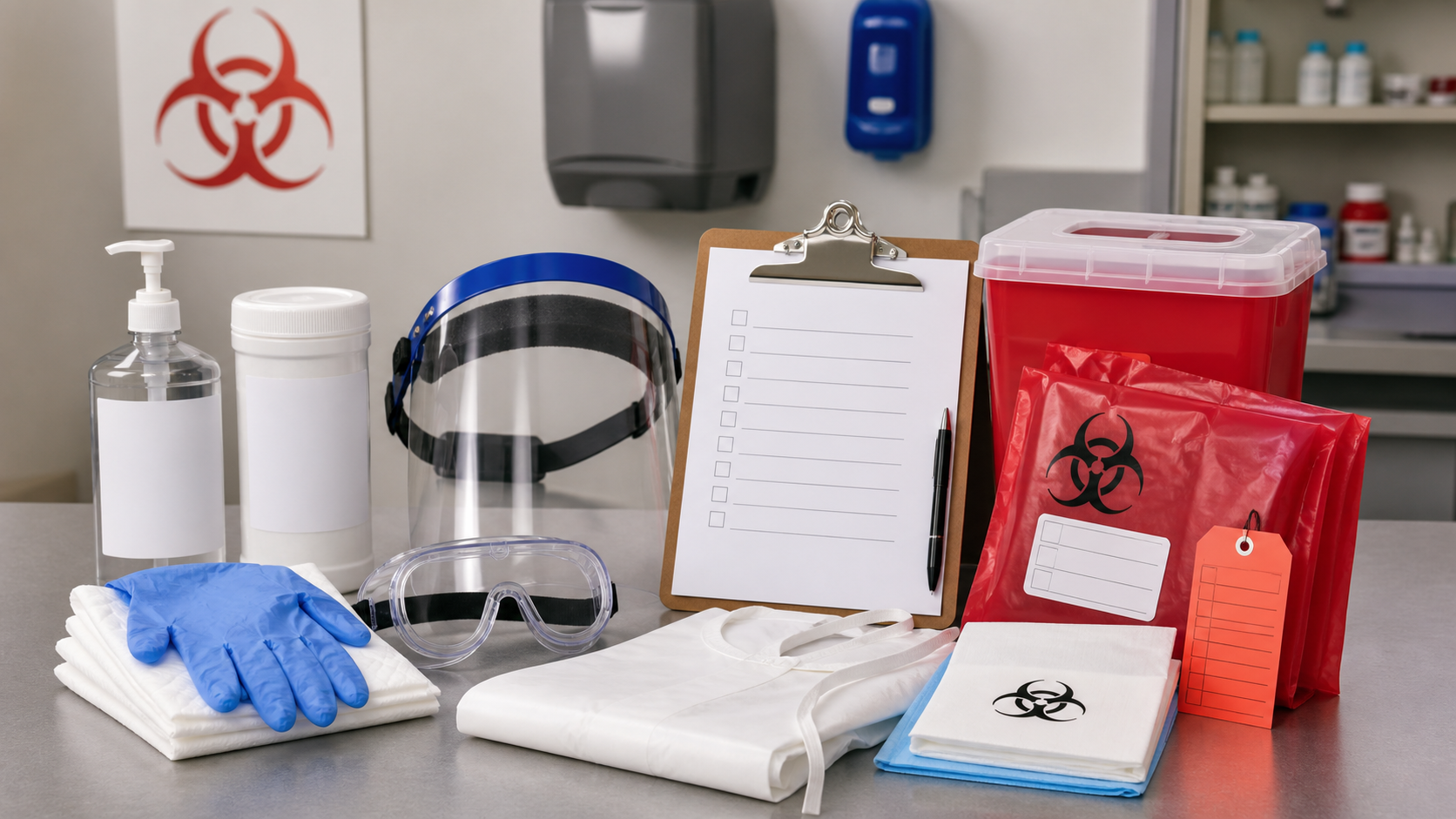
A bloodborne pathogens checklist should verify that employees with occupational exposure have access to appropriate PPE, handwashing or antiseptic alternatives, sharps containers where needed, biohazard labels or color coding, cleanup supplies, training, and an exposure control plan. OSHA's bloodborne pathogens standard applies where employees can reasonably anticipate contact with blood or other potentially infectious materials as part of their job duties.
For many workplaces, the practical issue is readiness. A spill, cut, first-aid response, or sharps disposal task is the wrong time to discover that gloves, face shields, bags, labels, or cleanup materials are missing.
Bloodborne Pathogens Supplies Checklist
| Area | What to Check | Useful Supplies |
|---|---|---|
| Exposure control plan | Confirm the written plan is current, accessible, and reflects actual job tasks with occupational exposure. | Document holders, checklist forms |
| Hand protection | Stock disposable gloves in appropriate sizes where first aid, cleanup, or exposure-response work may occur. | Nitrile gloves, glove dispensers |
| Eye and face protection | Use protection where splashes, sprays, splatter, or droplets could reach the eyes, nose, or mouth. | Face shields, goggles, masks |
| Protective clothing | Provide gowns, aprons, or other protective clothing when clothing or skin exposure is reasonably anticipated. | Disposable aprons, sleeves, coveralls |
| Sharps control | Use puncture-resistant, leakproof, labeled or color-coded sharps containers when contaminated sharps may be present. | Sharps containers, wall brackets, labels |
| Biohazard communication | Label or color-code regulated waste, contaminated equipment, and containers where required. | Biohazard labels, red bags, warning signs |
| Cleanup readiness | Keep absorbents, disinfectant, disposal materials, and PPE together so response is fast and controlled. | Biohazard cleanup kits, absorbent pads, disposal bags |
FAQ
What does OSHA mean by occupational exposure?
OSHA defines occupational exposure as reasonably anticipated skin, eye, mucous membrane, or parenteral contact with blood or other potentially infectious materials that may result from performing an employee's duties.
Do sharps containers need labels?
Containers for contaminated sharps must be closable, puncture resistant, leakproof on the sides and bottom, and labeled or color-coded according to OSHA's requirements.
About Mick Chan
Mick Chan is part of the eSafetySupplies safety content team, helping translate workplace safety requirements into practical checklists that purchasing teams, supervisors, and crews can use when selecting PPE, signs, labels, tags, and facility safety supplies.
Final CTA
Build a practical exposure-response station with nitrile gloves, face shields, goggles, masks, disposable aprons, sharps containers, biohazard labels, red bags, absorbents, disinfectant, and cleanup kits. eSafetySupplies can help keep bloodborne pathogens supplies organized before an exposure response is needed.
Sources
- OSHA 29 CFR 1910.1030, Bloodborne pathogens: https://www.osha.gov/laws-regs/regulations/standardnumber/1910/1910.1030
- OSHA Bloodborne Pathogens and Needlestick Prevention page: https://www.osha.gov/bloodborne-pathogens