
Quick Answer
A hearing protection checklist should verify that noisy work areas are identified, required hearing protectors are available, employees know when and how to use them, earplugs and earmuffs are stored cleanly, damaged protectors are replaced, and fit checks are part of the routine. OSHA's occupational noise standard requires a hearing conservation program when employee noise exposures equal or exceed an 8-hour time-weighted average of 85 decibels.
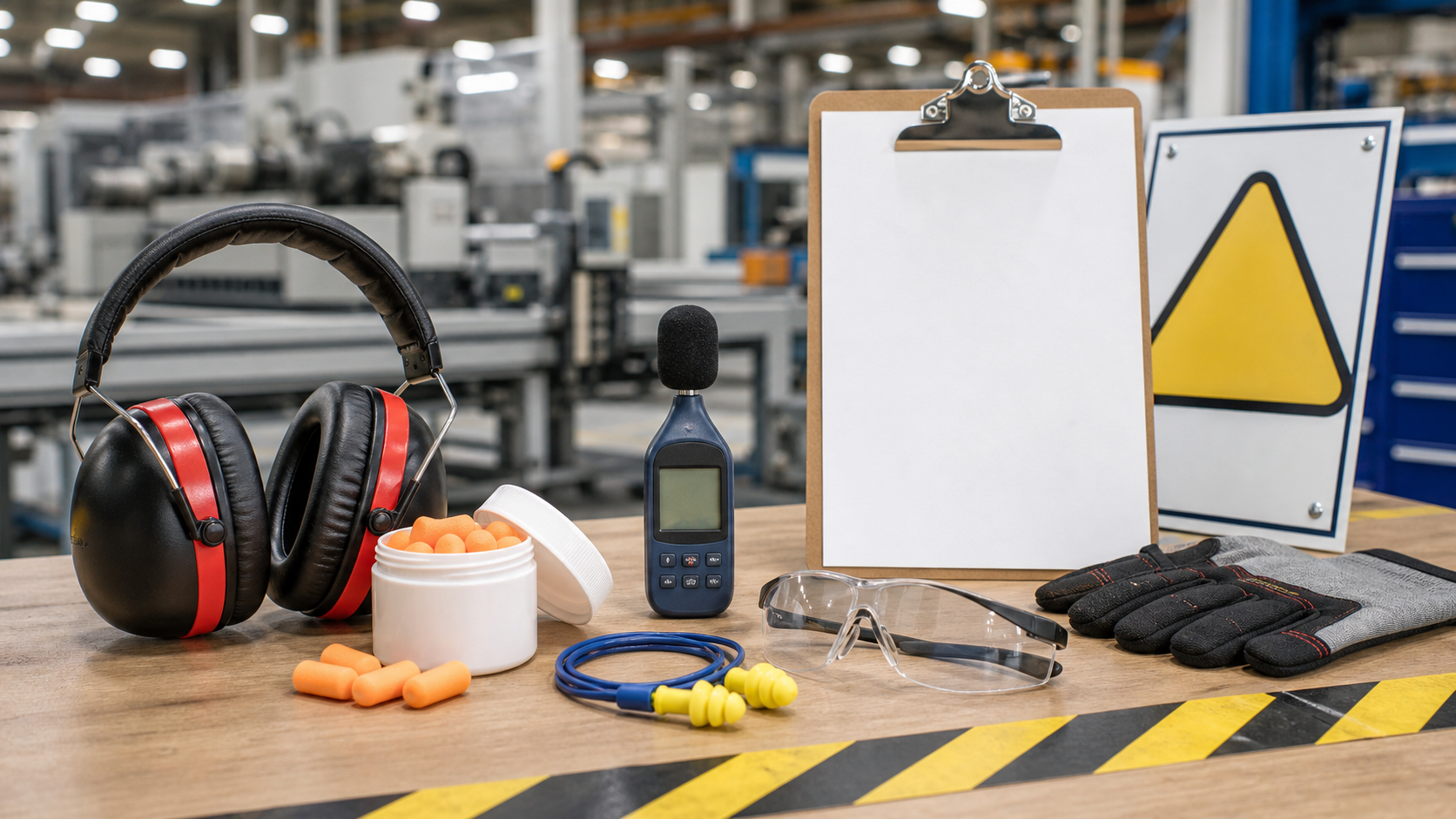
Hearing protection works best when it is treated as a station, not a box of earplugs hidden in a cabinet. Put the right protection close to the noise source and make the requirement visible.
Hearing Protection Checklist
| Area | What to Check | Useful Supplies |
|---|---|---|
| Noise areas | Identify work areas, equipment, or tasks where hearing protection is required or strongly recommended. | Noise hazard signs, floor marking tape, labels |
| Protector options | Stock multiple appropriate options so employees can choose protection that fits the task and their ears. | Foam earplugs, corded earplugs, earmuffs |
| Fit and use | Check whether employees can insert earplugs correctly or wear earmuffs with a complete seal. | Fit-check posters, training cards, mirrors |
| Storage | Keep clean protectors protected from dust, oil, coolant, moisture, and mixed waste. | Dispensers, storage boxes, wall stations |
| Replacement | Remove damaged, dirty, compressed, cracked, or stretched hearing protectors from service. | Replacement plugs, new earmuff cushions |
| Compatibility | Confirm earmuffs seal properly with hard hats, safety glasses, face shields, respirators, or cold-weather gear. | Compatible PPE kits, task labels |
Common Mistakes to Avoid
- Assuming one earplug style fits every worker.
- Letting employees wear earmuffs over safety glasses with thick temples that break the seal.
- Placing earplug dispensers far from the noisy area where employees forget to grab them.
- Using faded signs that no longer clearly identify hearing protection zones.
- Keeping dirty reusable plugs in pockets, toolboxes, or open bins.
FAQ
When does OSHA require a hearing conservation program?
OSHA requires a hearing conservation program when employee noise exposures equal or exceed an 8-hour time-weighted average of 85 decibels, known as the action level.
Are earplugs or earmuffs better?
Neither is automatically better for every job. Selection depends on noise level, fit, comfort, compatibility with other PPE, communication needs, and whether employees can use the protector correctly.
What should be posted in a noisy work area?
Use clear noise hazard signs, hearing protection required signs where applicable, PPE reminders, and location markers for earplug dispensers or hearing protection stations.
About Mick Chan
Mick Chan is part of the eSafetySupplies safety content team, helping translate workplace safety requirements into practical checklists that purchasing teams, supervisors, and crews can use when selecting PPE, signs, labels, tags, and facility safety supplies.
Final CTA
Build a visible hearing protection station with foam earplugs, corded earplugs, earmuffs, replacement cushions, noise hazard signs, PPE labels, dispensers, and inspection checklists. eSafetySupplies can help keep hearing protection stocked where noise exposure actually happens.
Sources
- OSHA 29 CFR 1910.95, Occupational noise exposure: https://www.osha.gov/laws-regs/regulations/standardnumber/1910/1910.95
- OSHA Occupational Noise Exposure overview: https://www.osha.gov/noise