Quick Answer
Respirator cartridges and filters should be selected by the airborne hazard, physical form, exposure level, respirator model, NIOSH approval, and required change schedule. Color labels can help identify cartridge families, but they are not a substitute for reading the NIOSH approval label and matching the cartridge to the contaminant.
If respirators are required in the workplace, OSHA requires a respiratory protection program. That program must include proper selection, medical evaluation, fit testing for tight-fitting respirators, training, cleaning, storage, and cartridge change procedures.
Cartridges vs Filters
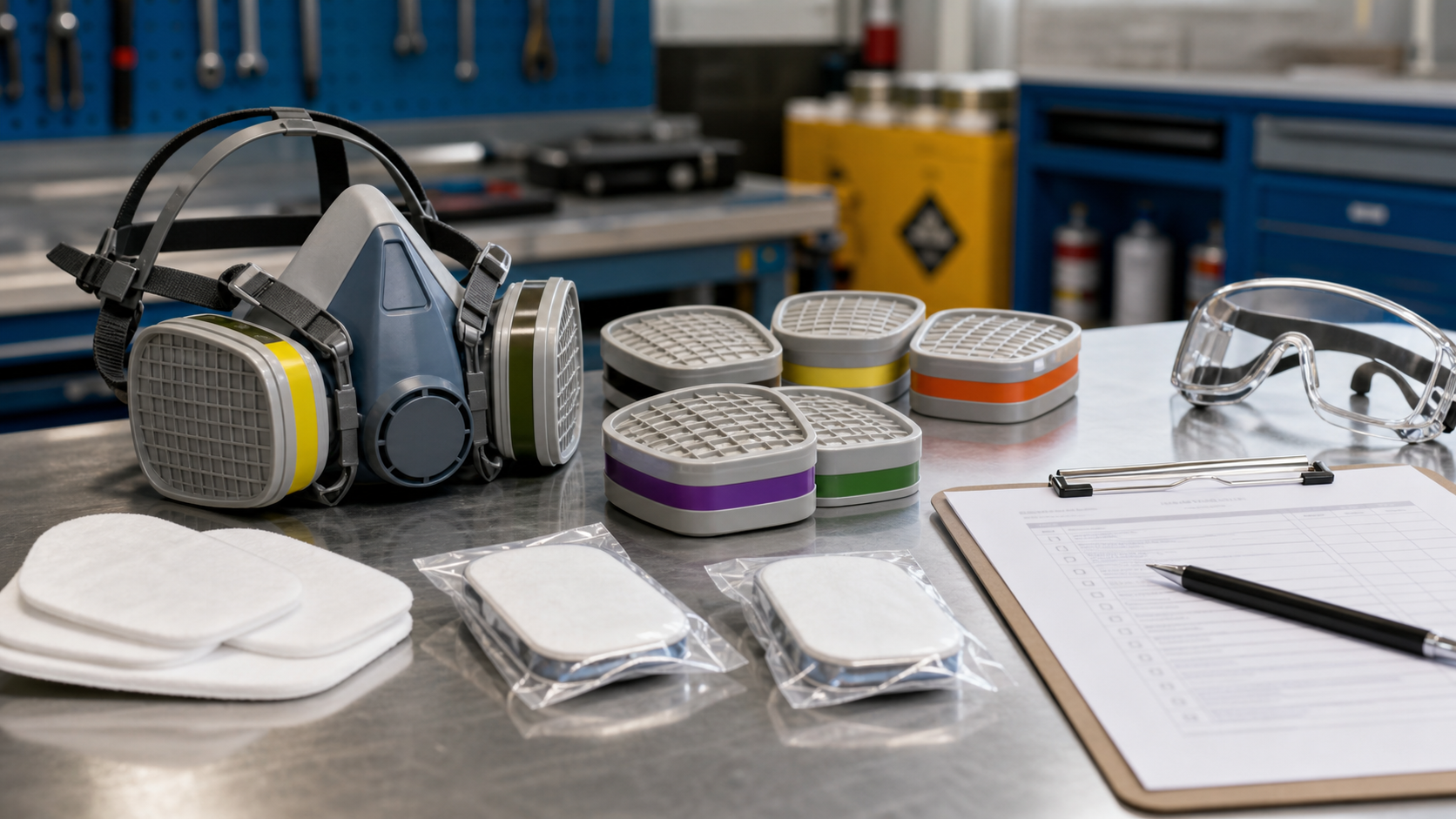
Respirator filters are commonly used for particulates such as dusts, mists, fumes, and aerosols. Chemical cartridges are used for certain gases and vapors. Combination cartridges and filters can address both particulate and chemical hazards when the approval and workplace exposure support that selection.
The key question is not “What color cartridge do I need?” The better question is “What airborne hazard are workers exposed to, and which NIOSH-approved respirator assembly is approved for that hazard?”
What OSHA Requires
OSHA’s Respiratory Protection Standard says employers must select NIOSH-certified respirators and use them in compliance with the conditions of certification. OSHA also requires employers to identify and evaluate respiratory hazards, including a reasonable estimate of employee exposure and the chemical state and physical form of the contaminant.
For gas and vapor cartridges, OSHA requires either an end-of-service-life indicator certified by NIOSH for the contaminant, or a change schedule that ensures cartridges are changed before the end of their service life. Odor, taste, or irritation should not be the only change signal.
How Color Codes Fit In
Color-coded labels help users distinguish cartridge types, but color alone is not enough. NIOSH approval labels and cartridge packaging identify the approved use, limitations, model compatibility, and exact approved assemblies. Different brands may also design cartridges for specific facepieces, so cartridges should not be mixed across respirator systems unless the manufacturer and approval information allow it.
Selection Guide
| Workplace question | Why it matters |
|---|---|
| Is the hazard particulate, gas, vapor, or combination? | Filters and cartridges are approved for different hazard types. |
| What is the contaminant and exposure level? | Selection depends on the substance and concentration, not only the task name. |
| Is the respirator NIOSH-approved for that use? | OSHA requires NIOSH-certified respirators when respirators are required. |
| Is the cartridge compatible with the facepiece? | Approved assemblies must be used as certified. |
| What is the change schedule? | Cartridges can stop protecting before they look dirty or damaged. |
| Has fit testing and training been completed? | Wrong fit or poor use can defeat the correct cartridge choice. |
Common Cartridge Selection Mistakes
One mistake is choosing by color band alone. Color is a useful visual cue, but the approval label and manufacturer guidance control the decision. Another mistake is using a cartridge until the worker smells or tastes the contaminant. OSHA expects a change schedule or certified end-of-service-life indicator for appropriate gas and vapor cartridges.
A third mistake is treating particulate filters and chemical cartridges as interchangeable. Dust work, paint vapor, acid gas, organic vapor, welding fume, wildfire smoke, and cleaning chemicals can require very different respiratory protection decisions.
Quick Buying Checklist
- Airborne hazard and exposure level have been identified.
- Respirator use is part of a written program when required.
- Respirator and cartridges are NIOSH-certified for the hazard.
- Cartridges are compatible with the exact facepiece model.
- Workers are fit tested where required.
- Change schedule is documented before use.
- Storage plan protects cartridges from contamination between uses.
- Training covers inspection, seal checks, use limits, and replacement.
FAQ
Can I choose respirator cartridges by color?
Use color labels as a quick identification aid, but always confirm the NIOSH approval label, manufacturer instructions, hazard, exposure level, and respirator compatibility.
How often should respirator cartridges be changed?
Change timing depends on the contaminant, concentration, humidity, breathing rate, cartridge capacity, and workplace conditions. OSHA requires a change schedule or appropriate end-of-service-life indicator for many gas and vapor cartridge uses.
Do respirator cartridges expire?
Cartridges can have shelf-life limits before use and service-life limits after opening or use. Follow the manufacturer date, packaging, storage instructions, and your workplace change schedule.
Can I use any cartridge on any respirator?
No. Cartridges must be compatible with the respirator facepiece and used as part of the approved assembly.
Mick Chan Bio
Mick Chan contributes practical safety supply guidance for eSafetySupplies.com, helping buyers compare PPE by hazard, task, compliance context, and day-to-day usability. His content is written to support safer purchasing decisions and should be paired with site-specific safety review.
Final CTA
Need respirators, cartridges, filters, or replacement PPE for your team? Browse respiratory protection options at eSafetySupplies.com, and match each purchase to your workplace respiratory protection program, NIOSH approval requirements, and cartridge change schedule.
Sources: OSHA 29 CFR 1910.134, NIOSH respirator approval label guidance.