
Quick Answer
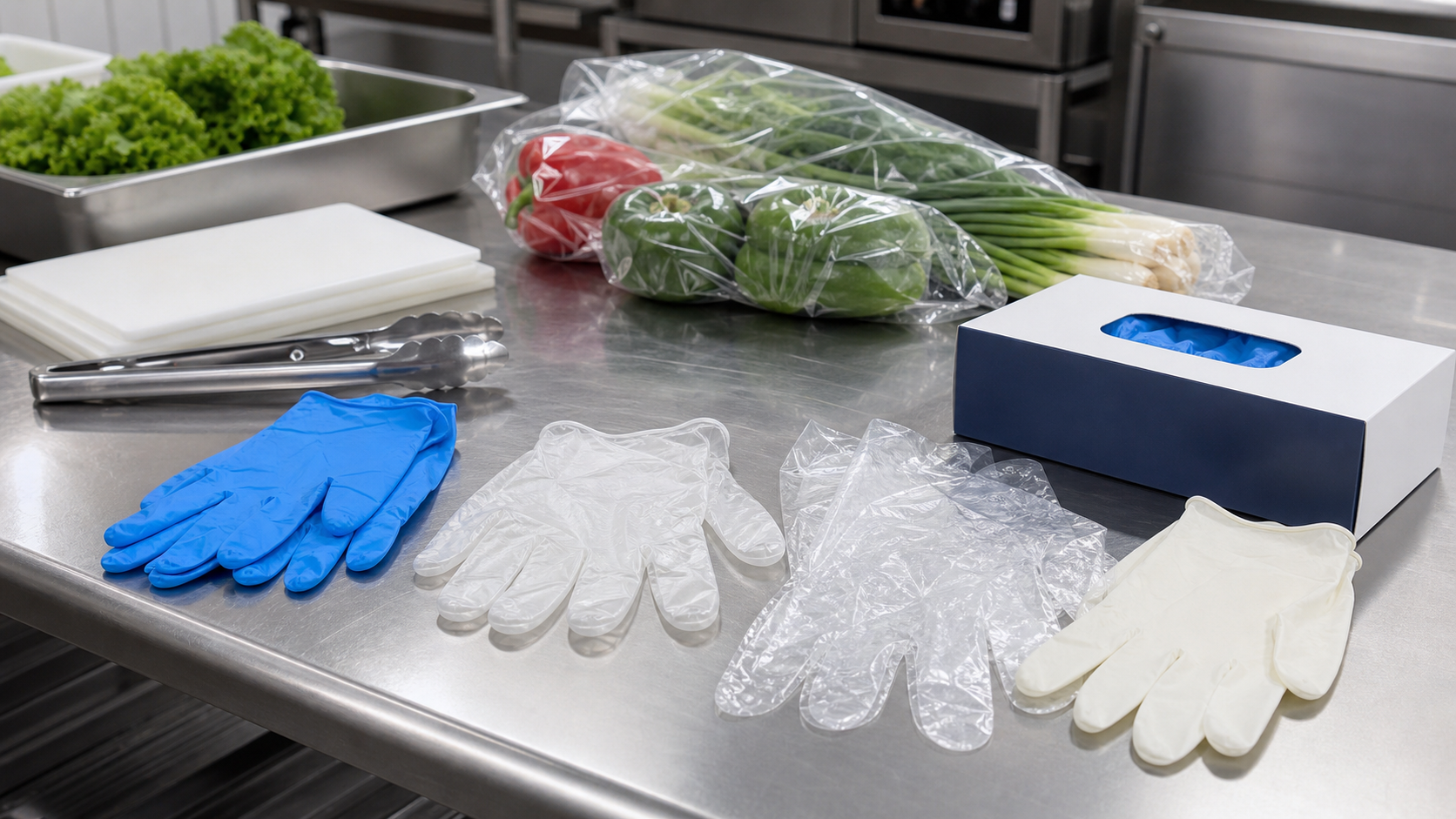
Food service gloves should be chosen by task, fit, durability, allergy risk, and change frequency. Nitrile gloves are often selected for durability and a latex-free fit. Vinyl gloves can work for lower-risk, short-duration food handling. Poly gloves are useful for quick, frequent glove changes. Latex gloves can offer comfort and stretch, but latex allergy concerns make synthetic options a safer default for many food service teams.
The best glove program is not one box for every task. Prep, serving, cleaning, dish handling, and register-to-food transitions often need different glove choices and clear change rules.
Why Food Service Glove Selection Matters
Disposable gloves help create a barrier during food handling, but they only work when they are used correctly. Gloves can still become contaminated when workers switch tasks, touch phones, handle money, clean surfaces, or move between raw and ready-to-eat foods. A good glove program makes proper glove changes easy.
The FDA Food Code is model guidance for retail and food service operations, and local rules may adopt or modify it. For purchasing, that means food service operators should pair glove selection with local health department requirements, internal food safety procedures, and training.
Nitrile vs Vinyl vs Poly vs Latex
| Glove type | Best-fit uses | Buyer note |
|---|---|---|
| Nitrile | Food prep, longer wear, better durability, latex-free teams | Often a strong all-around disposable glove for commercial kitchens. |
| Vinyl | Short-duration, lower-risk food handling and serving tasks | Usually economical, but less form-fitting and less durable than nitrile. |
| Poly | Fast glove changes, deli, bakery, sandwich assembly, light service | Loose fit makes it easy to change, but not ideal for detailed grip. |
| Latex | Tasks needing stretch and tactile feel where latex is allowed | Consider allergy risk for workers and customers before choosing. |
How To Choose Food Service Gloves
- Map the tasks. Separate prep, ready-to-eat handling, raw food handling, serving, cleaning, and dishwashing.
- Choose by change frequency. If workers change gloves constantly, poly or vinyl may make sense for light tasks. For longer prep work, nitrile may perform better.
- Consider allergy risk. The FDA notes that some people are allergic to natural rubber latex. Synthetic options such as nitrile or vinyl avoid that latex concern.
- Check food contact suitability. Buy gloves intended for food handling from a reliable safety supply source.
- Stock sizes correctly. Gloves that are too large can slip or snag; gloves that are too tight can tear and discourage use.
- Train glove changes. Gloves should be changed when switching tasks, when contaminated, when torn, and after handling non-food surfaces.
When To Change Gloves
Food service teams should build glove changes into normal workflow. Change gloves after handling raw food, before handling ready-to-eat food, after cleaning or sanitizing, after touching face or hair, after using a phone, after handling money, when moving between stations, and whenever the glove is torn or contaminated.
FDA medical glove guidance also states that medical gloves should not be reused, washed, disinfected, or shared. While food service gloves are purchased for different uses than medical gloves, the same practical lesson applies to disposable glove habits: disposable gloves are meant to be replaced, not cleaned and stretched beyond their purpose.
Quick Buying Checklist
- Glove material matches the task and change frequency.
- Latex allergy risk has been considered.
- Multiple sizes are stocked for better fit.
- Boxes are placed where glove changes actually happen.
- Gloves are suitable for food handling.
- Workers know when to wash hands and when to change gloves.
- Cleaning and chemical tasks use separate PPE when needed.
Common Mistakes To Avoid
Do not assume gloves replace handwashing. Gloves are a barrier, not a substitute for clean hands and safe food handling. Also avoid using one glove for every job in the kitchen. A loose poly glove may be convenient for sandwich assembly, but it may be frustrating for detailed prep. A durable nitrile glove may be better for longer tasks, but it may cost more than needed for fast, light service work.
FAQ
What gloves are best for food service?
Nitrile gloves are often the best all-around option because they are durable, latex-free, and form-fitting. Vinyl and poly gloves can be cost-effective for short, light tasks.
Are latex gloves safe for food handling?
Latex gloves may be used in some settings where allowed, but latex allergy concerns make synthetic gloves such as nitrile or vinyl a common safer default.
How often should food service gloves be changed?
Change gloves whenever switching tasks, after contamination, after handling raw food, before ready-to-eat food handling, when torn, and after touching non-food surfaces.
Mick Chan Bio
Mick Chan contributes practical safety supply guidance for eSafetySupplies.com, helping buyers compare PPE by hazard, task, compliance context, and day-to-day usability. His content is written to support safer purchasing decisions and should be paired with site-specific safety review.
Final CTA
Need disposable gloves for food prep, serving, deli, bakery, or commercial kitchen work? Compare nitrile, vinyl, poly, and latex glove options at eSafetySupplies.com, and choose the material that fits your workflow and local food safety requirements.
Sources: FDA Food Code 2022, FDA Medical Gloves, ASTM D7329-07(2024).