
Quick Answer
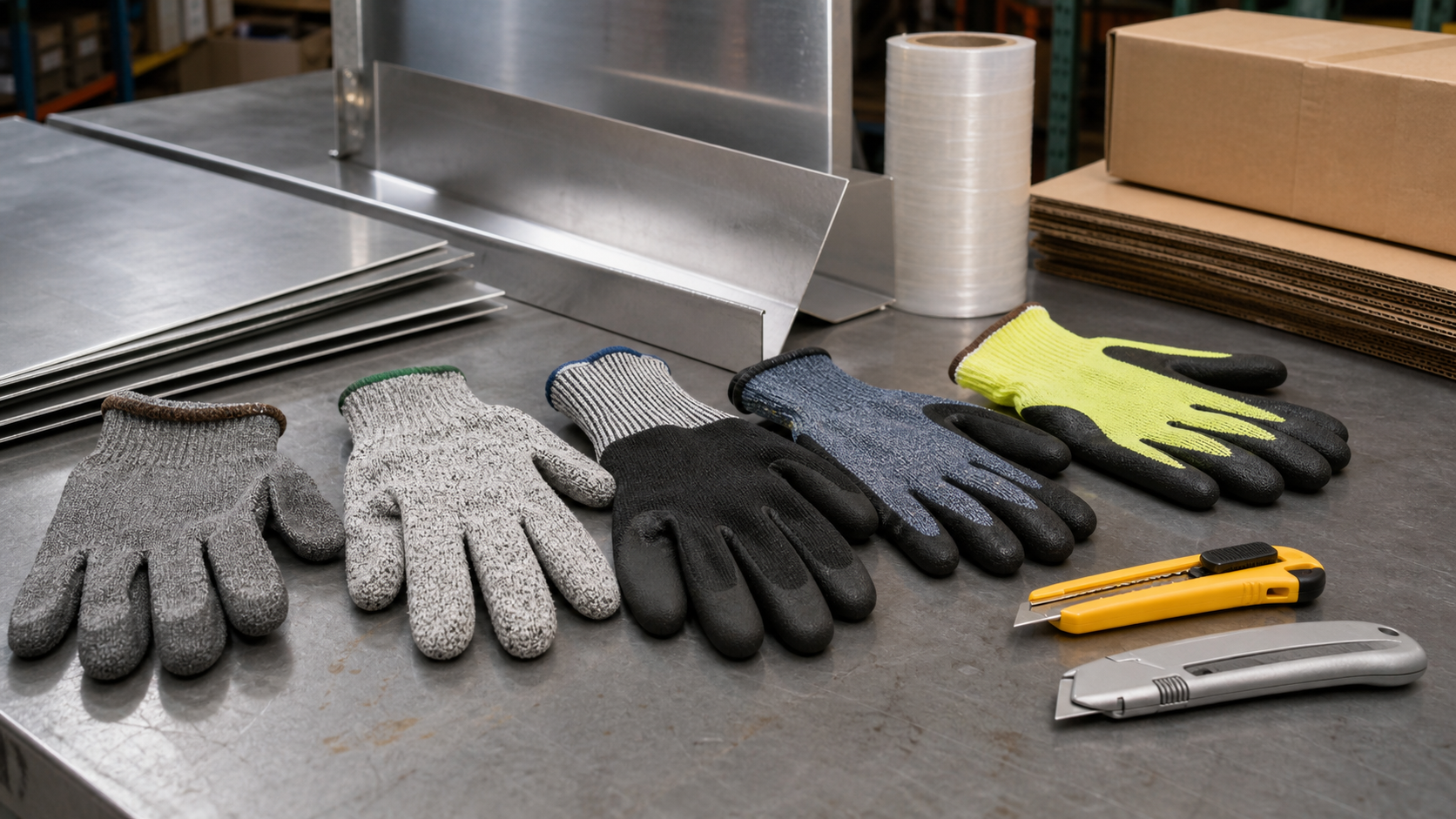
ANSI cut levels help compare cut-resistant gloves on a nine-level scale from A1 through A9. Lower levels are commonly used for lighter cut hazards, while higher levels are used when workers handle sharper edges, heavier materials, or more severe cut risks. The right glove is not always the highest level; it is the glove that fits the hazard while still allowing safe grip, dexterity, and comfort.
Use ANSI cut level as a screening tool, then match coating, grip, puncture resistance, abrasion resistance, cuff style, and sizing to the actual job.
What ANSI Cut Levels Mean
The ANSI/ISEA 105 hand protection standard classifies cut resistance from A1 to A9. ANSI’s public explanation describes A1 through A3 as light cut protection, A4 through A6 as medium cut protection, and A7 through A9 as higher or extreme cut protection. The scale helps buyers compare gloves more consistently than vague labels like “heavy duty” or “high performance.”
Cut level matters because OSHA’s hand protection rule requires employers to choose hand protection when workers face hazards such as cuts, lacerations, abrasions, punctures, chemical burns, thermal burns, and skin absorption hazards. A glove program should connect the tested glove performance to the actual task.
ANSI A1-A9 At A Glance
| ANSI cut level | Typical use context | Buyer note |
|---|---|---|
| A1-A2 | Light assembly, small parts, general warehouse handling, low cut exposure | Prioritize comfort and dexterity when cut risk is limited. |
| A3 | Light manufacturing, packaging, light glass or metal contact | A good middle ground for many low-to-moderate tasks. |
| A4-A5 | Sheet metal handling, appliance work, construction material handling, recycling | Often used when cut exposure is real but dexterity still matters. |
| A6 | Sharper metal edges, heavier glass, industrial maintenance, demanding warehouse tasks | Check grip and fatigue before standardizing across a team. |
| A7-A9 | High cut hazards, heavy sharp materials, severe edge exposure | Use when the hazard assessment supports it; test for task usability. |
How To Choose The Right Cut Level
- Identify the sharp object. Cardboard, plastic strapping, thin sheet metal, broken glass, machined parts, and blades create different hazards.
- Look at contact frequency. Occasional contact and constant handling do not carry the same risk.
- Consider force. High-force handling can require higher cut protection than light contact with the same material.
- Check grip conditions. Dry, oily, wet, and dusty environments change the coating you need.
- Balance dexterity. Overly bulky gloves can create secondary hazards if workers lose control of parts or tools.
- Document the decision. Keep the selected glove level connected to your hazard assessment and task list.
Glove Coating Matters Too
Cut level measures one performance area, but the glove coating often decides how useful the glove feels in real work. Polyurethane coatings are often chosen for dexterity and tactile feel. Nitrile coatings can improve durability and grip, especially around oils. Latex coatings may offer strong grip in some construction or material-handling tasks, but latex allergy concerns should be considered. Foam coatings can help with breathability and controlled grip.
Do Higher Cut Levels Last Longer?
Not necessarily. Cut resistance is not the same thing as abrasion life, puncture resistance, heat protection, or chemical resistance. A higher cut level may use stronger fibers or construction, but you still need to check the glove’s other performance ratings and inspect gloves regularly for wear.
Quick Buying Checklist
- Hazard assessment identifies the sharp material and task.
- ANSI cut level is appropriate for the severity and frequency of contact.
- Coating matches dry, wet, oily, or dusty conditions.
- Glove fit supports safe tool and material handling.
- Thumb crotch, palm, and fingertips are durable enough for the task.
- Workers can remove and replace damaged gloves easily.
- Purchasing keeps multiple sizes available so workers are not forced into poor fit.
Common Mistakes To Avoid
Do not buy the highest cut level for every job without testing it. If the glove is too stiff, too hot, or too bulky, workers may remove it or lose dexterity during detailed work. Also avoid comparing gloves by marketing names alone. Look for the ANSI level, coating, material, and task suitability.
FAQ
What ANSI cut level is best?
The best ANSI cut level depends on the sharpness of the material, force, contact frequency, and task. A4 or A5 may be suitable for many moderate industrial tasks, while severe edge exposure may require A7-A9.
Are cut-resistant gloves cut-proof?
No. Cut-resistant gloves reduce cut risk; they are not cut-proof. They must be matched to the hazard and replaced when damaged.
Can cut-resistant gloves protect against punctures?
Not automatically. Cut resistance and puncture resistance are different performance areas, so check the glove specifications if puncture hazards are present.
Mick Chan Bio
Mick Chan contributes practical safety supply guidance for eSafetySupplies.com, helping buyers compare PPE by hazard, task, compliance context, and day-to-day usability. His content is written to support safer purchasing decisions and should be paired with site-specific safety review.
Final CTA
Choosing cut-resistant gloves for warehouse, metal, glass, construction, or maintenance work? Compare cut levels, coatings, and sizes at eSafetySupplies.com, then match the glove to your task-specific hazard assessment.
Sources: ANSI/ISEA 105-2024 overview from ANSI, OSHA 29 CFR 1910.138.