
Quick Answer
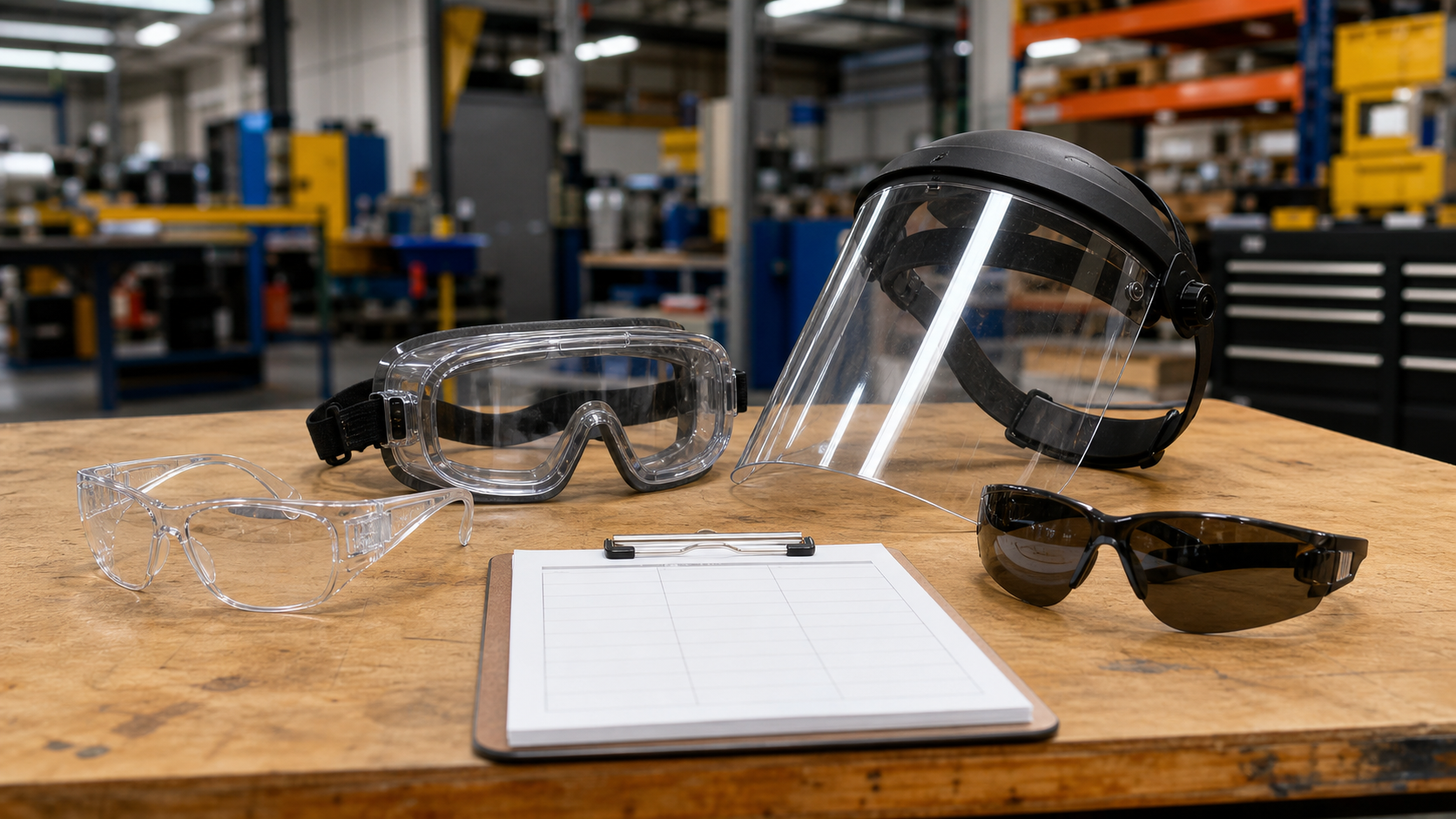
Safety glasses, safety goggles, and face shields protect against different eye and face hazards. Safety glasses with side shields are often used for flying particles and general impact hazards. Goggles provide a closer seal for splash, dust, and certain higher-exposure tasks. Face shields help protect more of the face, but they are usually used with safety glasses or goggles when impact or splash can reach the eyes.
The correct choice depends on the hazard: flying particles, liquid chemical splash, dust, molten metal, welding or cutting light, heat, or a combination of exposures. OSHA requires appropriate eye or face protection when employees are exposed to eye or face hazards, including flying particles, molten metal, liquid chemicals, acids or caustic liquids, chemical gases or vapors, or potentially injurious light radiation.
Safety Glasses vs Goggles vs Face Shields
| Protection type | Best-fit uses | Key limitation |
|---|---|---|
| Safety glasses with side shields | General impact protection, warehouse work, light grinding, drilling, material handling, maintenance | Less sealed than goggles; not ideal as the only protection for splash or heavy dust. |
| Safety goggles | Chemical splash, dust, debris, lab work, cleaning tasks, grinding, chipping, and over-prescription protection | Can fog or feel warmer; vent style must match the hazard. |
| Face shields | Face coverage for splash, flying debris, heat, sparks, and grinding support | Should not be treated as a substitute for primary eye protection when eye impact or splash exposure exists. |
When Safety Glasses Are Enough
Safety glasses are often the practical default for general work where the primary hazard is flying particles from tools, materials, or routine handling. OSHA requires side protection when there is a hazard from flying objects. For jobs such as basic warehouse picking, light assembly, maintenance inspection, or non-splash shop work, properly marked safety glasses with side shields may be suitable when the hazard assessment supports that choice.
Fit matters. Glasses that slide down, leave wide side gaps, or interfere with other PPE are less likely to protect workers consistently. For outdoor or high-glare jobs, tinted or polarized safety glasses may help comfort, but lens tint should still match the work environment and hazard.
When Goggles Are The Better Choice
Goggles are used when workers need a closer seal around the eyes. They are commonly selected for chemical splash, dust, grinding, chipping, cleaning chemicals, and tasks where particles can come from multiple directions. OSHA guidance also notes that employees who wear prescription lenses must use protection that either incorporates the prescription or fits over prescription lenses without disturbing the protective position.
Choose the vent style carefully. Direct-vent goggles may help airflow but can allow splash or fine dust entry in some tasks. Indirect-vent or non-vented goggles may be better for splash hazards, depending on the product rating and work conditions.
When Face Shields Are Needed
Face shields help protect a larger area of the face from splash, particles, heat, and certain flying debris. They are common in grinding, chemical handling, cutting, and tasks where workers need more coverage than eyewear alone provides.
A key buying point: face shields are often secondary protection. OSHA’s PPE assessment guidance says face shields do not protect employees from impact hazards by themselves and should be used with goggles or safety spectacles when impact hazards are present. For severe chemical splash exposure, a face shield may be used over goggles.
Selection Checklist
- Identify whether the hazard is impact, splash, dust, heat, light radiation, or a combination.
- Use side protection when flying objects are possible.
- Use goggles when a closer seal is needed.
- Use a face shield with primary eye protection when face coverage is needed.
- Confirm protective eyewear markings and applicable ANSI/ISEA Z87.1 compliance.
- Check compatibility with hard hats, respirators, earmuffs, and prescription eyewear.
- Account for fogging, lens tint, comfort, cleaning, and replacement.
Common Mistakes To Avoid
Do not use a face shield alone for impact work when the eyes still need primary protection. Do not assume ordinary prescription glasses are safety glasses. Do not buy one eyewear style for every team if some workers face splash, dust, radiant energy, or grinding hazards. Also avoid choosing only by price; eyewear that is uncomfortable, fog-prone, or poorly fitted is less likely to stay on.
FAQ
Are safety glasses the same as goggles?
No. Safety glasses protect against many impact hazards and often include side shields. Goggles fit closer to the face and can provide better protection against splash, dust, and particles from multiple directions.
Can a face shield replace safety glasses?
Usually no. For impact or splash hazards that can reach the eyes, use a face shield together with safety glasses or goggles as required by the hazard assessment.
What does ANSI Z87.1 mean?
ANSI/ISEA Z87.1 is the U.S. consensus standard used for occupational and educational eye and face protection. OSHA construction rules recognize protective devices that comply with listed Z87.1 versions or are demonstrated to be at least as effective.
Mick Chan Bio
Mick Chan contributes practical safety supply guidance for eSafetySupplies.com, helping buyers compare PPE by hazard, task, compliance context, and day-to-day usability. His content is written to support safer purchasing decisions and should be paired with site-specific safety review.
Final CTA
Need safety glasses, goggles, or face shields for warehouse, construction, lab, maintenance, or industrial work? Compare eye and face protection options at eSafetySupplies.com, and match each product to your workplace hazard assessment before ordering.
Sources: OSHA 29 CFR 1910.133, OSHA 29 CFR 1926.102, OSHA PPE Assessment guidance, ANSI/ISEA Z87.1-2020.