
Quick Answer
A pneumatic tool safety checklist should verify that the tool is in safe condition, air hoses and couplings are secured, operating pressure follows manufacturer instructions, guards and retainers are in place, damaged tools are tagged out of service, and workers have PPE for eye, face, hand, hearing, dust, and impact hazards.
Who This Guide Is For
This guide is for construction crews, maintenance departments, manufacturing shops, warehouse repair teams, and safety buyers who manage nailers, staplers, grinders, chippers, impact tools, or other air-powered equipment. It is educational and does not replace OSHA requirements, state-plan rules, manufacturer instructions, competent-person review, or site-specific safety procedures.
Why Pneumatic Tool Safety Matters
Air-powered tools can create impact, puncture, flying-particle, hose-whip, noise, dust, vibration, and struck-by hazards. OSHA construction rules for pneumatic power tools address issues such as secured hoses and couplings, safety clips or retainers on certain tools, manufacturer-rated operating pressures, and protections around airless spray equipment. A strong checklist keeps the inspection practical before the trigger is ever pulled.
Pneumatic Tool Safety Checklist
- Inspect the tool body, trigger, guard, fastener magazine, retainer, and accessories before use.
- Check air hoses for cuts, crushing, leaks, worn fittings, and trip hazards.
- Secure hose couplings and use safety devices where required by the tool and standard.
- Confirm compressor and line pressure match the tool manufacturer's instructions.
- Disconnect air before clearing jams, changing accessories, or servicing the tool.
- Keep the tool pointed in a safe direction and keep hands away from discharge areas.
- Use chip guards, screens, or shields when flying particles could strike nearby workers.
- Tag damaged tools, hoses, couplers, guards, or gauges out of service immediately.
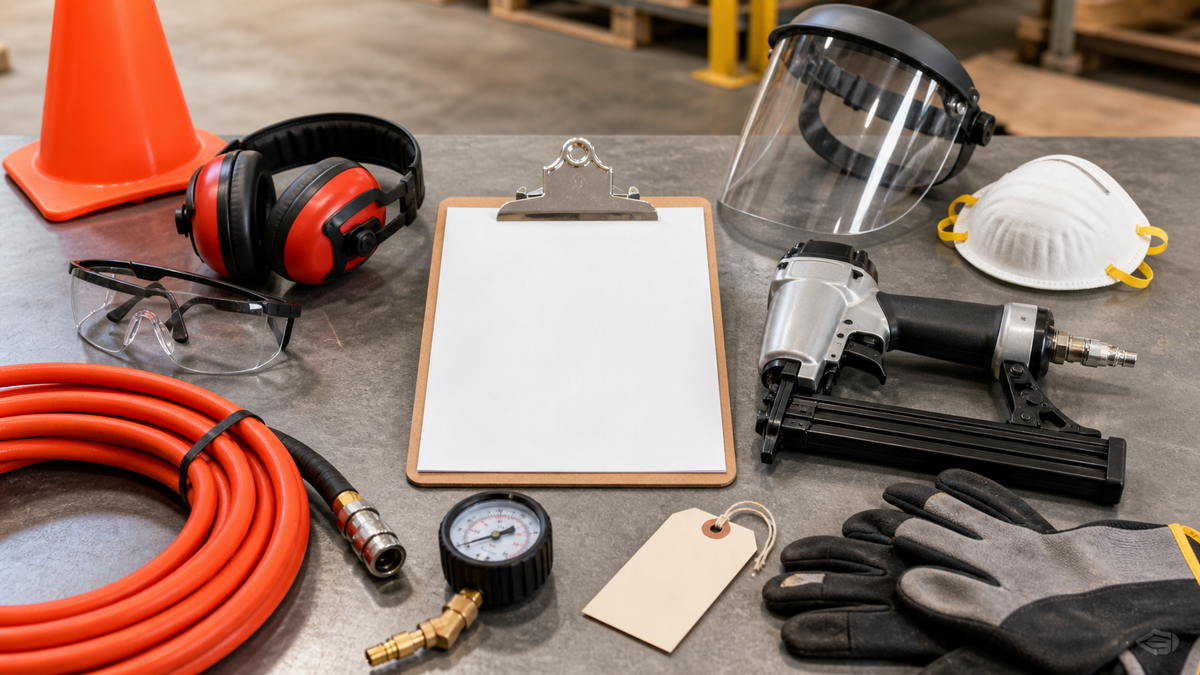
- Match PPE to the task: eye protection, face protection, hearing protection, gloves, and respiratory protection where dust or mist is present.
- Store hoses and tools so they are not crushed, kinked, contaminated, or left across walkways.
Product Category Match Table
| Pneumatic Tool Need | ESS Category | What To Verify |
|---|---|---|
| Flying particles | Safety glasses and face shields | Impact protection, side coverage, fog control, and compatibility with hard hats or respirators. |
| Noise exposure | Ear protection | Noise exposure, NRR labeling, comfort, and fit with other PPE. |
| Grip and abrasion | Work gloves | Dexterity, grip, cut/abrasion needs, and whether gloves can be used safely with the tool. |
| Dust or mist | Respiratory protection | Exposure type, filter selection, fit testing, and respiratory program requirements. |
| Damaged equipment control | Accident prevention tags | Tags clearly identify tools, hoses, or gauges that must not be used. |
| Nearby worker protection | Traffic cones and signs | Work area boundaries, visibility, and access control around tool use. |
Common Mistakes
- Using a hose or coupler that leaks, whips, or does not lock securely.
- Increasing pressure to compensate for a dull accessory or poor tool maintenance.
- Removing guards, retainers, screens, or shields for speed.
- Clearing jams while the tool is still connected to air.
- Wearing eye protection but skipping face or hearing protection when the task requires it.
- Leaving damaged tools in the shared tool area without a clear out-of-service tag.
- Running hoses through aisles without routing, covers, cones, or housekeeping controls.
FAQ
What should be inspected on pneumatic tools before use?
Inspect the tool body, trigger, guard, retainer, magazine, hose, coupler, fittings, pressure gauge, accessories, and PPE. Remove damaged or questionable equipment from service until it is repaired or replaced.
What PPE is needed for pneumatic tools?
PPE depends on the task, but common needs include safety glasses, face shields, hearing protection, gloves, and respiratory protection when dust or mist exposure is present. Use the hazard assessment and manufacturer instructions to make the final selection.
Why are pneumatic hose couplings important?
Loose or damaged couplings can separate under pressure and create hose-whip or struck-by hazards. Couplings should be secured and compatible with the hose, tool, and pressure used.
Should damaged air tools be tagged?
Yes. Damaged tools, hoses, couplers, guards, retainers, or gauges should be clearly tagged out of service so another worker does not unknowingly use them.
Mick Chan Bio
Mick Chan is an eSafetySupplies safety content contributor focused on practical workplace safety supply planning, PPE selection, and compliance-oriented checklists for facility, warehouse, construction, and maintenance teams.
Final CTA
Use this checklist to standardize pneumatic tool inspections across crews and departments. Compare ESS safety glasses, face shields, ear protection, work gloves, respirators, cones, and accident prevention tags, then confirm your final setup against the tool manufacturer's instructions and your site safety program.