
Quick Answer
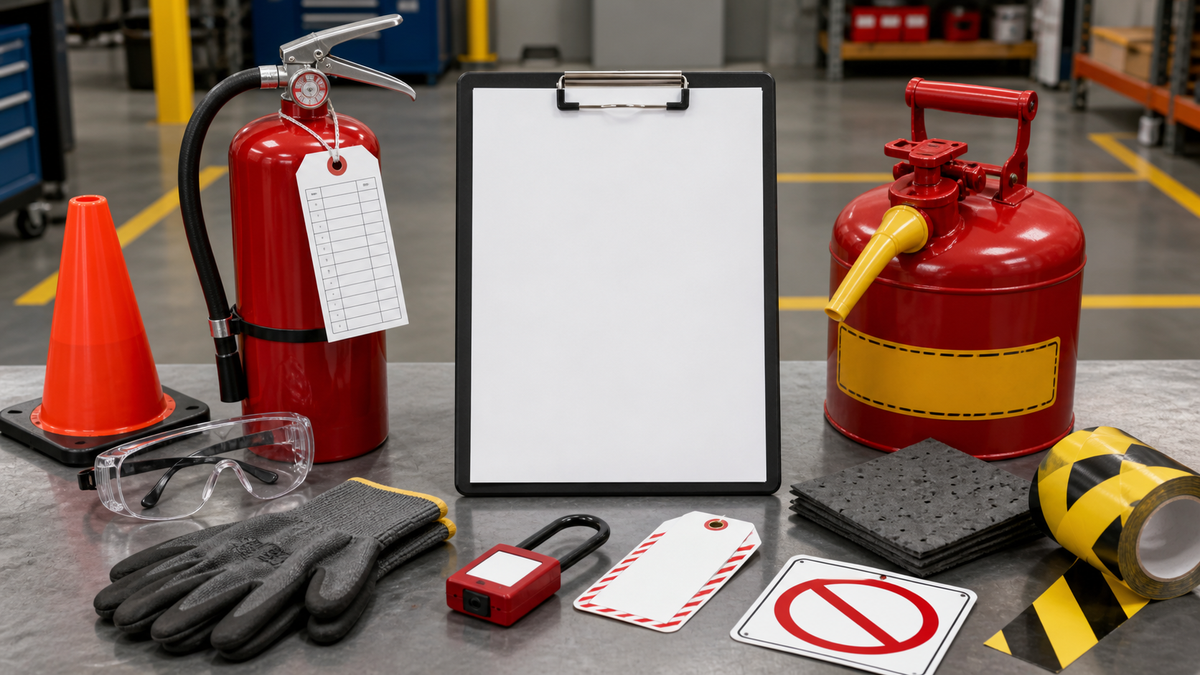
A fire prevention plan checklist should identify major workplace fire hazards, ignition sources, fuel sources, housekeeping controls, storage rules, fire protection equipment, employee responsibilities, and inspection routines. For safety supplies, focus on extinguishers and tags, flammable-liquid storage, spill control, signs, labels, and clear access around emergency equipment.
Who This Guide Is For
This guide is for facility managers, warehouse supervisors, maintenance teams, EHS coordinators, and small business owners who need a practical fire-prevention supply checklist. It is educational and does not replace OSHA requirements, state-plan rules, local fire code, insurance requirements, manufacturer instructions, or site-specific fire protection advice.
Why Fire Prevention Planning Matters
OSHA's fire prevention plan standard requires employers that use such plans to include major fire hazards, handling and storage procedures, ignition-source controls, equipment maintenance controls, and names or job titles of responsible employees. The useful buying lesson is that fire prevention is not just about having an extinguisher on the wall. It is also about controlling fuel, ignition, storage, housekeeping, access, labeling, and inspection discipline.
Fire Prevention Plan Checklist
- Identify major fire hazards by area, process, material, and work task.
- List flammable and combustible materials and where they are stored or used.
- Control ignition sources such as sparks, smoking, hot work, energized equipment, and static where relevant.
- Keep aisles, exits, extinguisher locations, electrical panels, and storage areas clear.
- Inspect fire extinguishers, tags, cabinets, brackets, and access routes on a routine schedule.
- Store flammable liquids in approved containers or cabinets where required by the site plan.
- Keep spill absorbents and disposal supplies available where liquid fuel or chemicals are handled.
- Use signs and labels to mark extinguisher locations, no-smoking areas, flammable storage, and restricted access.
- Assign responsible employees for fuel-source control, equipment maintenance, inspection, and emergency reporting.
- Train employees on the fire hazards they may encounter and what actions they should take.
Product Category Match Table
| Fire Prevention Need | ESS Category | What To Verify |
|---|---|---|
| Extinguisher readiness | Fire extinguisher tags | Tags match the inspection routine and do not replace required extinguisher maintenance. |
| Flammable-liquid handling | Safety cans | Container type, material compatibility, labeling, storage location, and site rules. |
| Chemical or fuel spills | Spill kits | Absorbent type, expected liquid, disposal steps, PPE, and restock trigger. |
| Fire and hazard communication | Safety signs | Visibility, placement, message, durability, and language needs. |
| Hand and eye exposure during cleanup | Work gloves and safety glasses | PPE matches the material, SDS, cleanup method, and task. |
Common Mistakes
- Treating extinguisher tags as the entire fire-prevention program.
- Storing flammable liquids near ignition sources or unmarked work areas.
- Letting pallets, boxes, or carts block extinguisher access.
- Failing to replace used spill absorbents or missing cabinet labels.
- Mixing incompatible materials in the same storage area without review.
- Leaving fire-prevention ownership vague across shifts or departments.
- Not updating the plan when processes, chemicals, or storage areas change.
FAQ
What should be included in a fire prevention plan checklist?
Include major fire hazards, fuel sources, ignition-source controls, storage procedures, housekeeping, equipment maintenance, inspection routines, employee responsibilities, and training needs.
Are fire extinguishers enough for fire prevention?
No. Extinguishers are important emergency equipment, but fire prevention also depends on controlling fuel sources, ignition sources, storage, spills, housekeeping, signs, and employee procedures.
How often should fire prevention supplies be checked?
Use the inspection frequency required by your site program, extinguisher service provider, local rules, and manufacturer instructions. High-use areas should also be checked after spills, storage changes, hot work, or layout changes.
What supplies help support fire prevention planning?
Common support supplies include extinguisher tags, safety cans, flammable-storage labels, safety signs, spill kits, absorbents, PPE, floor marking, and inspection checklists.
Mick Chan Bio
Mick Chan is an eSafetySupplies safety content contributor focused on practical workplace safety supply planning, PPE selection, and compliance-oriented checklists for facility, warehouse, construction, and maintenance teams.
Final CTA
Use this checklist to review fire-prevention supplies by department, storage area, and work process. Compare ESS fire extinguisher tags, safety cans, spill kits, signs, gloves, eyewear, and floor marking, then confirm your final plan with your safety lead or fire protection professional.