
Quick Answer
An aerial lift safety checklist should verify the lift inspection, manufacturer instructions, trained operator, fall protection, guardrails, controls, ground conditions, overhead hazards, traffic separation, and PPE before work begins. The goal is to prevent falls, tip-overs, struck-by incidents, electrocution, and equipment misuse.
Who This Guide Is For
This guide is for contractors, facility maintenance teams, warehouse managers, rental-equipment coordinators, and safety buyers using boom lifts, scissor lifts, or similar elevated work platforms. It is educational and does not replace OSHA requirements, state-plan rules, ANSI or manufacturer instructions, operator training, competent-person review, or site-specific safety procedures.
Why Aerial Lift Safety Matters
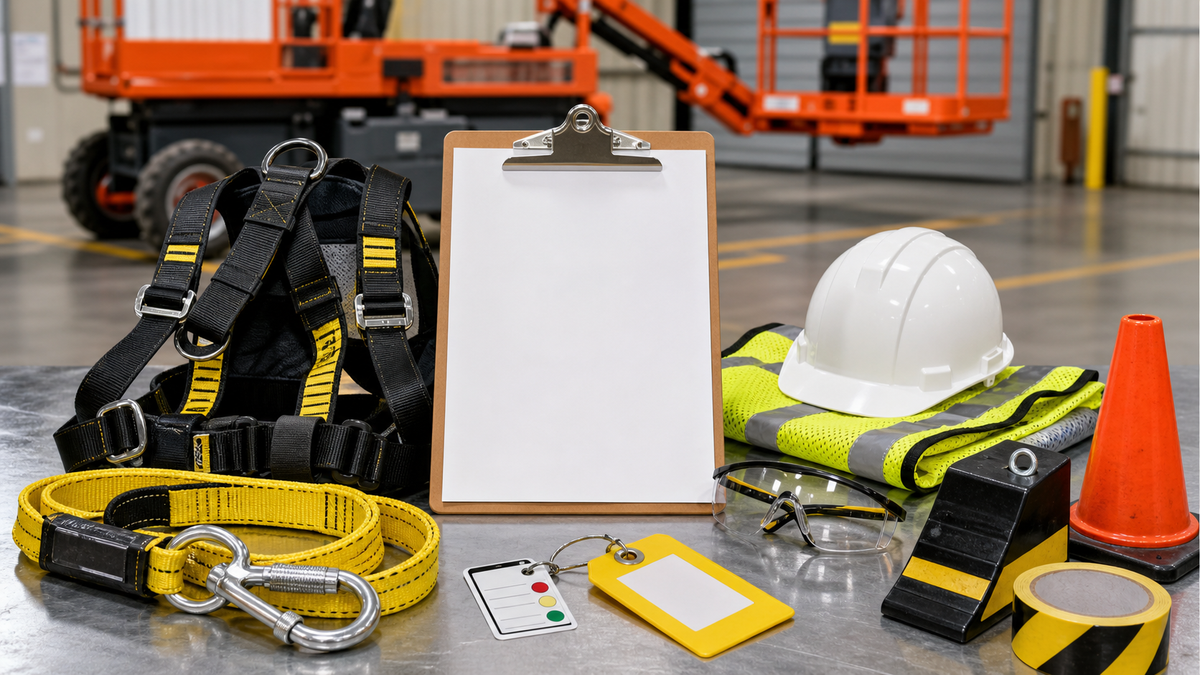
Aerial lifts put workers at height while equipment moves around changing ground, traffic, structures, and overhead hazards. OSHA's aerial lift rules and guidance emphasize trained use, safe operation, fall protection where required, and following manufacturer instructions. The practical purchasing point is that lift safety usually needs more than one item: fall protection, head and eye protection, high-visibility apparel, cones or barricades, inspection tags, and clear work-area controls.
Aerial Lift Safety Checklist
- Confirm the operator is trained and authorized for the lift type.
- Review the manufacturer's operating instructions and site-specific lift plan.
- Inspect controls, alarms, guardrails, platform gate, tires, wheels, leaks, labels, and emergency lowering functions.
- Check fall protection requirements for the lift type and task.
- Inspect harnesses, lanyards, anchors, and connectors before use.
- Confirm the work surface is firm, level, and able to support the lift.
- Identify slopes, holes, drop-offs, debris, floor openings, and soft ground.
- Keep the platform within rated load limits, including workers, tools, and materials.
- Mark or barricade the work area where pedestrians, forklifts, or vehicles could enter.
- Check overhead hazards, including power lines, beams, sprinklers, doors, and racking.
- Tag damaged lift equipment or PPE out of service until reviewed.
Product Category Match Table
| Aerial Lift Need | ESS Category | What To Verify |
|---|---|---|
| Fall exposure | Fall protection | Harness, lanyard, connector, anchor point, inspection status, and compatibility with the lift. |
| Head and eye hazards | Hard hats and safety glasses | Impact protection, side coverage, fit, and compatibility with other PPE. |
| Traffic separation | Traffic cones | Visibility, spacing, work-zone layout, and pedestrian or vehicle exposure. |
| Worker visibility | High-visibility apparel | Class, background, lighting, vehicle traffic, and layering needs. |
| Damaged equipment control | Accident prevention tags | Tags clearly identify lifts, harnesses, or accessories that must not be used. |
Common Mistakes
- Treating scissor lifts and boom lifts as identical for fall protection.
- Skipping the pre-use inspection because the lift was rented recently.
- Using a harness or lanyard that has not been inspected.
- Driving or elevating on poor ground without checking stability.
- Working too close to overhead power or building hazards.
- Letting pedestrians or forklifts pass under or near the platform.
- Exceeding platform capacity with tools, materials, or multiple workers.
FAQ
What should be inspected before using an aerial lift?
Inspect the lift controls, guardrails, gate, platform, tires or wheels, fluid leaks, alarms, labels, emergency controls, and visible structural condition. Also inspect fall protection and PPE before use.
Do aerial lifts require fall protection?
Fall protection requirements depend on the lift type, task, and applicable rules. Boom-supported aerial lifts commonly require workers to wear a body belt with lanyard or a full-body harness with lanyard attached to the boom or basket, while scissor lift requirements are evaluated differently.
What PPE is commonly used with aerial lifts?
Common PPE includes a hard hat, safety glasses, high-visibility apparel, gloves, and fall protection where required. The final PPE set should come from the task hazard assessment and manufacturer instructions.
How should the work area around an aerial lift be controlled?
Use cones, signs, barricades, spotters, or floor marking where pedestrians, forklifts, vehicles, or falling-object hazards are present. Controls should prevent people from entering the lift operating area unexpectedly.
Mick Chan Bio
Mick Chan is an eSafetySupplies safety content contributor focused on practical workplace safety supply planning, PPE selection, and compliance-oriented checklists for facility, warehouse, construction, and maintenance teams.
Final CTA
Use this checklist to build an aerial lift safety supply list for each crew and work area. Compare ESS fall protection, hard hats, safety glasses, high-visibility apparel, cones, and accident prevention tags, then confirm the final requirements against the lift manual and your site safety program.