
Quick Answer
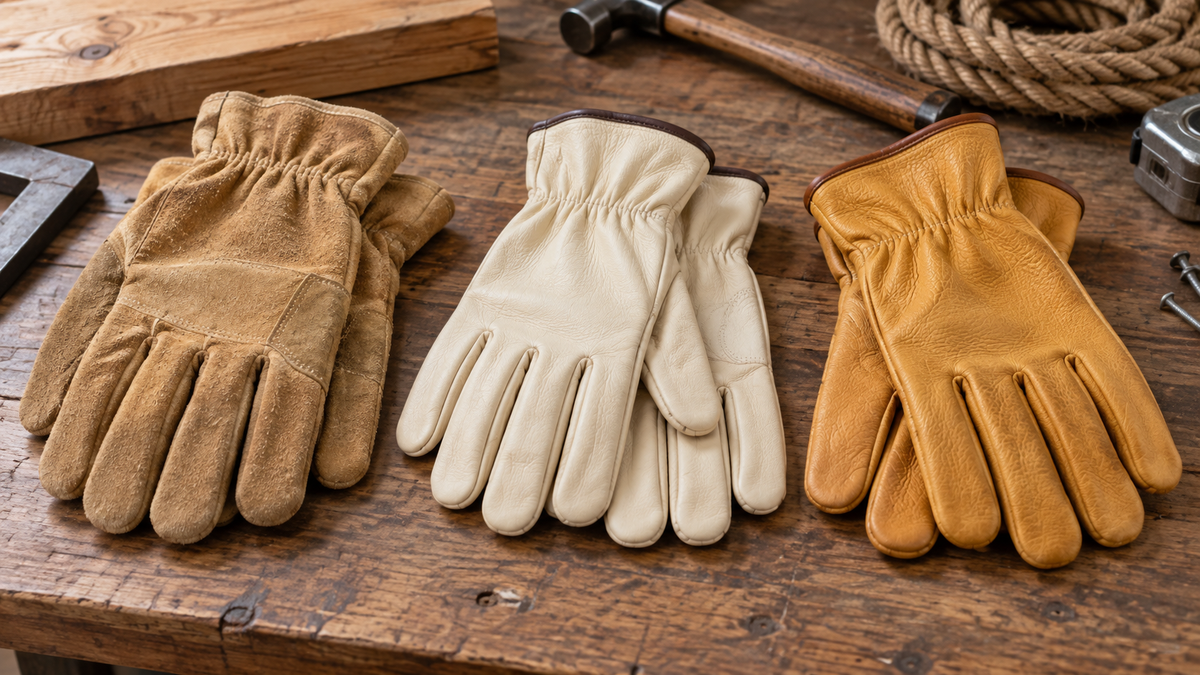
Cowhide leather work gloves are a practical choice when durability, abrasion resistance, and broad general-purpose use are priorities. Goatskin is often selected for flexibility and dexterity, while pigskin is valued for breathability and its ability to remain pliable after becoming wet. Hide type is only one buying factor: confirm the glove's construction, fit, cuff, lining, and tested protection levels against the actual workplace hazard.
Who This Guide Is For
This guide is for teams selecting reusable leather gloves for construction, material handling, maintenance, landscaping, utilities, warehousing, fabrication, and general industrial work.
This article is educational and does not replace legal, regulatory, engineering, or site-specific safety advice. Always verify requirements against applicable OSHA standards, state plans, the workplace hazard assessment, manufacturer instructions, and the ratings marked for the exact glove.
Leather Work Gloves at a Glance
| Leather type | Common buying priority | Practical strengths | What to verify |
|---|---|---|---|
| Cowhide | General durability and value | Broad availability, good abrasion resistance, durable construction options | Grain or split leather, thickness, seams, lining, tested ratings |
| Goatskin | Dexterity and flexible fit | Soft, supple feel with useful flexibility | Palm reinforcement, abrasion and cut ratings, cuff and closure |
| Pigskin | Breathability and wet-work flexibility | Breathable leather that can remain pliable after wetting | Drying and care instructions, lining, grip, task suitability |
This comparison reflects common material tendencies described in manufacturer selection guidance. It is not a substitute for the performance data of a finished glove. Leather grade, tanning, thickness, stitching, pattern, lining, coatings, and reinforcement can change how two gloves made from the same hide perform.
Start With the Hazard, Not the Hide
OSHA requires employers to select hand protection based on the task, conditions, duration, and identified hazards. OSHA also notes that no glove protects against every hand hazard and advises employers to request manufacturer documentation showing that a glove meets the appropriate test standards.
Before comparing leather types, identify whether workers face:
- Abrasion from lumber, masonry, rope, cartons, or rough parts
- Cuts or punctures from edges, wire, sheet material, or fasteners
- Heat, sparks, or hot surfaces
- Impact to knuckles or the back of the hand
- Chemicals, oils, water, or biological contamination
- Cold weather or prolonged outdoor exposure
- Fine assembly work requiring high dexterity
Leather can be useful for many dry mechanical tasks, but the word "leather" is not a cut, puncture, heat, chemical, or electrical rating. When one of those hazards is significant, verify the tested performance of the complete glove.
Cowhide Leather Work Gloves
Cowhide is widely used in leather work gloves because it offers a practical combination of durability, abrasion resistance, availability, and cost. It appears in driver gloves, leather-palm gloves, chore gloves, welding gloves, and reinforced industrial styles.
Cowhide is often worth evaluating for:
- Lumber, masonry, and general construction handling
- Warehousing and freight work
- Landscaping and grounds maintenance
- General equipment and facility maintenance
- Fabrication tasks using an appropriately rated glove
- Repetitive handling where palm wear is a concern
Not all cowhide is alike. Top-grain cowhide uses the outer hide surface and is generally smoother and more flexible. Split cowhide comes from the lower layer and often has a rougher surface that can support grip and economical durability. The better choice depends on the task, glove design, and manufacturer specifications.
For frequent general handling, cowhide is a sensible baseline to trial. If workers need fine finger control, compare a thinner grain-leather driver glove with goatskin rather than assuming every cowhide glove will feel bulky.
Goatskin Leather Work Gloves
Goatskin is commonly selected when flexibility, dexterity, and a soft hand feel matter. Manufacturer guidance often positions goatskin as a strong option for jobs that require workers to grip tools, operate controls, or handle parts without giving up the durability of leather.
Goatskin may be useful for:
- Tool use and equipment operation
- Driving and material handling
- Assembly and maintenance
- Utility and construction tasks requiring finger movement
- Welding applications when the exact glove is designed and rated for the process
A flexible hide does not automatically make a glove cut resistant. Some goatskin gloves include engineered liners, reinforced palms, impact protection, or heat-resistant stitching; others are basic leather driver gloves. Compare those features separately.
Workers should trial the actual glove while performing representative motions. Check whether fingertips bunch, seams press against the hand, the palm slips on controls, or the cuff interferes with sleeves and other PPE.
Pigskin Leather Work Gloves
Pigskin is known for breathability and for remaining relatively pliable after becoming wet. Those characteristics can make pigskin useful for outdoor work, landscaping, agriculture, and handling tasks where occasional moisture is expected.
Pigskin may be considered for:
- Outdoor material handling
- Landscaping and grounds work
- General construction in changing weather
- Jobs where sweaty hands and breathability affect worker acceptance
- Tasks where gloves may become damp and need to dry between uses
Moisture tolerance does not make pigskin waterproof or chemical resistant. Wet gloves can still lose grip, transfer contaminants, become uncomfortable, or degrade if they are stored incorrectly. Follow the manufacturer's cleaning and drying instructions, and remove gloves from service when the leather becomes stiff, cracked, badly worn, or contaminated.
Grain Leather vs Split Leather
Leather type and leather layer answer different questions. Cowhide, goatskin, and pigskin identify the animal hide. Grain and split identify the part of that hide used in the glove.
Grain leather
Grain leather retains the outer surface. It is commonly smoother, more flexible, and more resistant to moisture than comparable split leather. It is frequently used for driver-style gloves and tasks where dexterity and a closer fit are valuable.
Split leather
Split leather comes from the lower fibrous layer. Its rough surface can support grip, abrasion-focused handling, and economical glove construction. Split cowhide is common in leather-palm and welding gloves.
Do not rank gloves by the words "grain" or "split" alone. A reinforced split-leather glove may be better for rough handling than a light grain-leather glove, while a grain glove may be preferable for controls and tools. Evaluate the finished glove and its ratings.
Common Leather Glove Styles
Driver gloves
Leather driver gloves usually have a close-fitting pattern, slip-on or elastic wrist, and full leather construction. They are useful where grip and dexterity matter, but the exact model still needs to match the hazard.
Leather-palm gloves
Leather-palm gloves combine a leather palm with a fabric back and cuff. They can be economical for rough handling and general labor. Check palm reinforcement, fingertip coverage, cuff type, and exposed fabric areas.
Double-palm and chore gloves
Double-palm and chore gloves add material in high-wear areas. More layers can improve service life in some tasks but may also reduce flexibility.
Welding gloves
Welding gloves use leather with construction features intended for welding hazards. Select by welding process, heat exposure, cuff coverage, dexterity, and tested ratings. A general leather driver glove is not automatically a welding glove.
Ratings and Features to Compare
When the hazard assessment identifies cut, abrasion, puncture, impact, heat, or flame exposure, look beyond the hide description. Depending on the task, useful product information may include:
- ANSI/ISEA 105 cut, abrasion, puncture, or heat-contact ratings
- Impact protection claims and the standard used
- Palm or fingertip reinforcement
- Kevlar or other heat-resistant thread
- Engineered cut-resistant liners
- Insulation for cold conditions
- Gauntlet, safety, knit, or elastic cuffs
- High-visibility panels for work around vehicles or equipment
- Manufacturer instructions for cleaning and service life
Compare ratings only when they use the same test method and scale. A glove with no published rating should not be assumed to match a rated glove simply because both are leather.
Where Leather Gloves Are the Wrong Choice
Standard leather work gloves may be unsuitable for chemical exposure, electrical work, blood or biological hazards, food handling, or tasks requiring liquid-proof protection. Leather can absorb liquids and contaminants, making decontamination difficult.
Use chemical-resistant gloves for chemicals when supported by compatibility data. Use properly rated electrical protective equipment for electrical hazards. For sharp edges, compare cut-resistant gloves with a verified ANSI cut level.
Rotating machinery creates another concern. Gloves can become entangled, so the machine-specific procedure and hazard assessment must determine whether gloves are appropriate at all.
Fit and Worker Trial
Proper fit supports grip, control, comfort, and consistent use. A glove that is too tight can restrict motion and stress seams. A glove that is too loose can bunch at the fingertips, reduce control, and snag.
Before a bulk order:
- Stock representative sizes and candidate styles.
- Have workers perform normal gripping, lifting, tool, and control tasks.
- Check fingertip length, thumb movement, wrist closure, and cuff overlap.
- Record premature wear, seam failures, grip concerns, and hand fatigue.
- Compare cost per completed work cycle, not only price per pair.
Inspection, Care, and Replacement
Inspect leather gloves before use. Look for holes, thin spots, torn seams, damaged cuffs, embedded sharp material, hard or cracked leather, oil saturation, and contamination.
Follow the manufacturer's cleaning and drying instructions. Do not place wet leather on high heat unless the manufacturer permits it, because aggressive drying can stiffen or damage the material. Store clean, dry gloves away from sunlight, chemicals, and sharp objects.
Replace gloves when damage exposes the hand, grip is no longer reliable, protective layers are worn through, contamination cannot be removed, or the glove no longer performs as documented.
Common Buying Mistakes
- Selecting by leather species without reviewing the finished glove
- Assuming all leather gloves are cut or puncture resistant
- Using ordinary leather gloves for chemicals or electrical hazards
- Confusing a driver glove with a welding glove
- Buying one size for the entire crew
- Ignoring grain versus split construction and reinforcement
- Comparing ratings from different test methods as if they were equal
- Reusing contaminated, cracked, or saturated gloves
- Ordering in bulk before a worker trial
Key Takeaways
- Cowhide is a practical general-purpose option with broad availability and durable constructions.
- Goatskin often supports flexibility and dexterity for tools and controls.
- Pigskin is valued for breathability and pliability after occasional wetting.
- Grain versus split leather, glove pattern, lining, reinforcement, and ratings can matter as much as hide type.
- Leather alone does not prove cut, heat, chemical, impact, or electrical protection.
- Trial the exact glove with the real task and document replacement triggers before standardizing an order.
FAQ
Which leather is best for work gloves?
There is no single best leather for every task. Cowhide is a strong general-purpose starting point, goatskin often favors dexterity, and pigskin can be useful for breathability and damp conditions. The finished glove's design and ratings should decide the purchase.
Are cowhide work gloves cut resistant?
Leather can provide some mechanical protection, but cowhide alone is not a cut rating. For meaningful cut hazards, verify the ANSI cut level and construction of the exact glove.
Are goatskin gloves more flexible than cowhide?
Goatskin is commonly selected for a soft, flexible feel, but thickness, grade, pattern, and lining also affect dexterity. A worker trial is the best way to compare specific models.
Can leather work gloves get wet?
Some leather tolerates occasional moisture better than others, with pigskin often chosen for remaining pliable after wetting. Wet does not mean waterproof; follow the manufacturer's drying instructions and replace contaminated or damaged gloves.
Can leather gloves be used for welding?
Only use a leather glove for welding when the exact product is designed for the welding process and exposure. Verify heat protection, cuff coverage, seams, lining, and manufacturer ratings rather than relying on leather alone.
How long should leather work gloves last?
There is no universal replacement interval. Service life depends on the task, frequency, abrasion, moisture, contamination, care, and glove construction. Replace gloves based on inspection findings and manufacturer guidance.
About Mick Chan
Mick Chan contributes safety supply guidance for eSafetySupplies content, with a focus on practical PPE selection, workplace readiness, and helping teams connect safety requirements to the right supplies. His review perspective is included to keep recommendations grounded in real purchasing and jobsite use.
Final CTA
Start with the hand hazard, then compare hide type, construction, ratings, fit, and service life. Explore leather work gloves, work gloves, leather driver gloves, and leather-palm gloves to build a task-specific ordering list for each crew.