
Quick Answer
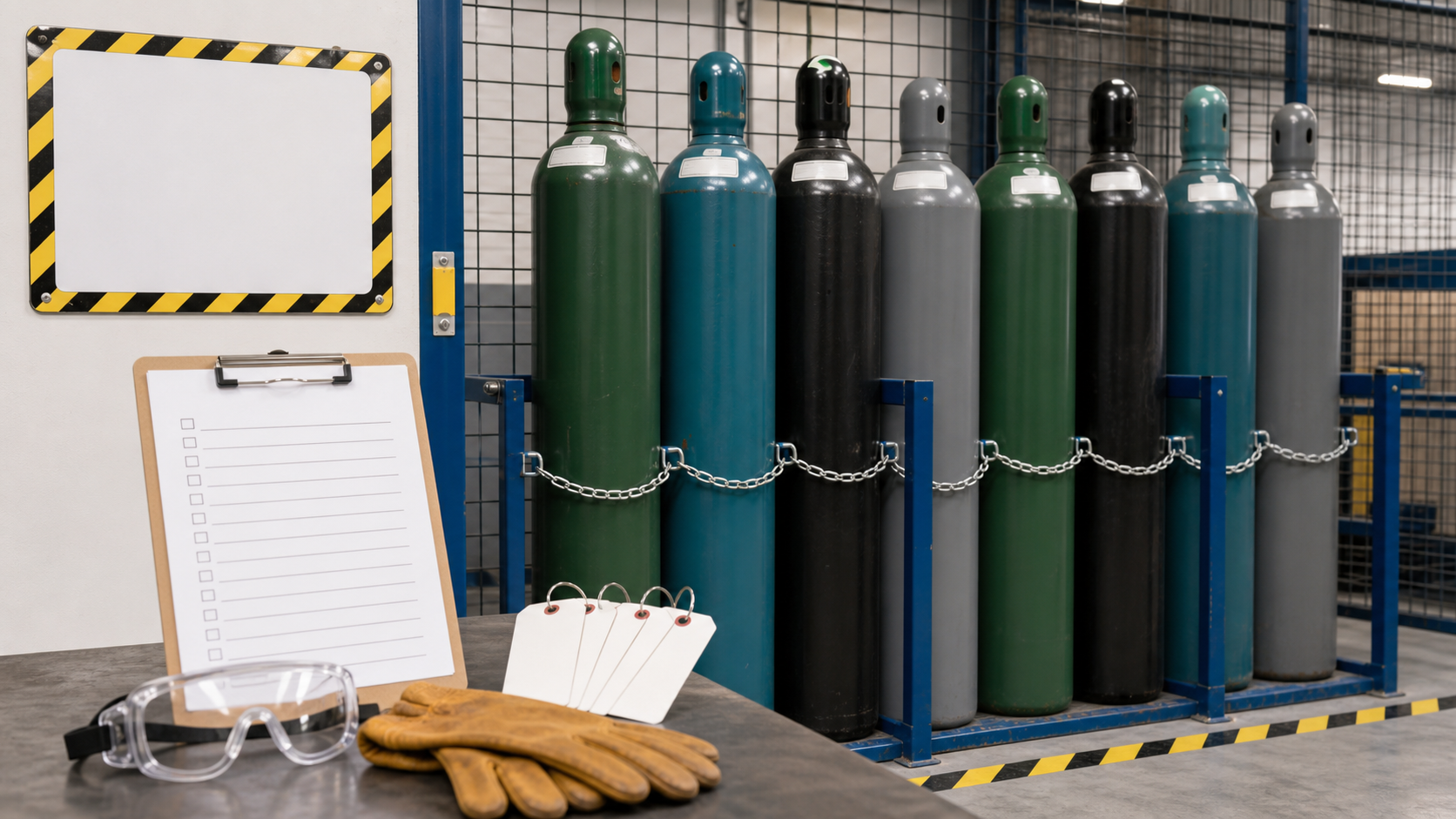
Compressed gas cylinders should be stored upright, secured against falling, clearly identified, protected from damage, and separated according to the gas type and site requirements. Cylinder caps, chains, racks, labels, tags, PPE, and floor markings help keep storage areas controlled and understandable.
OSHA requirements for compressed gases and welding gas cylinders address safe handling, storage, and protection from physical damage. Your site should also follow supplier instructions, fire code, and the safety data sheet for each gas.
Compressed Gas Storage Checklist
| Check area | What to inspect | Why it matters |
|---|---|---|
| Securement | Cylinders are upright and secured by chains, straps, racks, or cages. | Falling cylinders can damage valves and create serious hazards. |
| Valve caps | Caps are installed where required during storage or movement. | Caps help protect valves from impact. |
| Labels and tags | Gas identity and status tags are readable. | Workers need to distinguish full, empty, in-use, and unknown cylinders. |
| Separation | Incompatible gases are separated according to requirements and site policy. | Storage layout reduces fire and reaction risk. |
| Damage | Cylinders show no dents, corrosion, leaks, or heat exposure concerns. | Damaged cylinders should not remain in normal storage. |
| PPE and access | Gloves, eye protection, carts, and clear access are available. | Handling controls reduce injury risk during movement. |
Storage Area Controls
- Mark cylinder storage zones with signs and floor marking tape.
- Keep cylinders away from forklift impact and high-traffic aisles.
- Use cylinder carts for movement instead of dragging or rolling cylinders.
- Keep empty and full cylinders identified and separated.
- Keep access clear for inspections and emergency response.
Common Mistakes to Avoid
Do not leave cylinders freestanding without securement. Do not assume cylinder color is enough for identification. Do not store cylinders where vehicles can strike them without protection. Do not keep unknown or damaged cylinders in active storage.
FAQ
Should compressed gas cylinders be chained?
Cylinders should be secured against falling. Chains, straps, racks, and cages are common methods.
Do empty cylinders still need controls?
Yes. Empty cylinders should still be secured, identified, and handled according to site procedure.
What PPE is useful for cylinder handling?
Common PPE includes gloves, eye protection, safety shoes, and other equipment required by the task and gas hazard.
About Mick Chan
Mick Chan is a safety supply specialist who helps businesses choose practical PPE, facility safety, and emergency readiness products for real workplace conditions. His guidance focuses on simple, usable safety programs that are easier for teams to follow every day.
Final CTA
Improve cylinder storage with chains, racks, tags, warning signs, floor marking tape, gloves, goggles, and industrial safety supplies from eSafetySupplies.com.
Sources: OSHA 29 CFR 1910.101 Compressed Gases; OSHA 29 CFR 1926.350 Gas Welding and Cutting.