
Quick Answer
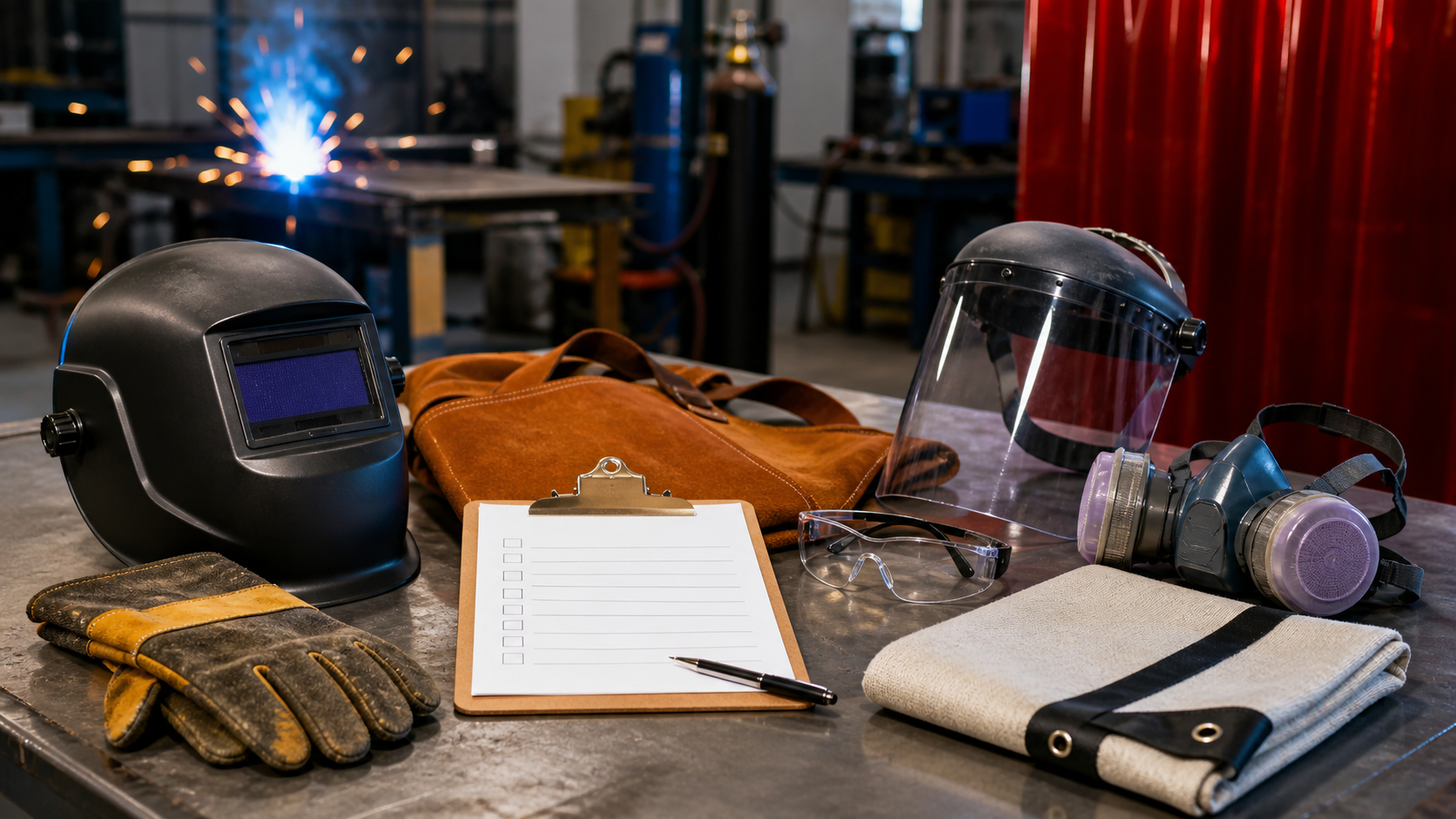
Welding PPE should protect the eyes, face, hands, skin, lungs, and nearby workers from arc radiation, sparks, spatter, heat, fumes, and flying particles. A typical welding PPE setup includes a welding helmet with the correct lens shade, safety glasses, welding gloves, flame-resistant clothing or apron, respiratory protection where required, and fire protection supplies.
OSHA welding requirements address eye protection, ventilation, fire prevention, and safe work practices. PPE selection should match the welding process, material, environment, and exposure assessment.
Welding PPE Checklist
| PPE or control | What to inspect | Why it matters |
|---|---|---|
| Welding helmet | Lens shade, shell condition, headgear, and cover plates. | Protects against arc radiation and flying particles. |
| Safety glasses | Impact-rated eyewear worn under the helmet. | Provides protection when the helmet is lifted. |
| Welding gloves | Heat resistance, holes, seams, cuffs, and flexibility. | Protects hands from heat, sparks, and sharp metal. |
| Clothing and apron | Flame-resistant coverage and no synthetic melt-prone layers. | Reduces burns from sparks and spatter. |
| Respiratory controls | Ventilation, fume extraction, or respirators where required. | Welding fumes can require exposure controls. |
| Fire protection | Welding curtains, fire blankets, extinguishers, and housekeeping. | Controls sparks and protects nearby workers and materials. |
Work Area Checks
- Remove combustible material where practical.
- Use welding curtains or screens to protect nearby workers.
- Keep fire blankets and extinguishers accessible.
- Inspect gloves, helmets, lenses, and aprons before use.
- Confirm ventilation and respiratory controls before welding starts.
Common Mistakes to Avoid
Do not rely on a welding helmet alone. Safety glasses, gloves, clothing, ventilation, and fire protection all matter. Do not use damaged lenses or gloves. Do not let sparks reach cardboard, solvents, rags, or unprotected passersby.
FAQ
Do welders need safety glasses under helmets?
Safety glasses help protect eyes when the helmet is lifted and from impact hazards around grinding, chipping, or setup.
When is respiratory protection needed for welding?
It depends on the material, process, ventilation, coatings, and exposure assessment. Follow OSHA requirements and site policy.
What should be near a welding station?
Common supplies include welding PPE, curtains, fire blankets, extinguishers, first aid supplies, signs, and inspection checklists.
About Mick Chan
Mick Chan is a safety supply specialist who helps businesses choose practical PPE, facility safety, and emergency readiness products for real workplace conditions. His guidance focuses on simple, usable safety programs that are easier for teams to follow every day.
Final CTA
Support safer welding with helmets, gloves, safety glasses, face shields, respirators, welding curtains, fire blankets, and PPE supplies from eSafetySupplies.com.
Sources: OSHA 29 CFR 1910.252 Welding, Cutting, and Brazing; OSHA 29 CFR 1910.133 Eye and Face Protection.