Quick Answer
A carbon fiber hard hat should be selected by its labeled impact Type, electrical Class, fit, and manufacturer instructions, not by its weave or color. “Carbon fiber” can describe the shell material or only a carbon-look surface pattern. Read the exact model's specifications and verify that its protection matches the hazards before buying it for a crew.
Who This Guide Is For
This guide is for buyers comparing premium-looking hard hats and trying to decide whether the material claims change the protection they can expect. It is educational; use the employer's hazard assessment, applicable OSHA rules, the product's actual labeling, and manufacturer guidance for a purchase decision.
The Photo Is Not the Specification
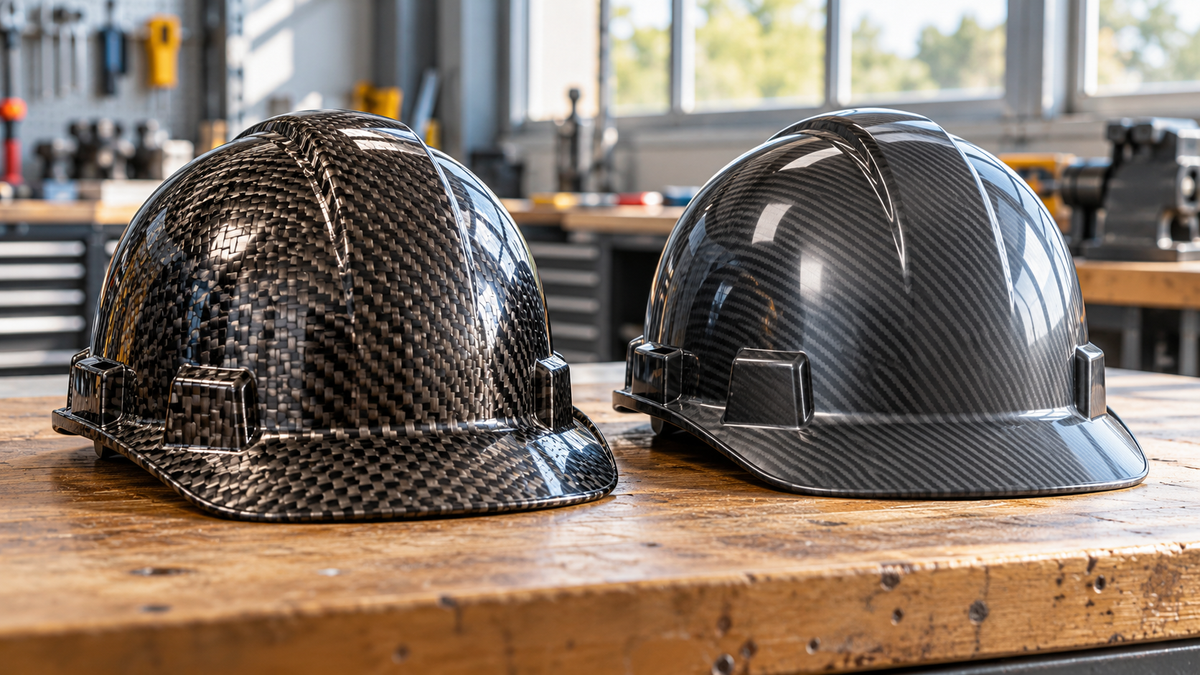
A dark woven pattern can look like structural carbon fiber in a product photo. Sometimes it is. Sometimes the pattern is a film over another shell material. Klein Tools, for example, describes a KARBN-pattern model as a hydro-dipped polymer film on a PC/ABS composite shell. That is not a criticism of the product; it is a reminder that visual texture does not identify the shell construction. Ask the supplier for the material specification if it matters to procurement.
More importantly, material does not replace testing. OSHA requires head protection where falling-object or electrical hazards call for it. The general-industry head protection rule points to specified ANSI editions or equivalent protection, and construction has its own head-protection rule. The current industry standard is ANSI/ISEA Z89.1-2026, but an updated consensus standard does not by itself rewrite the editions named in an OSHA rule. Check the model documentation and the applicable regulation.
Read the Label in This Order
| Label or specification | Buying question | Do not infer from |
|---|---|---|
| Standard designation | What standard and edition does this exact model state? | A listing saying “OSHA approved.” |
| Impact Type | Does the task call for Type I or Type II protection? | Carbon fiber appearance. |
| Electrical Class | Is electrical protection needed, and what Class is specified? | A thick, glossy, or dark shell. |
| Size and suspension | Does it fit the wearer securely with other PPE? | “One size fits most.” |
| Accessories | Are lamps, earmuffs, face shields, or straps approved for this model? | Universal-looking slots. |
ANSI/ISEA Z89.1's Type designations concern impact protection; Class designations concern electrical protection. OSHA's safety helmet bulletin explains that Class C is not intended to protect against contact with electrical hazards. A carbon fiber shell should never be assumed electrically protective. Verify the actual Class for any environment where exposed conductors could contact the head.
For a fuller explanation of rating language, see the hard hat classes and types guide. When comparing shell shapes, the full-brim versus cap-style guide addresses coverage and use. Neither style nor material alone proves a rating.
Why a Lighter-Feeling Hat May Still Be the Wrong One
Weight matters to wearer comfort, especially over a long shift. But an isolated gram figure can conceal the full assembly: suspension, chin strap, lamp, face shield, and hearing protection all add weight and affect balance. Have workers fit the complete combination. Ask them to look up, bend, turn, and perform a short representative task. A helmet that tips forward or presses on one point will not improve acceptance just because the shell material sounds premium.
Compare the maker's sizing range and approved suspension parts. Do not replace the suspension with an arbitrary aftermarket part or attach accessories by drilling the shell. A modification that seems small can invalidate the manufacturer's intended configuration. If the team needs hands-free lighting, check the exact helmet-light combination using the hard hat lights guide.
Four Purchase Questions Worth Sending to the Supplier
- Is the shell made with structural carbon fiber, a composite, or a carbon-look surface finish?
- What standard edition, impact Type, and electrical Class are marked on this exact model?
- Which suspension and accessory parts are approved, and can replacements be sourced?
- What are the maker's cleaning, inspection, and replacement instructions?
If those answers are absent from the product page, request the model's instruction sheet or spec sheet. The response should identify a part number, not merely a family name. A brand may sell vented and non-vented versions with different electrical properties under similar styling.
Field Scenarios
General construction. If falling-object hazards are present, confirm the required impact protection. A stylish shell may help worker acceptance, but it cannot substitute for the model's labeled performance and fit.
Electrical maintenance. Start from the electrical hazard assessment and required Class. Do not select a helmet because “carbon” sounds insulating or strong. Verify the Class and every installed accessory.
Crews using several accessories. Trial the helmet with the approved face shield, earmuffs, chin strap, and light together. A premium shell with a poor accessory system can create daily friction.
Inspect the Whole Helmet, Not Only the Shell
Before use, check the shell for cracks, deformation, cuts, chemical damage, and unauthorized alterations. Check the suspension for torn straps, broken clips, and a secure fit. Follow the maker's cleaning instructions; harsh solvents or heat can damage some materials. Do not invent a universal replacement date. Replace the helmet or components when the manufacturer instructs or when damage makes them unfit for use. The hard hat inspection guide provides a broader checklist.
Common Mistakes
- Treating a carbon-look finish as proof of carbon-fiber shell construction.
- Treating shell material as proof of ANSI/ISEA Type or electrical Class.
- Ordering by appearance before confirming the site hazard assessment.
- Ignoring the weight and balance of the complete accessory setup.
- Mixing incompatible suspensions, lights, or face shields.
- Assuming a higher price guarantees better protection for every task.
Key Takeaways
- Read the exact model label and instruction sheet.
- Separate material and styling claims from tested protection.
- Electrical Class matters whenever contact with exposed conductors is possible.
- Trial fit and accessories before standardizing a crew order.
FAQ
Are carbon fiber hard hats automatically safer?
No. Protection depends on the exact helmet's tested and labeled performance, condition, and fit. Material alone is not an ANSI Type or electrical Class.
Is every carbon-pattern hard hat made of carbon fiber?
No. Some use a surface film over another shell material. Read the manufacturer's material specification rather than relying on a photo.
Can a carbon fiber hard hat be used for electrical work?
Only if the exact model's electrical Class and the site's hazard assessment support its use. Never infer electrical protection from the shell's appearance or name.
Does the newest ANSI standard make older compliant hats unusable?
Not automatically. ISEA says its 2026 revision does not make current compliant head protection obsolete. Check applicable OSHA requirements, the employer program, and the helmet maker's instructions.
Final CTA
Browse hard hats by the Type, Class, fit, and accessory system your work requires. Shortlist exact models, request their specifications, and field-test the complete setup before a bulk order.
About Mick Chan: Mick Chan contributes safety supply guidance for eSafetySupplies content, with a focus on practical PPE selection, workplace readiness, and helping teams connect safety requirements to the right supplies. His review perspective is included to keep recommendations grounded in real purchasing and jobsite use.