
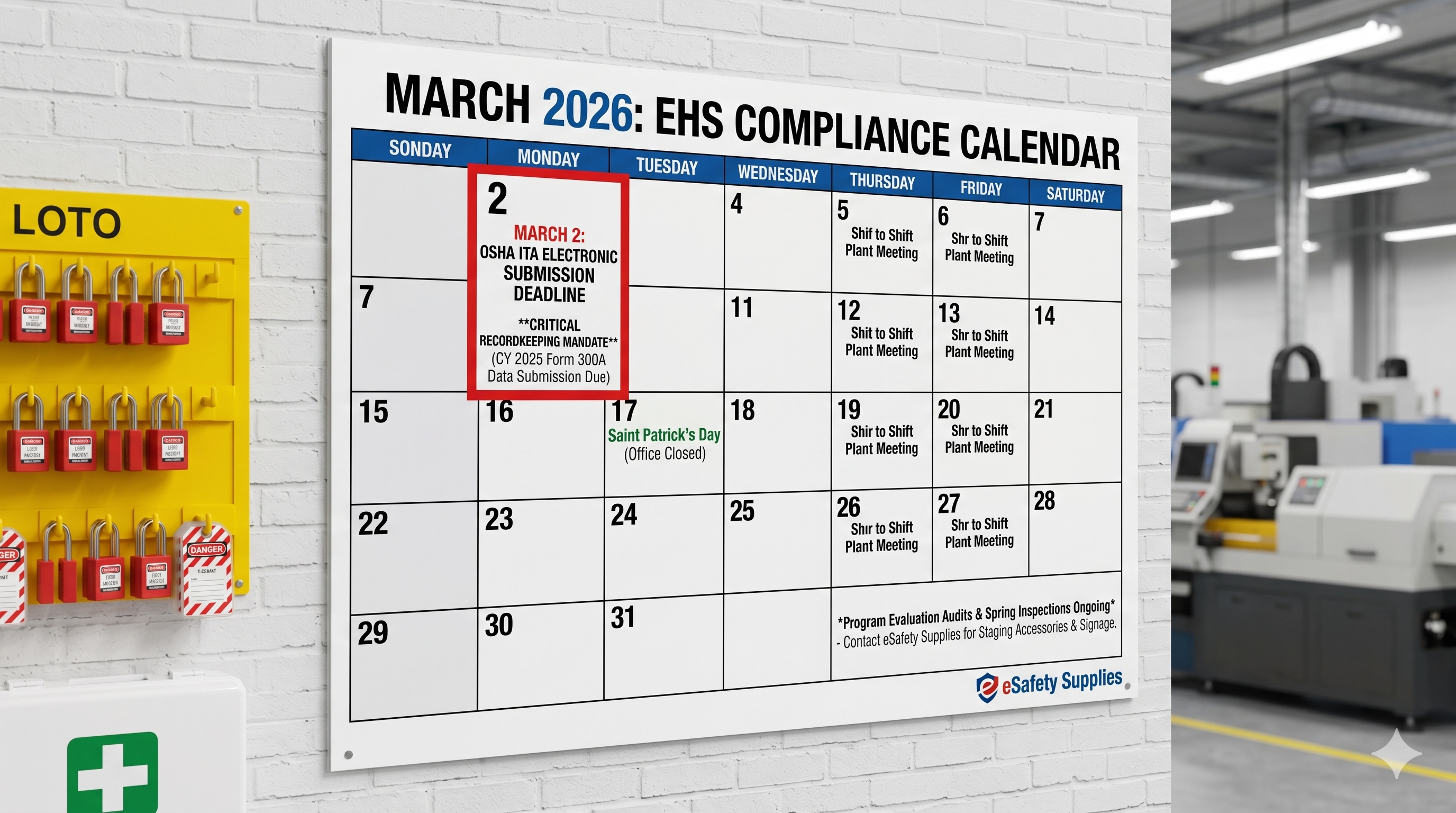
The annual push to finalize workplace injury and illness data can overwhelm even the most organized environmental, health, and safety (EHS) teams. Under federal recording regulations, specific high-hazard establishments must electronically report their preceding year's safety metrics directly to the federal portal.
When the strict March 2 calendar deadline passes, many compliance managers find themselves in a precarious position if their data was left unsubmitted. Slipping past this regulatory milestone creates clear legal vulnerabilities under OSHA Standard 29 CFR 1904.41.
This comprehensive guide details the immediate consequences of a missed deadline, how federal inspectors evaluate late electronic data, and the precise, step-by-step recovery process needed to stabilize your facility's compliance standing.
What Happens If You Miss the March 2 OSHA ITA Electronic Submission Deadline?
According to enforcement criteria established in the OSHA Injury Tracking Application (ITA) directives, missing the annual compliance deadline triggers specific administrative exposures and enforcement risks:
- Other-Than-Serious Citation Exposure: Failing to submit injury data on time is classified as a recordkeeping violation, typically generating immediate financial exposure per affected establishment.
- Targeted Non-Responder Tracking: Establishments that fail to upload data are compiled into an internal federal tracking database, which inspectors cross-reference to schedule unannounced spot-checks.
- Escalation to Willful Penalties: If an organization deliberately ignores the submission requirement over consecutive tracking years, OSHA can escalate the penalty structure to a willful classification.
- Compounded Recordkeeping Audits: Arriving late to the system increases the likelihood that a field officer will execute a comprehensive physical audit of your 300 and 301 logs during your next site inspection.
- Loss of Safe-Harbor Mitigation: Correcting an missing entry voluntarily protects an operation from the harshest penalties; waiting for an inspector to discover the omission removes your leverage for fine reduction.
Deep Dive: Breaking Down the OSHA ITA Penalty Structure
To insulate your business operations from severe recordkeeping citations, compliance directors must understand exactly how the federal system categorizes, detects, and prosecutes electronic reporting deficits.
Step 1: Understanding Your Specific Reporting Tier
Not every business footprint faces the exact same electronic mandates. OSHA separates reporting criteria based on local headcount metrics and industrial classification codes (NAICS):
- Establishments with 250+ Workers: Any facility that falls under standard recordkeeping rules with 250 or more employees must submit their digital tracking paperwork annually.
- High-Hazard Footprints (20-249 Workers): Operations within high-injury sectors—such as fulfillment infrastructure, manufacturing plants, and active job sites—must submit their Form 300A logs even with a smaller regional staff.
To maintain consistent evaluation patterns across your leadership loop, safety directors routinely consult standardized Safety Awareness Handbooks to confirm local reporting rules match underlying field rosters.
Step 2: How Fines are Calculated and Assessed
If an inspector visits your front office and notes an empty ITA transmission record for a mandatory facility, an other-than-serious citation is issued. The current penalty limits allow for substantial statutory fines for every unique establishment left unregistered.
If your legal entity operates multiple warehouse or distribution points across state borders and none were submitted, the financial exposure compounds exponentially as individual citations are applied to each unique physical address.
Step 3: The Danger of the "Non-Responder" Targeting List
The clear risk of missing the March 2 deadline is not just a digital notification; it is the physical fallout of the automated sorting system. OSHA uses ITA non-compliance data to fuel its Site-Specific Targeting (SST) inspection plan.
Firms appearing on the automated non-responder database are prioritized for field selection, giving enforcement personnel explicit cause to walk your facility floor with a clipboard in hand.
       +---------------------------------------------+
       |         OSHA ITA POST-DEADLINE PIPELINE    |
       +---------------------------------------------+
       |  [MARCH 2] -> Missed Submission Deadline    |
       |  [AUTO-LOG] -> Facility Put on Non-Responder List |
       |  [SST PLAN] -> Prioritized for Field Audit  |
       +---------------------------------------------+
Step 4: The Core Difference Between Digital and Physical Posting Rules
A frequent error among operations managers is assuming that a late digital upload satisfies all compliance requirements for the spring season. The electronic data mandate is entirely separate from physical plant posting laws.
Regardless of what day your digital payload registers on the federal servers, your actual, physical workplace must prominently display a signed copy of OSHA Form 300A from February 1 through April 30. This document must live on a bulletin board or staging space easily reached by your frontline crew without managerial intervention.
The Step-by-Step Post-Deadline Recovery Protocol
If you discover that your organization missed the March 2 electronic tracking window, do not panic. Follow this systematic remediation blueprint immediately to isolate your exposure and establish a documented good-faith compliance effort.
1. Execute an Immediate Data Integrity Audit
Before rushing into the digital portal, pull your raw OSHA Form 300 logs and verify the data. Ensure that every recordable injury or illness case from the previous calendar year is fully accounted for, cross-referenced with your workers' compensation filings, and properly calculated on your summaries. Uploading incorrect or flawed data late compounds your compliance problems by creating tracking discrepancies that attract structural scrutiny.
2. Submit via the ITA Web Portal Immediately
The OSHA Injury Tracking Application does not lock down permanently at midnight on March 2. The portal remains continuously open for rolling late submissions throughout the year. Log into your account, input your establishment parameters, and upload your validated Form 300A figures.
Submitting data late always trumps failing to submit entirely; it stops the non-compliance clock and proves that management actively worked to self-correct the oversight before an enforcement intervention occurred.
3. Document Your Good-Faith Corrective Action Plan
Create a formal, written corporate memorandum detailing why the deadline was missed (e.g., software transition issues, personnel adjustments, or clerical errors) and explicitly lay out the internal steps taken to prevent a recurrence. Keep this document on file alongside your physical logs. If an enforcement inspector visits your office later, presenting a pre-existing, self-discovered corrective plan can directly influence the officer to mitigate or waive an other-than-serious financial penalty.
To proactively maintain historical reporting structures and manage physical security safeguards during compliance gaps, administrative officers should leverage an enterprise-tier eSafety Supplies Procurement Account to keep vital site assets, posting centers, and structural tracking tools standard across all field footprints.
OSHA ITA Compliance Frequently Asked Questions
Can you submit OSHA ITA data late after the March 2 deadline?
Yes, the OSHA Injury Tracking Application (ITA) remains open for late submissions after the March 2 deadline. Employers who missed the cutoff should submit their data immediately to minimize potential citation severity and demonstrate a good-faith effort to achieve compliance.
What is the fine for failing to electronically submit OSHA Form 300A data?
Failing to submit required injury and illness logs can result in an other-than-serious citation with a maximum penalty exceeding $16,000 per violation. If inspectors discover an intentional or repeated pattern of failing to report electronic data, fines can escalate significantly to willful or repeat classification levels.
Does submitting late data through the ITA automatically trigger an inspection?
Submitting data late does not automatically trigger an enforcement inspection. However, completely failing to submit data places your facility on OSHA’s non-responder list, which is frequently used to target establishments for programmed compliance inspections.
Which establishments are legally required to submit electronic data through the ITA?
Establishments with 250 or more employees that are required to keep OSHA injury and illness records must submit data electronically. Additionally, establishments with 20 to 249 employees in specific high-hazard industries (such as manufacturing, logistics, and construction) must also submit their Form 300A data annually.
Do I still need to post the physical Form 300A if I submitted electronically late?
Yes. The electronic submission requirement is completely separate from the physical workplace posting mandate. Regardless of your ITA submission status, a physical, signed copy of OSHA Form 300A must remain posted in a highly visible location for employees from February 1 through April 30 every year.
About the Author
Mick Chan is a Senior EHS Compliance Specialist and Safety Content Strategist with over 15 years of boots-on-the-ground experience auditing industrial facilities, logistics hubs, and construction zones across the Western United States. Raised in the San Gabriel Valley, California, Mick holds a Bachelor of Science degree from California State University, Los Angeles (CSULA). He specializes in translating complex federal OSHA codes and National Electrical Codes (NEC) into practical, high-efficiency operational safety programs that shield companies from liability and protect industrial workforces.