
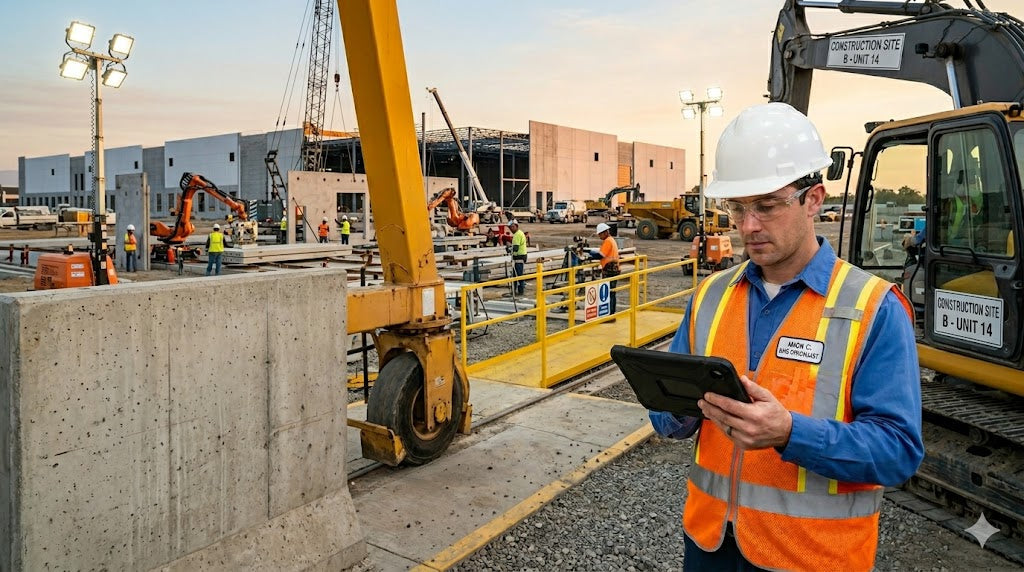
In the high-stakes world of industrial safety, visibility is your first and most effective line of defense. Whether your crew is operating on a high-speed roadway, managing a chaotic fulfillment center, or directing heavy machinery on a dimly lit construction site, being seen can mean the difference between a routine shift and a catastrophic incident.
To regulate these hazardous work zones, the American National Standards Institute (ANSI) and the International Safety Equipment Association (ISEA) established a strict framework governing high-visibility apparel. The current active benchmark, ANSI/ISEA 107-2020, dictates the exact engineering requirements for reflective safety gear. Staying compliant isn't just about throwing on any fluorescent vest; it requires a precise understanding of material square footage, garment configuration, and operational risk tiers.
This comprehensive guide breaks down the essential high-visibility garment classes under the 2020 standard, reveals the precise design metrics required for compliance, and outlines how to outfit your workforce to stay fully shielded from liability.
What Are the Garment Types and Classes Under ANSI/ISEA 107-2020?
According to the compliance criteria established in the active consensus standard, high-visibility apparel is categorized into three distinct Performance Classes based on the worker's environment and the level of risk they encounter:
- Performance Class 1 (Low-Risk Zones): Designed for workers in environments where vehicle speeds do not exceed 25 mph and tasks are separated from traffic. Garments require a minimum of 217 square inches of background material and 155 square inches of retroreflective tape.
- Performance Class 2 (Medium-Risk Zones): Mandatory for personnel working near roadways where traffic exceeds 25 mph, or in complex backgrounds where a worker’s attention may be diverted. Garments require a minimum of 775 square inches of background material and 201 square inches of retroreflective tape.
- Performance Class 3 (High-Risk Zones): Strictly required for workers exposed to high-speed traffic (exceeding 50 mph), wide ranges of weather conditions, or complex operational environments. Garments require a minimum of 1,240 square inches of background material and 310 square inches of retroreflective tape, and must feature reflective material on the sleeves and/or pant legs to map human form movement.
- Performance Class E (Supplemental Gear): High-visibility trousers, bib overalls, shorts, or gaiters that do not meet standalone compliance metrics. However, when a Class E garment is worn in combination with a Class 2 vest or shirt, the entire ensemble is legally upgraded and certified as a Performance Class 3 outfit.
Deep Dive: Breaking Down the High-Vis Compliance Workflow
To maintain an unassailable safety program, compliance managers must understand how ANSI evaluates high-visibility garments beyond simple color palettes. The 2020 standard merges environmental "Types" with structural "Classes" to eliminate guessing games in the field.
Step 1: Matching Garment Types to Your Field Environment
The ANSI/ISEA 107-2020 standard segment garments into three structural Types that align directly with specific industrial settings:
- Type O (Off-Road / Non-Roadway): Engineered strictly for indoor environments or off-road spaces where workers are exposed to moving equipment but not public traffic. Type O apparel is legally designated as Performance Class 1 only.
- Type R (Roadway and Temporary Traffic Control): The most common designation, built for personnel exposed to public highway traffic, rights-of-way, or construction zones. Type R apparel is certified under Performance Class 2 or Class 3 metrics.
- Type P (Public Safety Personnel): Specialized gear tailored for emergency responders, law enforcement, and fire personnel who require access to duty belts or tactical equipment. Type P apparel is available in Class 2 and Class 3 configurations.
To monitor these apparel requirements cleanly alongside your broader facility safety measures, safety directors often leverage a comprehensive Warehouse Safety PPE Checklist to verify that floor personnel are outfitted with the correct high-vis tier for their specific sector.
Step 2: The Material Testing Mandate
A vest bought from an uncertified discount retailer does not meet OSHA standards. ANSI/ISEA 107-2020 enforces rigorous testing protocols on the fabrics themselves before a garment can bear an official compliance label.
The standard mandates testing across two primary material layers:
- Background Material: The main fluorescent body fabric (typically available in fluorescent yellow-green, fluorescent orange-red, or fluorescent red). This fabric must pass strict colorfastness, mechanical strength, and luminance testing both before and after simulated sunlight exposure and laundering cycles.
- Retroreflective Material: The silver reflective tape bands that bounce light back directly to a vehicle's headlights. This material must achieve specific coefficients of retroreflection to remain legally compliant.
Step 3: Layout Configuration and Retroreflective Band Placement
To keep a worker visible from a 360-degree radius, the placement of retroreflective tape follows strict geometric rules. The standard requires that all Class 2 and Class 3 garments feature a continuous block of reflective material around the torso.
Additionally, Class 3 garments must incorporate reflective bands on the sleeves and pant legs. This placement utilizes the biomechanical principle of biomotion—when a driver sees moving reflective bands on an arm or leg, their brain instantly recognizes the object as a human being rather than a static traffic cone, reducing reaction times exponentially.
       +-------------------------------------------------------+
       |             ANSI HIGH-VISIBILITY ENSEMBLE             |
       +-------------------------------------------------------+
       | Class 2 Vest (Torso Bands Only)                       |
       |                   +                                   |
       | Class E Pants (Lower Leg Bands Only)                  |
       |                   =                                   |
       | CERTIFIED CLASS 3 MAXIMUM ENVIRONMENT COMPLIANCE      |
       +-------------------------------------------------------+
Step 4: The Service Life and Replacement Cycle
High-visibility gear does not last forever. Continuous exposure to UV rays, industrial grease, asphalt dust, and aggressive washing cycles will permanently degrade both the background fluorescence and the retroreflective capabilities of the tape.
The ANSI standard notes that the average service life of a high-vis garment subjected to daily outdoor use is approximately six months to one year. If a vest appears faded, soiled, or cracked, its protection rating drops below compliance thresholds, leaving your organization exposed to severe liability and OSHA citations.
Inspection, Care, and Storage Protocols
To maximize the lifespan of your reflective inventory and keep your crew safely visible, procurement officers and field foremen must enforce strict garment maintenance routines.
Cleaning and Laundering Restraints
Standard industrial detergents containing optical brighteners or bleach will rapidly ruin the fluorescent dyes in ANSI fabrics. High-visibility garments should always be washed inside out in cold or warm water using a mild, neutral detergent. Line drying is highly recommended; if a dryer must be used, it should be set to a low-heat cycle to prevent the heat-activated adhesive backing on the retroreflective tape from melting or peeling away from the fabric.
Inspection for Deficiencies
Before stepping into a live traffic zone or a heavy machine corridor, authorized employees must inspect their high-vis gear. This inspection must include a check of:
- Fluorescent Intensity: Comparing the fabric against a new vest to ensure fading has not compromised its daytime visibility.
- Reflective Tape Integrity: Checking for severe abrasions, cracks, or heavy staining from oils and mud that block retroreflection.
- Hardware Functionality: Ensuring zippers, hook-and-loop fasteners, and snaps function perfectly so the garment remains fully closed and does not snag on moving machinery parts.
To streamline this verification workflow during daily shift huddles, facility managers can utilize structured Safety Awareness Handbooks as localized reference materials to guide crews through physical equipment audits on the floor.
High-Visibility Apparel Frequently Asked Questions
Can an employer logo block the visibility of an ANSI vest?
Yes, but only within strict limits. ANSI/ISEA 107-2020 allows for corporate branding, logos, and identification badges to be printed directly onto high-visibility garments. However, the total area of non-compliant logo material cannot exceed 72 square inches on the front or back of the garment. If a massive company logo covers up too much of the background fluorescent fabric, the garment is legally voided of its ANSI certification.
Is high-visibility apparel required for all construction workers?
Yes, under the Federal Highway Administration (FHWA) regulations and OSHA’s general duty clause, any worker within the right-of-way of a public federal-aid highway who is exposed to traffic or construction equipment must wear high-visibility apparel matching Class 2 or Class 3 metrics. Local municipal codes and general industry practices mimic these rules for commercial warehouse footprints and private developments to maintain baseline workplace safety.
What is the difference between fluorescent and retroreflective materials?
- Fluorescent Material: Utilizes special dyes that absorb invisible ultraviolet light from the sun and re-emit it as visible light. This material makes the worker highly visible during daytime hours and overcast conditions, but it is completely ineffective in total darkness.
- Retroreflective Material: Utilizes microscopic glass beads or prismatic structures to bounce light from an external source (like a vehicle's headlights) directly back to the sender. This material provides maximum visibility during nighttime hours and low-light conditions.
Can a worker wear a Class E pant by itself to meet safety rules?
No. Performance Class E garments (such as high-vis shorts or trousers) do not meet standalone compliance thresholds for public roadways or construction zones. They are strictly classified as supplemental gear. To legally satisfy safety regulations, a Class E garment must be paired with an ANSI Class 2 or Class 3 upper garment.
Are employers required to pay for high-visibility garments?
Yes. Under OSHA’s personal protective equipment standard, employers are legally mandated to select, provide, and pay for appropriate ANSI-compliant high-visibility gear for any employee exposed to hazardous traffic or moving machinery zones at zero cost to the worker. For organizations looking to manage volume inventory cycles and outfit multiple field crews cleanly, leveraging a comprehensive eSafety Supplies Procurement Account ensures compliance managers can track structural safety requirements across regional facilities without inflating operational margins.
About the Author
Mick Chan is a Senior EHS Compliance Specialist and Safety Content Strategist with over 15 years of boots-on-the-ground experience auditing industrial facilities, logistics hubs, and construction zones across the Western United States. Raised in the San Gabriel Valley, California, Mick holds a Bachelor of Science degree from California State University, Los Angeles (CSULA). He specializes in translating complex federal OSHA codes and National Electrical Codes (NEC) into practical, high-efficiency operational safety programs that shield companies from liability and protect industrial workforces.