
Quick Summary
Workplace emergency preparedness is essential for protecting employees, minimizing risks, and ensuring OSHA compliance. This guide outlines key requirements, emergency planning steps, and safety equipment every workplace should have in 2026.
What Is Workplace Emergency Preparedness?
Emergency preparedness refers to the planning, training, and equipment required to respond effectively to workplace emergencies such as fires, chemical spills, severe weather, or medical incidents.
A well-prepared workplace reduces injuries, saves lives, and ensures business continuity.
Why Emergency Preparedness Is Critical
- Protects employees and visitors
- Reduces workplace injuries and fatalities
- Ensures compliance with OSHA regulations
- Minimizes downtime and operational disruption
OSHA Emergency Preparedness Requirements
OSHA requires employers to develop and implement an Emergency Action Plan (EAP) under 29 CFR 1910.38.
View OSHA guidance: OSHA Emergency Preparedness
Additional preparedness resources: Ready.gov Workplace Emergency Planning
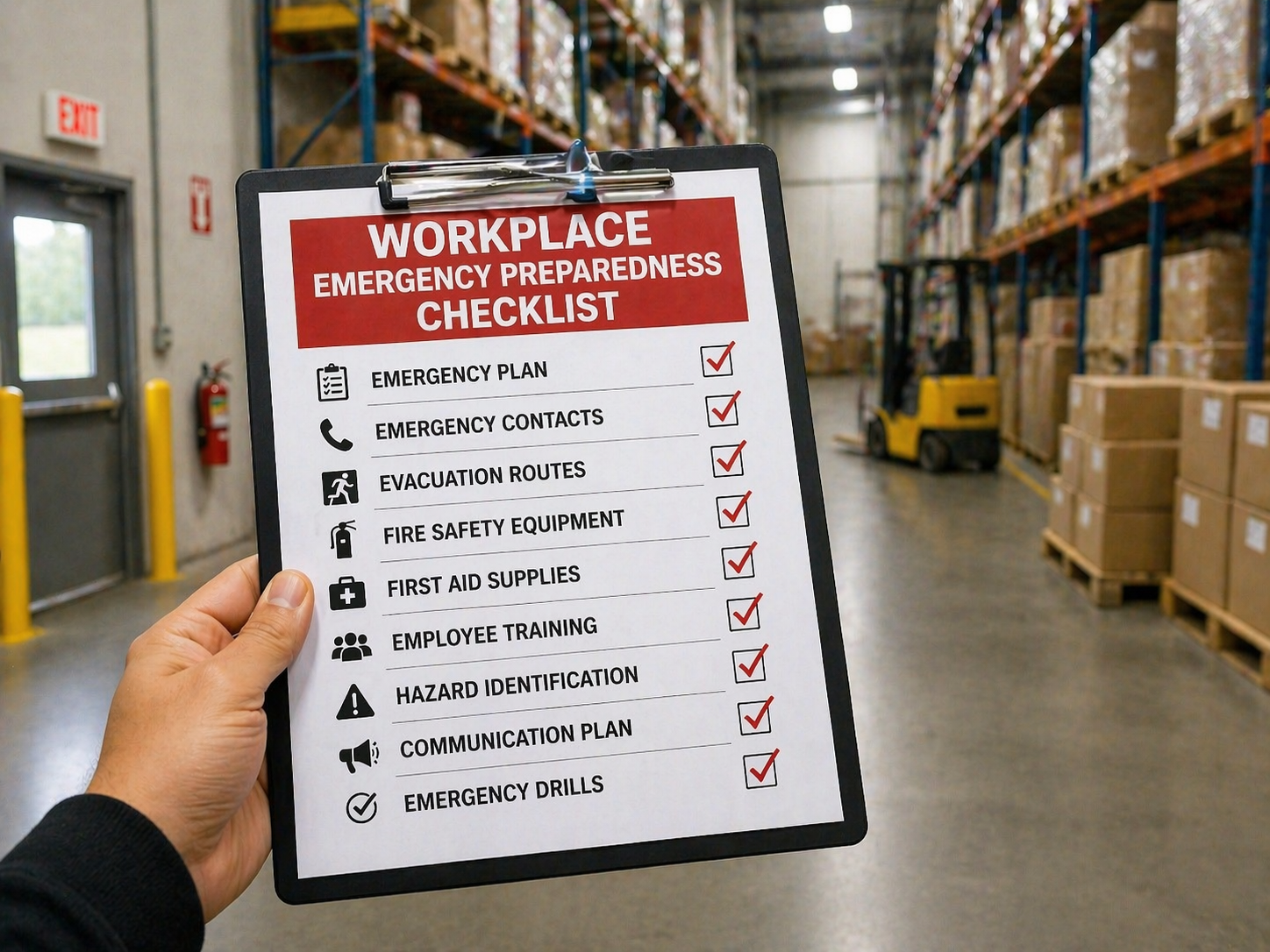
Workplace Emergency Preparedness Checklist
1. Emergency Action Plan (EAP)
- Evacuation procedures
- Emergency contact information
- Roles and responsibilities
2. Communication Systems
- Alarm systems
- Public address systems
- Emergency notifications
3. Employee Training
- Evacuation drills
- First aid training
- Emergency response procedures
4. Hazard Identification
- Fire risks
- Chemical hazards
- Electrical dangers
Essential Emergency Safety Equipment
- Fire extinguishers
- First aid kits
- Emergency lighting
- Spill kits
- Eye wash stations
- High-visibility clothing
Learn about visibility safety: High-Visibility Clothing Requirements Guide
Emergency Preparedness for Different Industries
Construction Sites
- Fall protection systems
- Traffic control equipment
- Heat stress prevention
Warehouses
- Forklift safety protocols
- Fire suppression systems
- Clear evacuation routes
Laboratories
- Chemical spill kits
- Eye wash stations
- Protective PPE
Common Emergency Preparedness Mistakes
- No written emergency plan
- Lack of employee training
- Outdated or missing equipment
- Poor communication systems
Related Safety Equipment
Conclusion
Emergency preparedness is not optional—it is a critical component of workplace safety. By implementing OSHA-compliant plans and equipping your workplace with the right safety tools, you can protect lives and ensure operational resilience.
People Also Ask
What is an emergency action plan?
It is a written plan outlining procedures for workplace emergencies.
Is emergency preparedness required by OSHA?
Yes, OSHA requires employers to have an Emergency Action Plan.
What equipment is needed for emergencies?
Fire extinguishers, first aid kits, eye wash stations, and emergency lighting.
How often should emergency drills be conducted?
At least annually or as required by workplace risk level.
Who is responsible for emergency preparedness?
Employers must implement plans, and employees must follow them.
About the Author
Mick Chan is a Safety Supplies industry professional with over 15 years of experience specializing in OSHA compliance, PPE regulations, and workplace safety solutions.